
When your world suddenly spins out of control, your ears ring like a bell, and your hearing feels muffled - it’s not just dizziness. It could be Meniere’s disease, a chronic inner ear disorder that doesn’t just make you feel off-balance - it rewires how you hear and move through the world.
What’s Really Happening Inside Your Ear?
Your inner ear isn’t just a hearing organ. It’s also your body’s built-in gyroscope. Inside it, two fluid systems work like a delicate plumbing network: one is rich in potassium (endolymph), the other in sodium (perilymph). These fluids help send signals to your brain about movement and sound. In Meniere’s disease, something goes wrong. Too much endolymph builds up - a condition called endolymphatic hydrops. This isn’t just waterlogging. It’s pressure. It stretches the membranes, damages hair cells, and scrambles the signals your brain receives. Research from 2022 using advanced 3D imaging showed that in people with Meniere’s, the saccule - a small sac in the inner ear - swells in 97% of cases. The cochlear duct follows close behind. The utricle, which helps with balance, only swells in about a third of cases. Why? Because its membrane is thicker. It resists pressure longer. But when it does give way, things get worse. This isn’t random. The endolymphatic sac, your ear’s drainage system, is often too narrow - less than 0.3mm in severe cases, compared to a healthy 0.5-0.8mm. Think of it like a clogged sink. Fluid keeps coming in, but it can’t drain out. And over time, that pressure destroys the delicate structures that turn sound and motion into nerve signals.Why Do Symptoms Come in Waves?
Meniere’s doesn’t creep up. It attacks. You wake up one day with a spinning room, nausea, and a feeling of fullness in your ear. Then, after hours or days, it fades. But it comes back. Why? It’s not just fluid pressure. New studies show your immune system is involved too. Inflammation in the inner ear spikes dramatically. Levels of IL-6, TNF-alpha, and IL-17 - proteins that drive inflammation - are 4 to 5 times higher in Meniere’s patients than in healthy people. These immune signals break down the blood-labyrinth barrier, letting immune cells invade the inner ear. Over time, this leads to scarring and fibrosis in the endolymphatic sac. That’s why some people get worse even when their vertigo improves. Another factor? Blood flow. About 45% of stubborn cases show poor drainage through the paravestibular vein. When blood can’t leave the area properly, pressure builds. It’s like a traffic jam behind your ear. The result? Four classic symptoms:- Sudden, violent vertigo - lasting 20 minutes to several hours
- Fluctuating hearing loss, usually in one ear at first
- Ringing or roaring in the ear (tinnitus)
- A feeling of pressure or fullness, like your ear is stuffed with cotton
How Do You Manage the Fluid Buildup?
The goal isn’t to cure Meniere’s - not yet. But you can take control. The most proven way to reduce endolymph is to cut sodium. Your inner ear works like your kidneys. Too much salt means your body holds onto water. That means more fluid in your ear. Experts recommend a daily sodium intake of 1,500-2,000 mg. That’s less than a teaspoon of salt. You’ll need to avoid processed foods, canned soups, soy sauce, and even bread - which can have more salt than you think. Reading labels becomes essential. Alongside diet, diuretics like hydrochlorothiazide are often prescribed. They help your body flush out extra fluid. Studies show they reduce endolymph volume by 22-35% in people who respond. But here’s the catch: only about 55-60% of patients see real improvement. Why? Because if your endolymphatic sac is too narrow or scarred, diuretics can’t fix the drainage problem.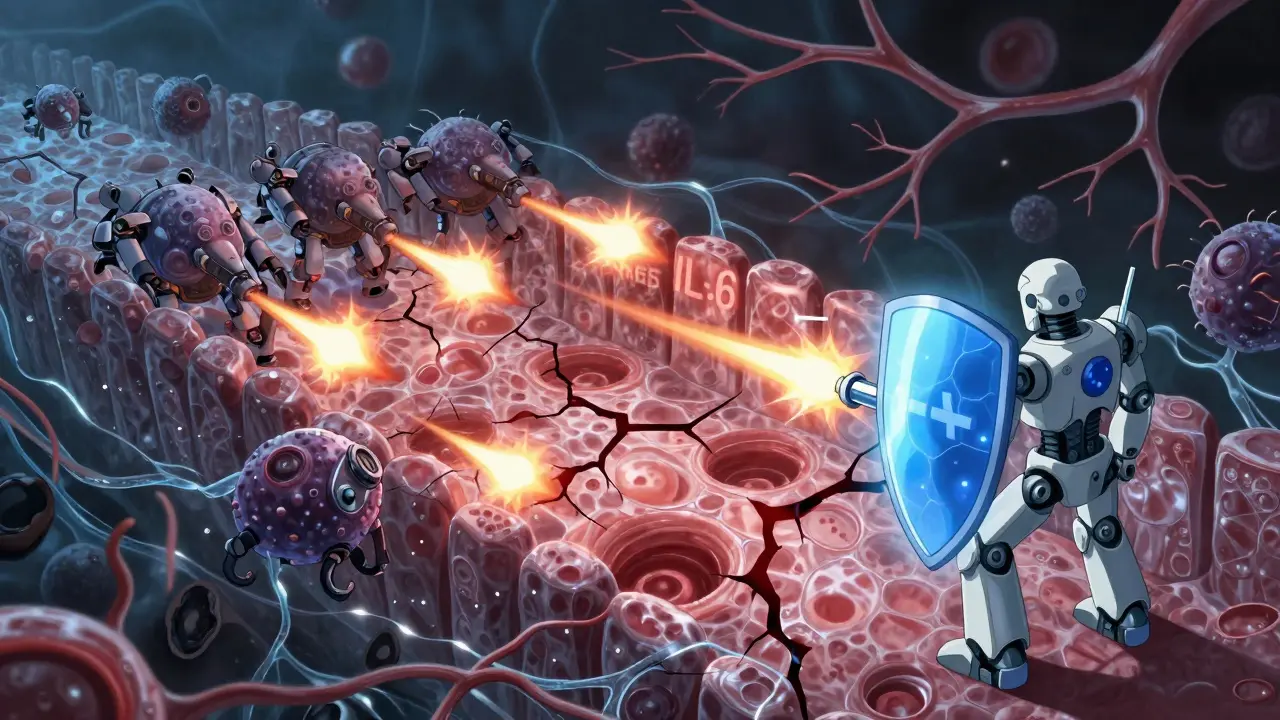
What Treatments Work for Vertigo and Hearing Loss?
When vertigo hits hard, you need fast relief. Intratympanic steroid injections - where medicine is injected directly into the middle ear - are one of the most effective options. Methylprednisolone reduces inflammation and helps regulate fluid transport in the inner ear. About 70% of patients see fewer and less severe attacks after a few treatments. If steroids don’t work, gentamicin injections may be next. This antibiotic kills the balance cells in your inner ear - not the hearing ones. It sounds extreme, but it works. Up to 92% of people stop having vertigo attacks. The trade-off? A 12-18% chance of worsening hearing loss. For someone whose vertigo is disabling, this is often a fair choice. Surgery is another option. Endolymphatic sac decompression opens up the drainage pathway. It helps about 60-70% of people with vertigo, but only 25-35% get better hearing. It’s not a cure - it’s damage control.The New Hope: Targeting the Immune System
The biggest breakthrough in the last few years isn’t about draining fluid. It’s about stopping the immune attack. A 2025 study tested anti-IL-17 antibodies - drugs already used for psoriasis and arthritis - in Meniere’s patients. The results were striking: vertigo episodes dropped by 63%, and hearing loss slowed by 41%. This isn’t just symptom relief. It’s disease modification. Steroids aren’t just anti-inflammatory. They also help the inner ear regulate sodium and water. That’s why they’re more effective than just diuretics alone. When you combine diet, diuretics, and immunomodulation, symptom control jumps to 78%. Single treatments? Only 52%.
What Happens Over Time?
Meniere’s isn’t static. It evolves. In the early stages, you have attacks - then recovery. But after 10-15 years, something changes. The inner ear becomes so swollen, so damaged, that the fluid doesn’t move anymore. The spinning stops - but you don’t feel better. Instead, you’re left with chronic unsteadiness. Walking feels like being on a boat. Your hearing is permanently damaged - often worse than 50dB loss in the affected ear. That’s like missing half of normal conversation. And in 93% of long-term cases, the other ear starts to decline too. There’s also a subtype called vestibular Meniere’s, where vertigo happens without hearing loss. It makes up about 18% of cases and may respond better to balance therapy.What You Can Do Today
You don’t have to wait for a miracle drug. Start now:- Track your sodium. Use an app or food scale. Avoid processed snacks, canned goods, and restaurant meals.
- Stay hydrated. Dehydration can trigger fluid shifts. Drink water consistently - not just when you’re thirsty.
- Reduce caffeine and alcohol. Both affect blood flow and fluid balance in the inner ear.
- Manage stress. Stress hormones like cortisol can worsen inflammation and fluid retention.
- See a specialist. Not all ENTs know Meniere’s deeply. Look for one who works with vestibular disorders or has published research on inner ear fluid.
Is There a Cure Coming?
There’s no cure yet. But the science is moving fast. Genetic studies have found 17 gene variants linked to Meniere’s - especially those affecting ion channels. This means future treatments could be personalized. If you have a mutation in the SLC26A4 gene, you might respond better to certain drugs. 3D imaging is now sensitive enough to spot fluid buildup before symptoms start. In the next five years, we may see screening for at-risk people - maybe even those with a family history. For now, the best strategy is a three-part plan: reduce fluid, calm inflammation, and protect what hearing you still have. It’s not glamorous. But it works.Meniere’s disease doesn’t disappear. But with the right approach, it doesn’t have to take over your life either.