
St. John's Wort Interaction Checker
Critical Warning
This tool is for educational purposes only. It does not replace professional medical advice. Never stop or change prescribed medications without consulting your healthcare provider.
Select Your Medications
Check all medications you're currently taking that could interact with St. John's Wort. This tool identifies potentially dangerous combinations.
St. John’s Wort is sold on pharmacy shelves beside vitamins and protein powders. It’s labeled "natural," "gentle," and "safe." But if you’re taking prescription meds - even something as common as birth control or blood pressure pills - this herb could be silently sabotaging your treatment. It doesn’t just cause mild side effects. It can make your heart medication useless, trigger seizures, cause unplanned pregnancy, or send you into serotonin syndrome - a life-threatening condition. And most people have no idea.
How St. John’s Wort Changes How Your Body Handles Medicine
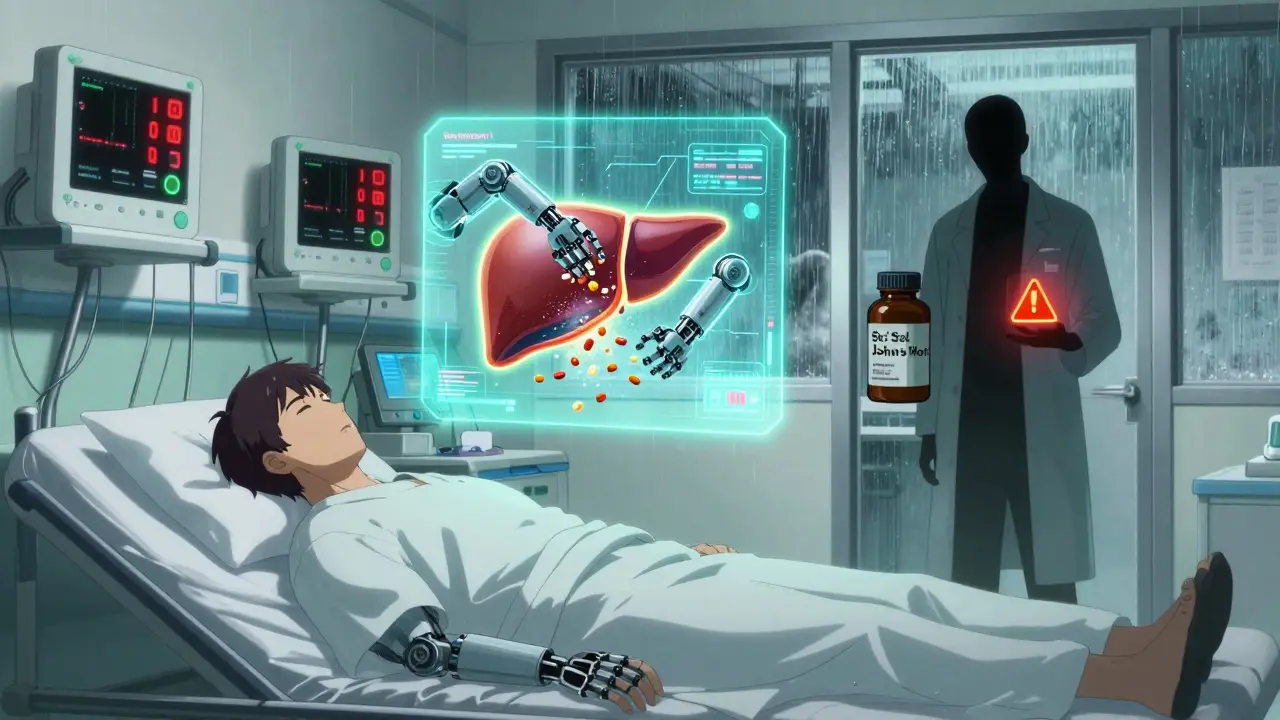
St. John’s Wort doesn’t just sit in your system. It actively rewires how your liver processes drugs. The key player? Hyperforin. This compound turns on a powerful enzyme system called CYP3A4. This enzyme is responsible for breaking down about half of all prescription medications. When St. John’s Wort wakes it up, your body starts chewing through drugs too fast.
Think of it like a highway. Your medication is a car. Normally, it moves at a steady pace so it can do its job. But St. John’s Wort slams on the gas. The car zips past its destination before it can work. That’s why warfarin stops thinning your blood. Why your antidepressant stops lifting your mood. Why your transplant drug fails to stop organ rejection.
It’s not just about speed. St. John’s Wort also flips a switch on P-glycoprotein - a protein that shuttles drugs in and out of cells. This messes with how much medicine actually reaches your brain, heart, or liver. The result? Unpredictable, dangerous drops in drug levels. And when you stop taking St. John’s Wort? The enzyme slows back down. Suddenly, your meds build up like traffic after a road closure. Toxic levels. Hospital visits. That’s not theoretical. It’s happened in real patients.
Medications That Can Become Dangerous or Useless
Here’s the hard truth: if you’re on any of these, St. John’s Wort is a red flag.
- Antidepressants - SSRIs like sertraline, fluoxetine, or escitalopram. Mixing them with St. John’s Wort can trigger serotonin syndrome. Symptoms: high fever, rapid heartbeat, confusion, muscle rigidity. This isn’t a mild headache. It’s an emergency.
- Blood thinners - Warfarin, rivaroxaban. St. John’s Wort cuts their effectiveness by up to 50%. One study showed patients on warfarin had dangerous blood clots after starting the herb. They didn’t know the herb was the cause.
- Birth control - Oral pills, patches, rings. The herb speeds up estrogen breakdown. Breakthrough bleeding? Unplanned pregnancy? That’s not bad luck. That’s pharmacology. IUDs are safer, but even then, no one’s proven they’re immune.
- Immunosuppressants - Cyclosporine, tacrolimus. These keep transplanted organs alive. St. John’s Wort can drop their levels so low, your body starts rejecting the organ. Cases have been documented in kidney and liver transplant patients.
- Antiseizure drugs - Phenytoin, carbamazepine, phenobarbital. If your seizure control slips, it’s not your condition worsening. It’s the herb flushing the medicine out of your system.
- Heart meds - Digoxin, statins. Levels drop. Risk of heart attack or stroke rises.
- HIV drugs - Protease inhibitors, NNRTIs. These are finely tuned. A 30% drop can lead to drug resistance. That means your treatment stops working - permanently.
- Antipsychotics - Clozapine. St. John’s Wort reduces its levels, making psychosis harder to control.
- Methadone - Used for pain or addiction. St. John’s Wort can trigger withdrawal symptoms or reduce pain relief.
- Migraine meds - Triptans. Combined with St. John’s Wort, risk of serotonin overload spikes.
And that’s just the known list. The Therapeutic Goods Administration in Australia says the full list is still growing. Why? Because CYP3A4 handles so many drugs. You don’t need to be on a rare medication. If it’s prescribed, it’s likely affected.
Why "Natural" Doesn’t Mean Safe
People assume herbal means harmless. But St. John’s Wort is a potent drug - just not regulated like one. A capsule from one brand might have 0.3% hyperforin. Another might have 1.2%. Same label. Different strength. Same risk. No one checks it.
And here’s the kicker: your doctor probably doesn’t know you’re taking it. Most patients don’t mention supplements. They think it’s "just a tea." But in the UK and Sweden, regulators now require warning labels on both St. John’s Wort products and the prescription drugs it interferes with. Why? Because they’ve seen the hospital admissions.
One patient in Manchester, 58, was on warfarin after a stroke. He started St. John’s Wort for low mood. His INR dropped from 2.8 to 1.1 in two weeks. He had another stroke. He didn’t connect the dots until his pharmacist asked: "Are you taking any herbal supplements?"
What Happens When You Quit St. John’s Wort?
Stopping the herb doesn’t fix everything. It makes things riskier.
When you stop taking it, your liver enzyme activity drops back to normal. But your meds? They’re still at the same dose. Now, instead of being flushed out too fast, they’re building up. That’s when toxicity hits.
One case involved a woman on cyclosporin after a kidney transplant. She quit St. John’s Wort without telling her doctor. Two weeks later, she had nausea, tremors, and kidney failure. Her cyclosporin level had doubled. She needed emergency dialysis.
That’s why you can’t just stop the herb cold. You need medical supervision. Your doctor must monitor drug levels and adjust doses - slowly.

What Should You Do If You’re Taking Both?
Don’t panic. But don’t ignore it either.
- Stop taking St. John’s Wort immediately if you’re on any of the medications listed above. Don’t wait. Don’t "try it for a few more days."
- Tell your doctor and pharmacist - even if you think it’s "not a big deal." Write it down. Show them the bottle.
- Don’t restart it without a clear plan. If you need help with depression, there are safer options: therapy, FDA-approved antidepressants, exercise. None of them carry this level of risk.
- Monitor for symptoms - unusual bleeding, seizures, mood swings, racing heart, confusion. If you feel off, go to urgent care. Say: "I was taking St. John’s Wort and am on [medication]."
- Use a medication tracker - apps or paper lists. Include every pill, patch, tea, or powder you take. Bring it to every appointment.
If you’re considering St. John’s Wort for depression - stop. There are safer, proven alternatives. And if you’re already on it? Talk to your doctor before you quit. This isn’t about fear. It’s about control.
Why This Problem Keeps Growing
St. John’s Wort is easy to buy. No prescription. No questions. Online ads call it "nature’s Prozac." But it’s not. It’s a drug with the power to undo years of medical treatment.
Regulators in the UK, Sweden, and Australia have been warning for over 20 years. The American Academy of Family Physicians says it’s one of the most dangerous herbal interactions out there. And yet, patients still walk into pharmacies and grab it like candy.
The problem isn’t the herb. It’s the myth that "natural" equals "safe." And the silence from doctors who don’t ask. The silence from patients who don’t tell.
If you’re on medication - any medication - ask yourself: Have I told my doctor about every supplement I take? If the answer is no, you’re playing Russian roulette with your health.