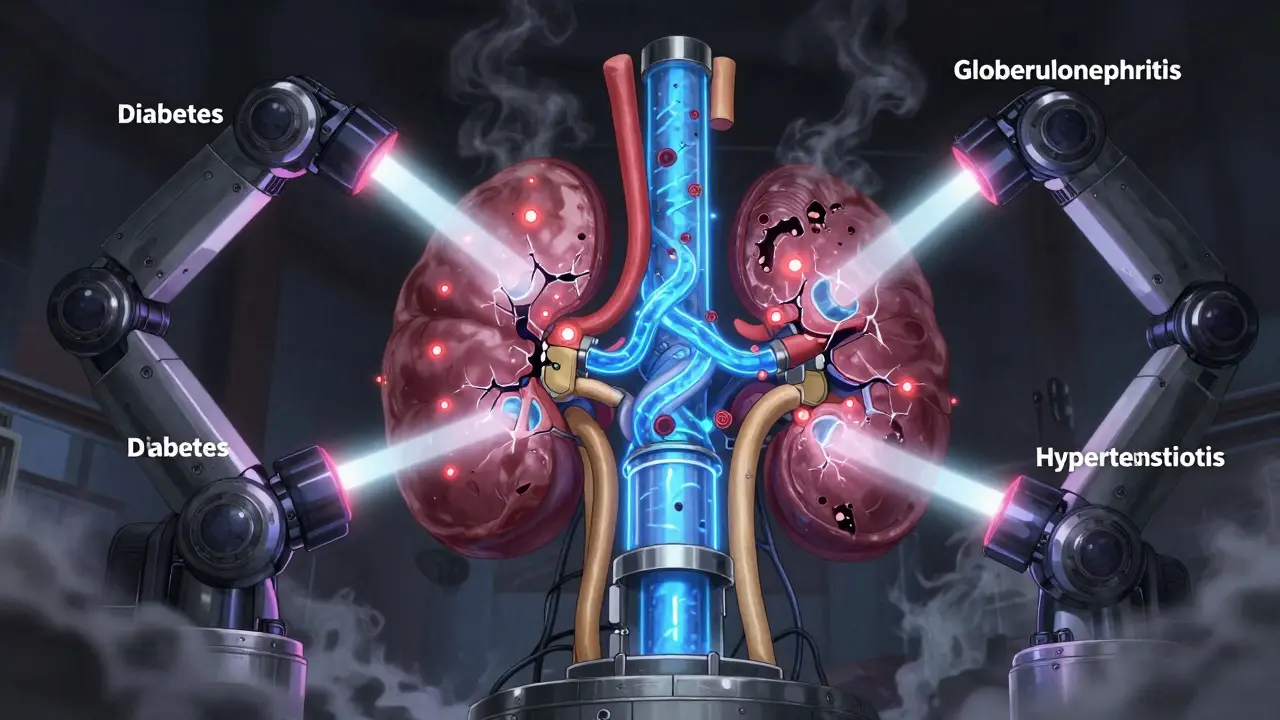
When your kidneys stop working, your body can’t filter waste or balance fluids anymore. That’s kidney failure-also called end-stage renal disease (ESRD). It doesn’t happen overnight. It’s a slow breakdown, often unnoticed until it’s too late. And the three biggest reasons this happens? Diabetes, hypertension, and glomerulonephritis. Together, they cause over 80% of all cases in the U.S. and most of the world. If you or someone you care about has one of these conditions, understanding how they wreck your kidneys isn’t just helpful-it could save your life.
Diabetes: The Silent Kidney Killer
Diabetes is the number one cause of kidney failure. In fact, nearly half of all new ESRD cases in the U.S. come from it. It’s not just about high blood sugar. It’s about what that sugar does to your kidneys over time. When blood glucose stays too high, the tiny filters in your kidneys-called glomeruli-start to swell. They get too much pressure. The walls of these filters thicken, and proteins that should stay in your blood begin leaking into your urine. This is called albuminuria. It’s the first warning sign.
Early on, you might not feel anything. That’s why so many people don’t know they’re in trouble until their kidney function has dropped by 70% or more. Studies show that 30% of people with type 1 diabetes and 40% of those with type 2 diabetes will eventually develop kidney damage. The damage starts within the first year of diagnosis, even before symptoms show. The kidneys enlarge, blood flow increases unnaturally, and the filters get overworked. This is called hyperfiltration.
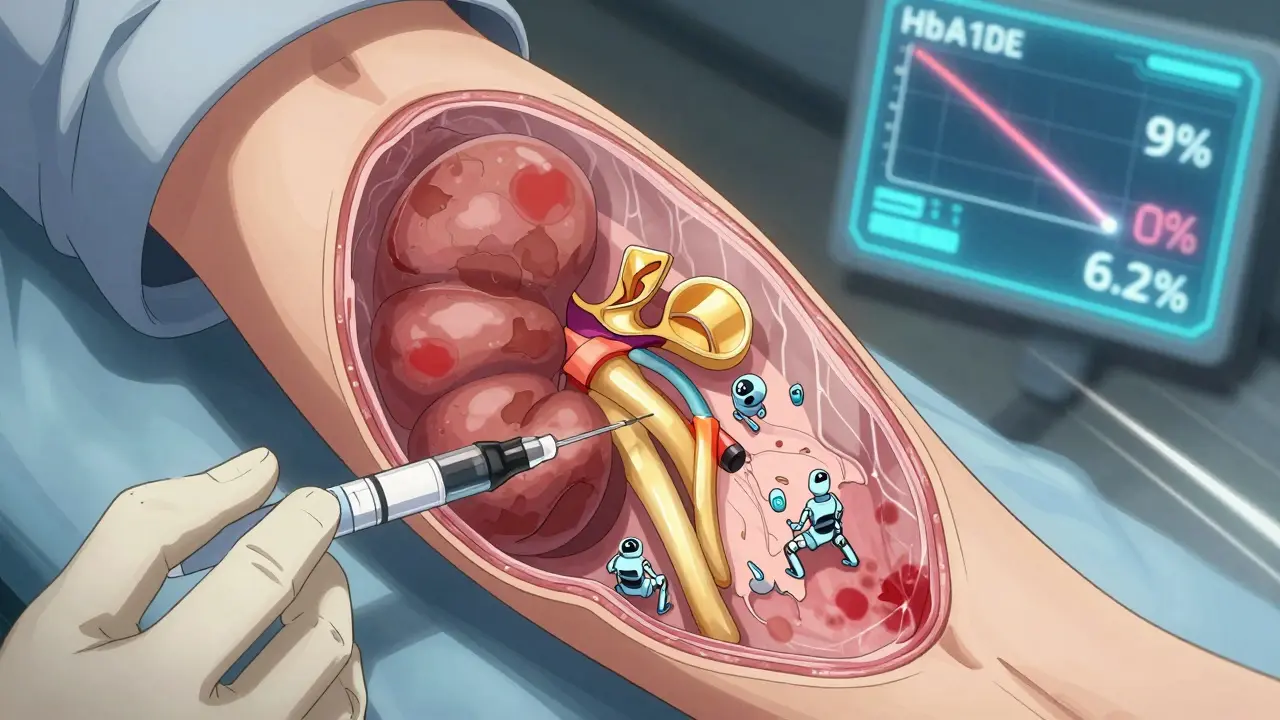
But here’s the good news: you can stop or slow this. Keeping your HbA1c below 7% in the first five years of diagnosis cuts your risk of kidney disease by over half. Medications like SGLT2 inhibitors (such as empagliflozin and dapagliflozin) don’t just lower blood sugar-they protect your kidneys directly. The EMPA-KIDNEY trial showed these drugs reduce the risk of kidney failure by 32%. They work by reducing pressure inside the glomeruli and helping the kidneys clear excess sugar without overworking. If you have diabetes and even a small amount of protein in your urine, your doctor should be talking to you about these drugs.
Hypertension: The Hidden Pressure
High blood pressure is the second leading cause of kidney failure. It’s responsible for nearly 3 out of every 10 cases. And here’s the scary part: many people with high blood pressure don’t even know it. There are no symptoms until damage is done. That’s why it’s called the silent killer.
When your blood pressure stays above 140/90 mmHg for years, it damages the small arteries leading to your kidneys. These vessels thicken, harden, and narrow. This cuts off blood flow. Without enough blood, the glomeruli start to die. This is called nephrosclerosis. By the time you feel tired, swollen, or notice changes in urination, up to 40% of your kidney filters may already be scarred.
What makes it worse? Diabetes and high blood pressure often go hand in hand. In fact, 75% of people with diabetes develop high blood pressure. When both are present, kidney damage speeds up. Instead of losing 1.8 mL/min of kidney function per year from diabetes alone, you lose 3.2 mL/min. That’s almost double. The damage adds up.
The fix? Lowering your blood pressure. But not just any target. For people with kidney disease, especially if protein is leaking into the urine, the goal is <120/80 mmHg. ACE inhibitors and ARBs are the go-to medications-not just because they lower blood pressure, but because they directly protect the kidney filters. They reduce protein leakage and slow scarring. Studies show they cut progression to kidney failure by 20-30%. The key is starting early, before symptoms show. If you’re over 40, have diabetes, or are overweight, get your blood pressure checked at least once a year. Don’t wait until you feel bad.
Glomerulonephritis: When Your Immune System Attacks
Unlike diabetes and hypertension, glomerulonephritis isn’t about wear and tear. It’s an attack. Your immune system, which is supposed to protect you, turns on your kidneys. It causes inflammation in the glomeruli. This is a group of over 20 different diseases, but the most common ones are IgA nephropathy and lupus nephritis.
IgA nephropathy is the most frequent cause of glomerulonephritis worldwide. It’s especially common in Asia. In this condition, a type of antibody called IgA builds up in the kidney filters. This triggers inflammation, scarring, and eventually, loss of function. About 20-40% of people with IgA nephropathy will end up needing dialysis within 20 years. The risk depends on how much protein is in the urine and how much scarring shows up on a biopsy.
Lupus nephritis happens in about half of people with systemic lupus erythematosus. It’s more aggressive. Class IV lupus nephritis-the worst type-leads to kidney failure in nearly 30% of cases within 10 years. The problem? Symptoms are vague. Swelling, foamy urine, dark urine, fatigue. Many people see seven different doctors before getting diagnosed. One patient on Reddit said it took 18 months and seven visits before someone finally did a kidney biopsy and found IgA nephropathy.
Treatment here is different. You can’t just control sugar or blood pressure. You need to calm down the immune system. Medications like corticosteroids, rituximab, and now new drugs like sparsentan (expected approval in 2024) are changing the game. The VALIGA study found rituximab reduced kidney failure risk by 48% in high-risk IgA patients. But it’s not for everyone. Some older patients face higher infection risks from strong immune drugs. That’s why treatment is personalized. A biopsy is often needed to know exactly what you’re dealing with.
How Fast Does Each Cause Progress?
Not all kidney failure happens at the same speed. Knowing how quickly each cause moves helps you act before it’s too late.
- Diabetic kidney disease: Progresses fastest on average. From first signs of protein in urine to kidney failure can take 8-10 years. If you have macroalbuminuria (over 300 mg/g), your 5-year risk of kidney failure is 44%.
- Hypertensive kidney disease: Slower. It takes about 12 years on average to reach kidney failure. But if you have both diabetes and high blood pressure, it speeds up dramatically.
- Glomerulonephritis: The most unpredictable. Some people stay stable for decades. Others lose kidney function in just a few years. The Oxford MEST-C score (based on biopsy findings) can predict this. A score of 0-1 means 50% kidney survival at 20 years. A score of 4-5? Only 20%.
That’s why testing matters. For diabetes, test your urine for albumin every year. For hypertension, check your blood pressure regularly and get kidney function tests if it’s been high for years. If you have unexplained swelling or blood in your urine, don’t ignore it. A simple urine test can catch glomerulonephritis early.
What You Can Do Right Now
You don’t have to wait for dialysis. The best time to protect your kidneys is before you feel sick.
- If you have diabetes: Get your HbA1c checked every 3 months. Ask your doctor about SGLT2 inhibitors if you have any protein in your urine-even a little. Aim for blood pressure below 130/80.
- If you have high blood pressure: Take your meds daily. Don’t skip them because you feel fine. Monitor your blood pressure at home. If you’re over 50, get a urine test for protein every year.
- If you have symptoms like foamy urine, swelling in legs, or unexplained fatigue: Get a kidney panel done. A urine albumin-to-creatinine ratio (UACR) test costs less than $20 and can catch problems years before they’re serious.
- Watch your salt and protein intake. Too much salt raises blood pressure. Too much protein can strain damaged kidneys. Aim for 0.8 grams of protein per kilogram of body weight.
And don’t forget: lifestyle isn’t optional. Losing 5-10% of your body weight if you’re overweight can cut kidney damage risk by 40%. Walking 30 minutes a day lowers blood pressure. Quitting smoking improves blood flow to your kidneys. These aren’t just "good ideas." They’re medical necessities.
Why This Matters Now
More than 850 million people worldwide have kidney disease. By 2030, that number could jump 52%, mostly because of rising diabetes rates. In the U.S., treating one person with kidney failure costs Medicare nearly $100,000 a year. That’s money-and lives-that could be saved if we act early.
The tools we have now are better than ever. SGLT2 inhibitors, finerenone, new immunosuppressants-they’re not just drugs. They’re shields. But they only work if you start using them before your kidneys are half-dead. The window for saving your kidneys is wide open. But it’s closing.
If you have diabetes, high blood pressure, or symptoms that might point to kidney inflammation-don’t wait. Talk to your doctor. Get tested. Start protecting your kidneys today. Your future self will thank you.
Can kidney failure from diabetes be reversed?
Early kidney damage from diabetes can be slowed or even partially reversed if caught in the first stage-when only small amounts of protein leak into the urine. Tight blood sugar control, SGLT2 inhibitors, and blood pressure management can stabilize or improve kidney function. But once scarring sets in and kidney function drops below 30%, reversal is unlikely. The goal shifts to preventing total failure.
Does high blood pressure always damage the kidneys?
Not always, but it’s very likely if it’s uncontrolled for more than 5-10 years. The risk depends on how high the pressure is, how long it’s been high, and whether you have other conditions like diabetes or obesity. People who keep their blood pressure below 120/80 and take protective medications like ACE inhibitors rarely develop kidney failure from hypertension alone.
Can glomerulonephritis be cured?
Some forms of glomerulonephritis can go into long-term remission, especially if caught early and treated aggressively. IgA nephropathy, for example, may stabilize with medication and lifestyle changes. Lupus nephritis can be controlled with immunosuppressants. But complete "cure" is rare. Most patients need lifelong monitoring and treatment to prevent progression to kidney failure.
What tests detect kidney damage early?
Two simple tests: urine albumin-to-creatinine ratio (UACR) and estimated glomerular filtration rate (eGFR). UACR finds protein leakage-often the first sign of damage. eGFR measures how well your kidneys filter blood. Both are done with a urine sample and a blood test. If you have diabetes or high blood pressure, these should be checked at least once a year.
Are there new treatments for kidney failure on the horizon?
Yes. Finerenone, approved in 2023, reduces kidney failure risk by 18% in diabetics. Sparsentan, expected in 2024, cuts proteinuria by nearly 50% in glomerulonephritis patients. New biomarkers like urinary TNF receptor-1 can predict kidney failure with 89% accuracy years before symptoms appear. These aren’t just improvements-they’re turning kidney disease from a slow death sentence into a manageable condition.