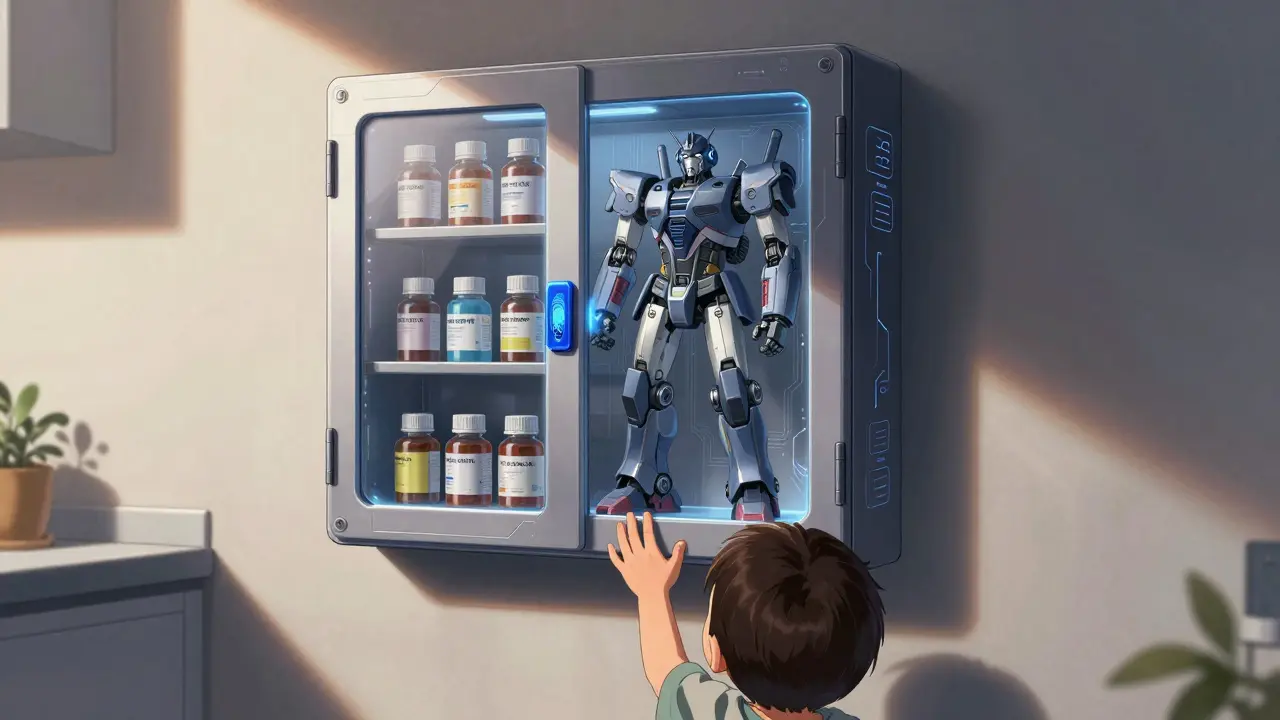
Every year, medication safety becomes a critical concern for parents and caregivers. In the UK and across the US, medicines are the top cause of accidental poisoning in young children. It’s not just about keeping pills out of reach-it’s about changing habits, redesigning spaces, and teaching kids early what medicine really is. If you’ve ever left a pill bottle on the nightstand while giving your toddler medicine, or let your child rummage through a diaper bag while you were distracted, you’re not alone. But those small moments can have serious consequences.
Where Most Accidents Happen (And How to Stop Them)
Most medication poisonings don’t happen because a child broke into a locked cabinet. They happen because the medicine was left out-on a nightstand, in a purse, on the kitchen counter. According to safety data, 78% of incidents occur from surfaces like dressers and bedside tables. That’s right: the very place you keep your nighttime pills is one of the most dangerous spots in your home.
Here’s where else kids find medicine:
- Diaper bags and purses left on the floor or hook
- Kitchen counters (12% of incidents)
- Under the bed (5%)
- Floors (7%, often from pills dropped during dosing)
The fix? Move everything up. Store all medications-prescription, over-the-counter, vitamins, even CBD gummies-at least 48 inches off the ground. That’s above the tallest toddler’s reach. High kitchen cabinets with child locks work well. So do linen closet shelves. The goal isn’t just to hide it-it’s to make it impossible to find without a key or code.
Child-Resistant Caps Aren’t Enough
You’ve probably heard that medicine bottles have “child-resistant” caps. That doesn’t mean they’re childproof. In fact, a JAMA study found that while these caps reduce access by about half, many kids under 5 can still open them in under five minutes-especially if they’ve watched an adult do it.
Here’s what works better:
- Locking medication safes (sales up 32% year-over-year)
- Locking cabinets with safety latches (89% effective when used, vs. 35% for latches alone)
- Using a dedicated medicine box with a combination lock
Don’t rely on the cap. Treat every bottle like it’s a toy your child will try to open. If you’re not using it right now, lock it away.
What You Do After Giving Medicine Matters More Than You Think
Here’s a scary stat: 68% of poisoning incidents happen because the medicine was left out after being used-even if it was just for a minute. You give your child acetaminophen. You put the bottle down to grab a tissue. You turn around to check on the dog. And in that second, your toddler grabs it.
The rule? Put it away after every single use. Even if you’re going to need it again in two hours. Even if you’re still up at 3 a.m. and you’re tired. Even if you think, “It’s just one pill.” That’s the moment accidents happen.
Make it a habit. After you give the dose, immediately close the bottle, snap the cap, and walk it to the locked cabinet. Do it the same way every time. Your brain will start to auto-pilot the action-and your child won’t get the chance.

Visitors Are a Hidden Risk
Most parents focus on their own meds. But 28% of poisoning cases involve medicine brought into the home by guests. A grandparent brings their heart pills in their purse. A friend leaves their allergy meds on the coffee table. A relative forgets their child’s liquid cough syrup in the stroller.
Here’s how to handle it:
- When guests arrive, say: “Can I hang up your coat and bag? We’ve got a little one who gets into everything.”
- Keep a small basket near the front door for coats, bags, and purses.
- If someone brings medicine, ask: “Would you like me to put this in a safe spot?”
Don’t assume people know. Most don’t. And you’re not being rude-you’re being responsible.
Never Call Medicine “Candy”
It’s tempting. You want to make it easier for your child to take medicine. So you say, “This is like candy, sweetie.” But research shows that this increases accidental ingestion by 40%.
Children don’t understand the difference between “medicine that tastes bad” and “candy that tastes good.” They learn from what you say. If you call it candy, they’ll treat it like candy.
Use clear, simple language instead:
- “This is medicine. It helps you feel better when you’re sick.”
- “Only grown-ups give medicine. It’s not for playing with.”
- “Medicine is not candy. Candy is in the cupboard. Medicine is locked up.”
Start these conversations at age 2. Kids begin understanding rules around that age. And by age 5, children who’ve heard this message consistently are 65% better at recognizing medicine as dangerous than those who haven’t.
Dosing Errors Are Just as Dangerous as Access
Even if your child never opens a bottle, they can still be harmed by wrong doses. Kitchen spoons are the biggest culprit. A teaspoon can hold anywhere from 2.5mL to 7.3mL-250% difference. That’s not just inaccurate. It’s dangerous.
Here’s what to do instead:
- Always use the dosing syringe or cup that came with the medicine.
- Measure in milliliters (mL) only. No teaspoons, tablespoons, or “a capful.”
- Double-check the label. Infant and adult versions of acetaminophen or ibuprofen can differ by 300-400% in strength.
- If someone else is giving medicine, write down: what, how much, when, and why.
One mom in Manchester told me her 18-month-old got too much ibuprofen because she used a regular spoon. Her son ended up in the hospital. “I thought I was being careful,” she said. “I didn’t realize how much a spoon could vary.”

Dispose of Unused Medicine Properly
Don’t keep old pills “just in case.” The CDC says 22% of households keep unused opioids longer than needed. And 74% fewer accidental access incidents happen when those are properly disposed of.
Here’s how to get rid of medicine safely:
- Take it to a pharmacy drop-off if you can.
- If not, mix pills with coffee grounds or kitty litter.
- Put them in a sealed plastic bag.
- Remove or black out your name and prescription info from the bottle.
- Toss it in the trash.
Never flush medicine unless the label says to. And never pour liquid meds down the sink. That’s bad for the environment-and still dangerous if a child finds the bottle later.
Weekly Safety Sweeps Save Lives
Set a reminder: every Sunday, do a 5-minute “safety sweep.” Walk through every room. Check:
- Under beds and sofas
- Inside drawers, purses, diaper bags
- On counters, nightstands, shelves
- Inside the car (kids’ car seats often have forgotten medicine)
Find a dropped pill? That’s a warning sign. Something’s not secure. Adjust your storage. Maybe the cabinet door isn’t latched. Maybe you’re still leaving the bottle on the bathroom counter.
These sweeps take five minutes. But they’ve stopped dozens of potential accidents in homes that use them.
What to Keep in Mind
Childproofing for medication isn’t a one-time task. It’s a routine. It’s habits. It’s communication. It’s remembering that even the safest home can become dangerous in a split second.
Remember:
- Lock it. Don’t just hide it.
- Put it away after every use.
- Never call medicine candy.
- Use only the dosing tool that came with the bottle.
- Check guest belongings.
- Dispose of old meds properly.
- Sweep weekly.
There’s no perfect system. But the ones that work are simple, consistent, and repeatable. And they’re backed by data-not guesswork.
If you do these things, you’re not just protecting your child. You’re protecting every child who visits your home. And that’s worth the extra step.
Can child-resistant caps really keep kids out of medicine?
No. Child-resistant caps are designed to slow down children, not stop them. Studies show that many kids under 5 can open them in under five minutes, especially after watching an adult do it. Always store medicine in a locked cabinet or safe-even if the cap is child-resistant.
Where’s the safest place to store medicine in my home?
The safest place is a locked cabinet or safe, at least 48 inches off the ground. High kitchen cabinets, top shelves of linen closets, or dedicated medicine safes are the most effective. Avoid nightstands, dressers, and kitchen counters-even if they’re out of reach, they’re still visible and tempting.
Is it safe to keep medicine in the bathroom?
Not recommended. Bathrooms are humid, which can weaken some medications. More importantly, they’re easy for kids to access-especially if you leave bottles on the sink or counter. Store medicine in a cool, dry place like a high cabinet in the kitchen or bedroom instead.
Can I use a pill organizer for storage?
Only if you’re actively using it for daily doses. Pill organizers are meant for convenience during a treatment period, not long-term storage. Once the week is done, put the remaining pills back in their original, locked containers. Organizers are easy for kids to open and often lack child-resistant features.
What should I do if my child swallows medicine by accident?
Call 999 immediately. Do not wait for symptoms. Do not try to make them vomit. Keep the medicine bottle handy so you can tell emergency responders what was taken, how much, and when. Keep the Poison Control number (111 in the UK) saved in your phone. Quick action saves lives.
Is it okay to give my child medicine from an adult bottle if I’m out of child-sized doses?
Never. Adult and children’s formulations can differ by 300-400% in strength. Giving even a small amount of adult acetaminophen or ibuprofen to a child can cause liver or kidney damage. Always use the correct strength for your child’s age and weight. If you’re out of the right kind, call your pharmacist or doctor.
At what age should I start teaching my child about medicine safety?
Start at age 2. That’s when kids begin to understand simple rules like “don’t touch.” Use clear phrases: “Medicine is not candy. Only grown-ups give medicine.” Consistent messaging helps kids recognize medicine as something dangerous, not something to play with.
Are cough and cold medicines safe for toddlers?
No. The American Academy of Pediatrics says these medicines should never be used in children under 2, and aren’t recommended under 6. They don’t work well for young kids and carry serious risks like seizures and rapid heart rate. Use saline drops, humidifiers, and fluids instead.