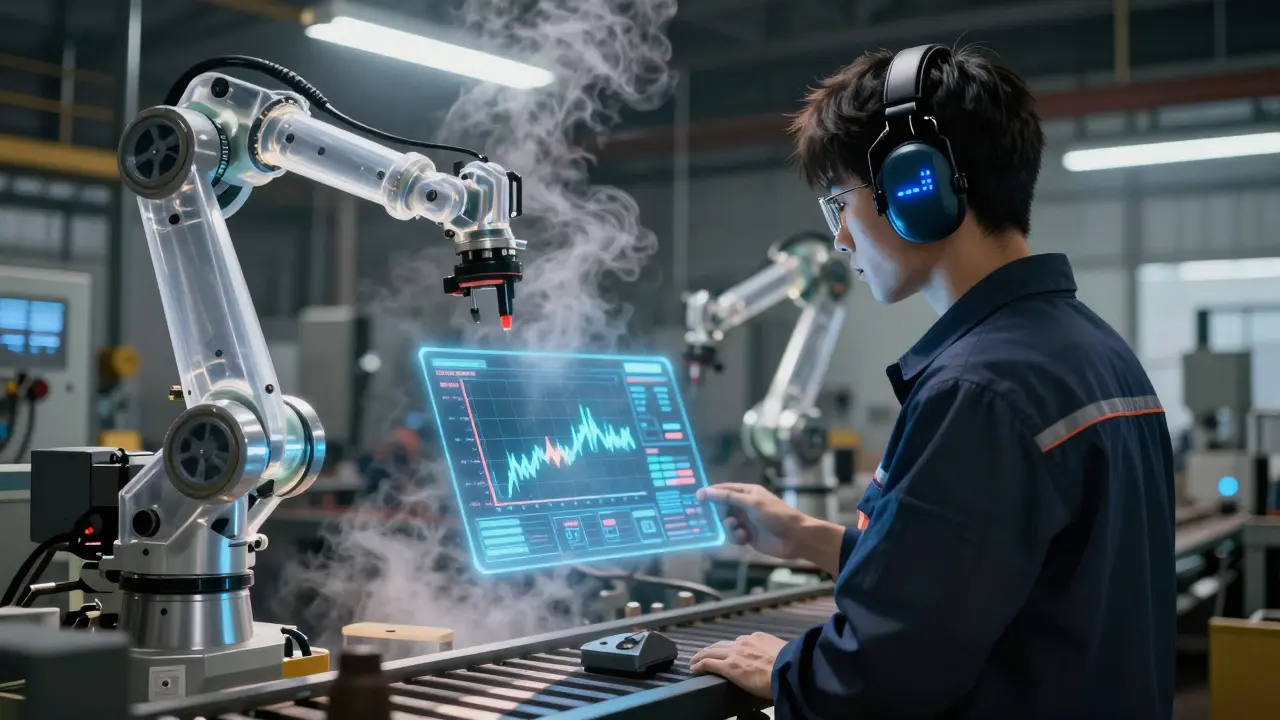
Every year, hearing conservation programs save thousands of workers from permanent hearing damage - but only if they’re done right. In the U.S., about 22 million employees are exposed to dangerous noise levels on the job. That’s not just a statistic. It’s your coworker, your neighbor, the person operating the drill press next to you. And for many, the damage is already happening - quietly, slowly, and without pain.
OSHA’s Hearing Conservation Amendment, under 29 CFR 1910.95, isn’t optional. If your workplace has noise levels at or above 85 decibels averaged over eight hours, you’re legally required to have a full hearing conservation program in place. This isn’t about compliance paperwork. It’s about keeping people able to hear their kids laugh, their partner call their name, or the alarm that warns them of danger.
What Exactly Is a Hearing Conservation Program?
A hearing conservation program (HCP) is a structured set of actions employers must take to prevent noise-induced hearing loss. It’s not just handing out earplugs and calling it a day. It’s a full cycle: measuring noise, testing hearing, fitting protection, training workers, and keeping records. The goal? Stop hearing loss before it happens.
OSHA requires five core components:
- Noise monitoring to find where exposure hits 85 dBA or higher
- Audiometric testing to track hearing changes over time
- Hearing protection devices that actually work
- Annual training so workers understand the risk
- Recordkeeping to prove you’re doing it right
Fail any one of these, and you’re not just at risk of an OSHA fine - you’re putting real people in danger.
Noise Monitoring: Finding the Problem Before It’s Too Late
You can’t protect what you don’t measure. Noise monitoring is the first step - and the most often skipped.
Employers must use calibrated sound level meters or noise dosimeters to measure exposure over an 8-hour workday. The trigger is 85 dBA (A-weighted, slow response). That’s the level of a busy city street, a lawnmower, or a factory floor with multiple machines running. It’s not deafening - but it’s enough to damage hearing over years.
Monitoring isn’t a one-time thing. If you add a new machine, change a layout, or upgrade equipment, you have to retest. Many companies skip this, assuming noise levels stay the same. They don’t. A new compressor, a louder conveyor belt, or even a change in shift timing can push exposure over the limit.
According to OSHA’s 2022 enforcement data, 47% of violations came from poor or outdated noise exposure records. That’s not a paperwork error - it’s a safety blind spot.
Audiometric Testing: The Early Warning System
Once noise exposure is confirmed, audiometric testing becomes your most powerful tool.
Every employee exposed at or above 85 dBA must get a baseline audiogram within six months of starting work in a noisy area. This baseline is your reference point - the hearing level you’ll compare against every year after.
Here’s what most employers get wrong: the test must be done after the employee has been free from workplace noise for at least 14 hours. That means no factory floor, no power tools, no concerts the night before. If the test is done too soon, the results are useless.
Annual tests must include frequencies at 500, 1000, 2000, and 3000 Hz - the critical range for detecting early hearing loss. The room must meet OSHA’s background noise standards (Appendix C), and the audiometer must meet ANSI SC-1969 specs. Many small businesses use cheap, uncalibrated devices. That’s not just bad practice - it’s illegal.
When a standard threshold shift (STS) is detected - a 10 dB average drop at 2000, 3000, and 4000 Hz compared to baseline - you have 30 days to act. You must:
- Notify the employee in writing within 21 days
- Refit and retrain them on hearing protection
- Provide higher-attenuation protectors if needed
- Refer them for a clinical evaluation if there’s suspicion of medical issues
And here’s the key: you can revise the baseline if the STS is confirmed as permanent. That way, you’re not chasing the same shift year after year. But you can’t ignore it.
Hearing Protection: More Than Just Earplugs
Earplugs and earmuffs aren’t just ‘safety gear.’ They’re medical devices - and they need to be chosen, fitted, and used correctly.
OSHA requires that hearing protectors reduce exposure to at least 90 dBA over eight hours. That’s the permissible exposure limit (PEL). But here’s the catch: the 90 dBA limit hasn’t changed since 1983. NIOSH and the American Academy of Audiology both argue that even 85 dBA over a lifetime causes hearing loss in 8-12% of workers.
Employers must offer a variety of options - foam plugs, silicone plugs, reusable plugs, earmuffs, and even custom-molded options. One size doesn’t fit all. A welder with a helmet can’t wear standard earmuffs. A worker in a dusty environment needs plugs that stay clean. A call center employee needs communication-capable protectors.
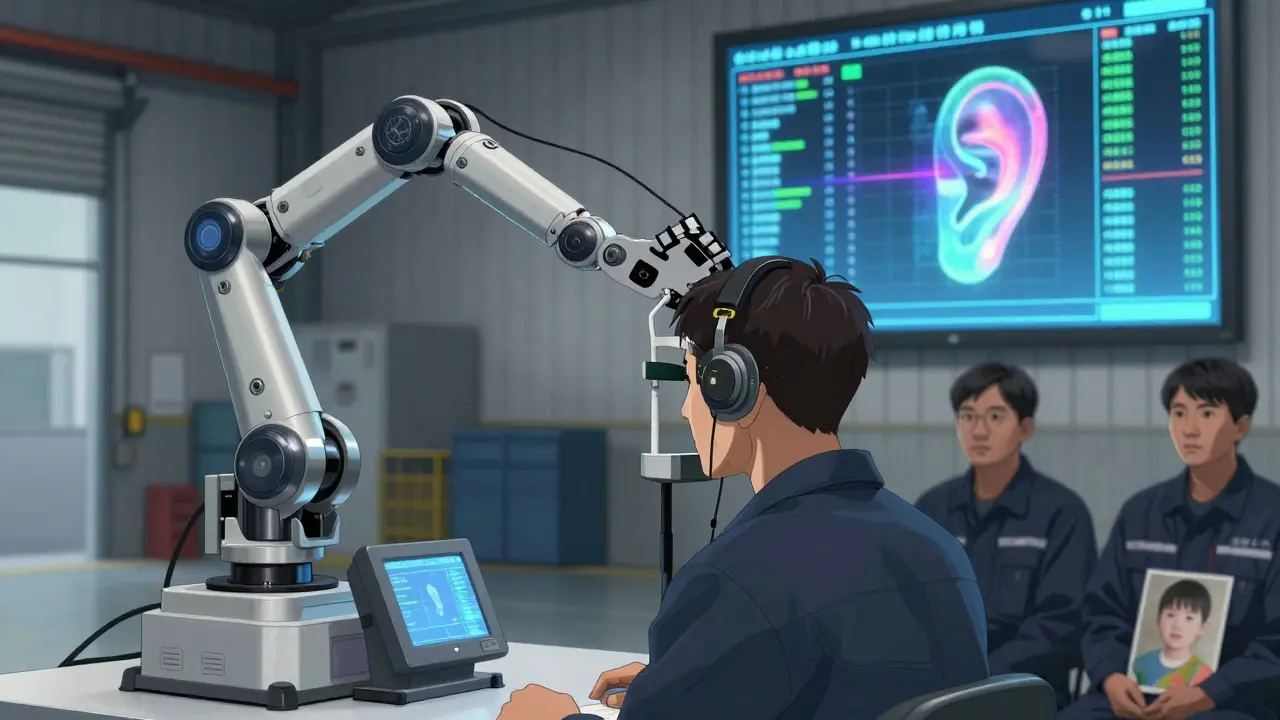
Fit testing is critical. A 2023 SHRM survey found that 52% of safety managers struggle with proper fit. A poorly fitted earplug can reduce protection by 50% or more. That’s why mobile audiometric units with real-time fit testing are becoming standard in compliant workplaces. They measure actual noise reduction on the person - not just the NRR on the box.
Training: Why People Don’t Use Protection
Training isn’t a 10-minute video you show once a year. It’s a conversation.
OSHA requires annual training covering:
- How noise damages hearing
- How hearing protectors work and how to use them
- Why audiometric testing matters
- What to do if they notice hearing changes
But here’s what most training misses: the emotional impact. Workers need to understand that hearing loss isn’t reversible. It doesn’t heal. It doesn’t get better with rest. Once the hair cells in your inner ear are damaged, they’re gone for good.
And yet, OSHA’s 2021 data showed that 28% of violations were due to inadequate training. Why? Because companies treat it like a checkbox. The best programs use real stories - a machinist who can’t hear his granddaughter, a firefighter who missed a radio call, a warehouse worker who can’t enjoy music anymore.
Recordkeeping: Proof You’re Doing the Right Thing
OSHA doesn’t just want you to do it - they want proof.
Noise exposure records must be kept for at least two years. Audiometric test results must be kept for the entire duration of the employee’s employment. That means if someone works for you for 20 years, you keep their hearing records for 20 years.
These records aren’t just for inspectors. They’re your defense. If an employee files a workers’ comp claim for hearing loss, your records prove you took steps to prevent it. Without them, you’re liable.
Many small businesses use spreadsheets. That’s fine - as long as they’re accurate, dated, and signed by the person administering the test. Digital systems with automated alerts for annual tests and STS triggers are becoming more common - and worth the investment.
The Real Cost of Ignoring Hearing Conservation
Some employers think HCPs are expensive. They’re not - compared to what happens when you skip them.
The average cost of a full program is $250-$400 per employee per year. Audiometric testing makes up nearly half of that. But here’s what you save:
- 5-10% higher productivity (OSHA, 2002)
- 15-20% lower absenteeism
- Reduced workers’ comp claims
- Avoided OSHA fines - which average $15,625 to $156,259 per violation
And then there’s the human cost. One worker with hearing loss can’t hear alarms. They miss instructions. They feel isolated. They lose confidence. That’s not just a health issue - it’s a safety and culture issue.
What’s Changing in 2025?
OSHA is moving to update its standards. The proposed changes - expected to be finalized in late 2024 - include:
- Switching from ANSI SC-1969 to ANSI S3.6-2018 for audiometer calibration
- Adding 4000 Hz and 6000 Hz to required test frequencies
- Requiring protectors with higher NRR for exposures above 100 dBA
These changes will raise costs by 8-12%, but they could prevent 150,000 new cases of hearing loss each year. If you’re not planning for these updates, you’re already falling behind.
Why So Many Programs Fail
OSHA found that only 58% of manufacturing plants and 42% of construction sites fully comply with all HCP requirements. Why?
Three reasons keep coming up:
- Employee participation - 68% of safety managers say workers skip audiometric tests. They’re busy. They think they’re fine. They don’t understand the risk.
- Fit testing - 52% struggle to ensure protectors are worn correctly. A plug that doesn’t seal is useless.
- Recordkeeping - 47% can’t keep accurate, up-to-date logs.
The fix? Make it easy. Bring testing to the site with mobile units. Use digital tools that auto-remind employees. Train supervisors to lead by example. If the foreman wears his protectors, the crew will too.
Companies that do it right see a 30-50% drop in hearing loss cases. That’s not theory. That’s data from OSHA’s Directorate of Science, Technology and Medicine.
Dr. Thais C. Morata from NIOSH put it simply: ‘Early detection through annual audiometric testing combined with proper hearing protection can prevent permanent hearing damage in 75% of at-risk workers.’
That’s not a guarantee. But it’s a chance. And in workplaces where hearing matters - where alarms, radios, and communication save lives - that chance is worth everything.
Is a hearing conservation program required by law?
Yes, under OSHA’s 29 CFR 1910.95 regulation, employers must implement a hearing conservation program whenever employees are exposed to noise at or above an 8-hour time-weighted average of 85 decibels. This is not optional - it’s a legal requirement for workplaces with hazardous noise levels.
What happens if an employee has a standard threshold shift (STS)?
If an STS - a 10 dB or greater average hearing loss at 2000, 3000, and 4000 Hz - is detected, the employer must notify the employee in writing within 21 days. Within 30 days, they must retrain the employee on proper hearing protector use, refit them with better protection if needed, and refer them for a clinical audiological evaluation if there’s suspicion of an underlying medical condition. The baseline audiogram may be revised if the shift is confirmed as permanent.
How often should audiometric testing be done?
Employees exposed to noise at or above 85 dBA must receive a baseline audiogram within six months of initial exposure. After that, annual audiograms are required. Tests must be conducted in a quiet, calibrated environment, and the employee must be free from workplace noise for at least 14 hours before the test.
What types of hearing protection must employers provide?
Employers must provide a variety of hearing protection devices, including earplugs (foam, silicone, reusable) and earmuffs. The goal is to reduce noise exposure to at least 90 dBA over eight hours. Employers must also ensure workers know how to fit and use them properly, and fit testing is strongly recommended to confirm effectiveness.
Are there new updates to OSHA hearing conservation rules in 2025?
Yes, OSHA is finalizing updates expected to take effect in 2025. These include requiring audiometers to meet the newer ANSI S3.6-2018 standard instead of SC-1969, expanding required test frequencies to include 4000 Hz and 6000 Hz, and mandating higher-attenuation protectors for noise exposures above 100 dBA. These changes aim to better detect early hearing loss and improve protection.
What Comes Next?
If your workplace has noise levels near 85 dBA, don’t wait for an OSHA inspection. Start now. Measure your noise. Test your people. Train them like their hearing depends on it - because it does.
There’s no magic tool. No single product. Just consistent action: monitor, test, protect, train, record. Do it right, and you’re not just avoiding fines. You’re keeping people connected - to their families, their jobs, their lives.