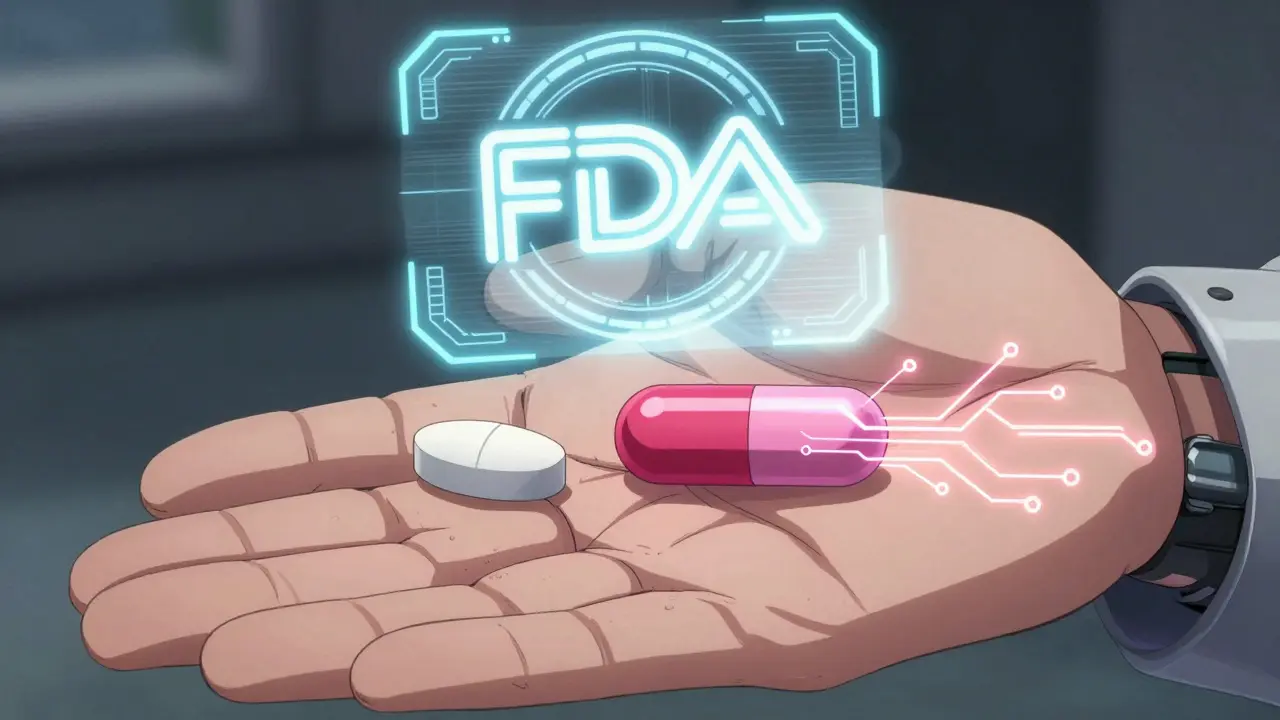
Have you ever opened your pill bottle and thought, "This doesn’t look right"? You’re not alone. Every year, millions of people in the U.S. get a different-looking pill for the same medication they’ve been taking for years. One month it’s a small white oval; the next, it’s a large pink capsule. The active ingredient? Exactly the same. But the change in color, shape, or size can trigger confusion, fear, and even medication non-adherence.
Why Do Generic Pills Look Different?
Generic drugs are not knockoffs. They’re legally approved copies of brand-name medications, required by the FDA to have the same active ingredient, strength, dosage form, and bioequivalence. That means they work the same way in your body. So why do they look different? The answer lies in trademark law. In the U.S., brand-name drug companies hold trademarks on the appearance of their pills - the color, shape, and markings. To avoid infringing on those trademarks, generic manufacturers are legally barred from copying the exact look. So each company that makes a generic version picks its own design. One might make metformin as a white round tablet; another makes it pink and oblong. Both are equally effective. But they look nothing alike. This isn’t a flaw - it’s a rule. The FDA allows this variation because it helps distinguish between manufacturers. But it creates a real problem for patients.How Common Are These Changes?
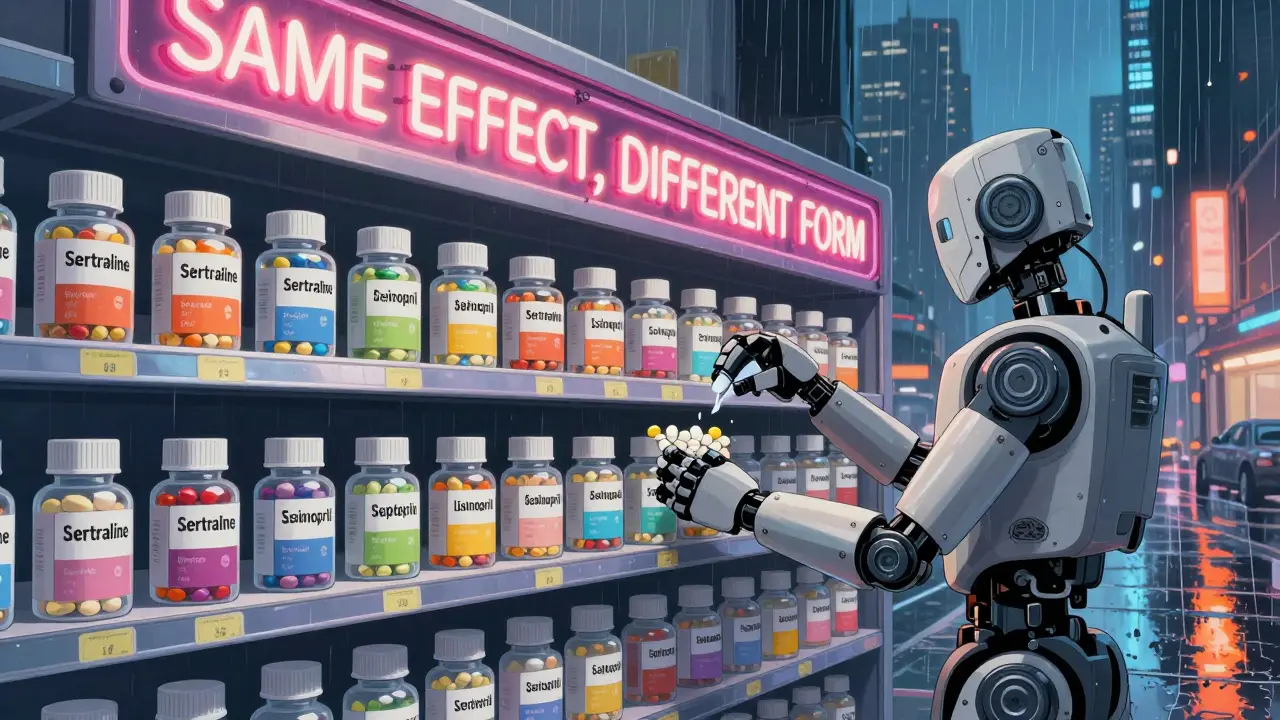
More common than you think. A 2023 UCLA Health study found that one patient experienced nine different pill appearances over just 15 years for the same medication. The American Pharmacists Association reported that 42% of patients saw at least one appearance change in their regular meds within a 12-month period. Some drugs are notorious for this. Sertraline (Zoloft) can be blue, green, or white. Lisinopril comes in white, pink, or peach. Gabapentin? It’s been made in over a dozen different shapes and colors by different makers. Even something as simple as potassium chloride - often a bright orange tablet - has been switched to white capsules, leaving patients wondering if they got the wrong drug. Pharmacies don’t choose the pill design. They pick the cheapest option from their supplier. If your pharmacy switches vendors because one offers a better price, your pill changes - even if you didn’t ask for it.What’s the Real Risk? Adherence and Safety
The biggest danger isn’t that the pill is ineffective. It’s that you might stop taking it. A landmark study in the Annals of Internal Medicine found:- 34% of patients stopped taking their medication after a color change
- 66% stopped after a shape change
Is It Legal? Yes - But Should It Be?
Yes, it’s completely legal. The FDA requires generics to prove bioequivalence - meaning they deliver the same amount of active ingredient at the same rate as the brand-name drug. Appearance? Not part of the equation. The FDA explicitly states that color, size, and shape are not required to match. But experts are pushing back. In a 2014 letter in ACP Journals, Drs. Uhl and Peters wrote that "bioequivalent generic drugs that look like their brand-name counterparts enhance patient acceptance." The message was clear: appearance matters. The 2020 MODERN Labeling Act gave the FDA more power to update generic drug labels when new safety data emerges. And in September 2025, the FDA announced new rules requiring manufacturers to update labeling based on emerging safety concerns - a step toward more responsive communication. But changing pill appearance? That still requires changing trademark law.What Should You Do?
You don’t have to guess whether your pill is safe. Here’s what to do:- Keep a written list of every medication you take - including name, dose, and what it looks like. Update it every time your pill changes.
- Check the bottle label. It should list the manufacturer and the active ingredient. If it says "sertraline 50 mg," you’re fine - even if the color changed.
- Ask your pharmacist. They’re trained to explain these changes. Don’t be shy. Say: "I noticed my pill looks different. Is this still the same medicine?"
- Use online tools. Websites like Medscape’s Pill Identifier or the NIH’s Tracking Your Medications let you search by color, shape, and imprint to verify your pill.
- Flag changes immediately. If you’re unsure, don’t take it until you confirm. Call your doctor or pharmacist. Better safe than sorry.