
Most people think their doctor gives them all the information they need about their meds. But here’s the truth: pharmacists are the real experts on how your pills actually work in your body. They know the exact timing, the side effects, how to take them with food, what to avoid, and how to spot trouble before it happens. Yet too many patients leave the pharmacy with nothing but a bottle and a vague sense of "take as directed." If you’re on any chronic medication-diabetes, blood pressure, cholesterol, asthma-you’re not getting the full picture unless you ask for the right materials.
What You Should Always Request
Don’t wait for your pharmacist to hand you something. Ask for it. Specifically, request these five things every time you pick up a new or changed prescription.
- Medication-specific handouts-not generic brochures. Ask for printed materials that match your exact drug, dose, and condition. The Patient Education Reference Center (PERC) has over 15,000 evidence-based handouts, many available in Spanish and other languages. These aren’t marketing fluff-they’re medically reviewed and updated to match current guidelines like the 2025 Pharmacists’ Patient Care Process.
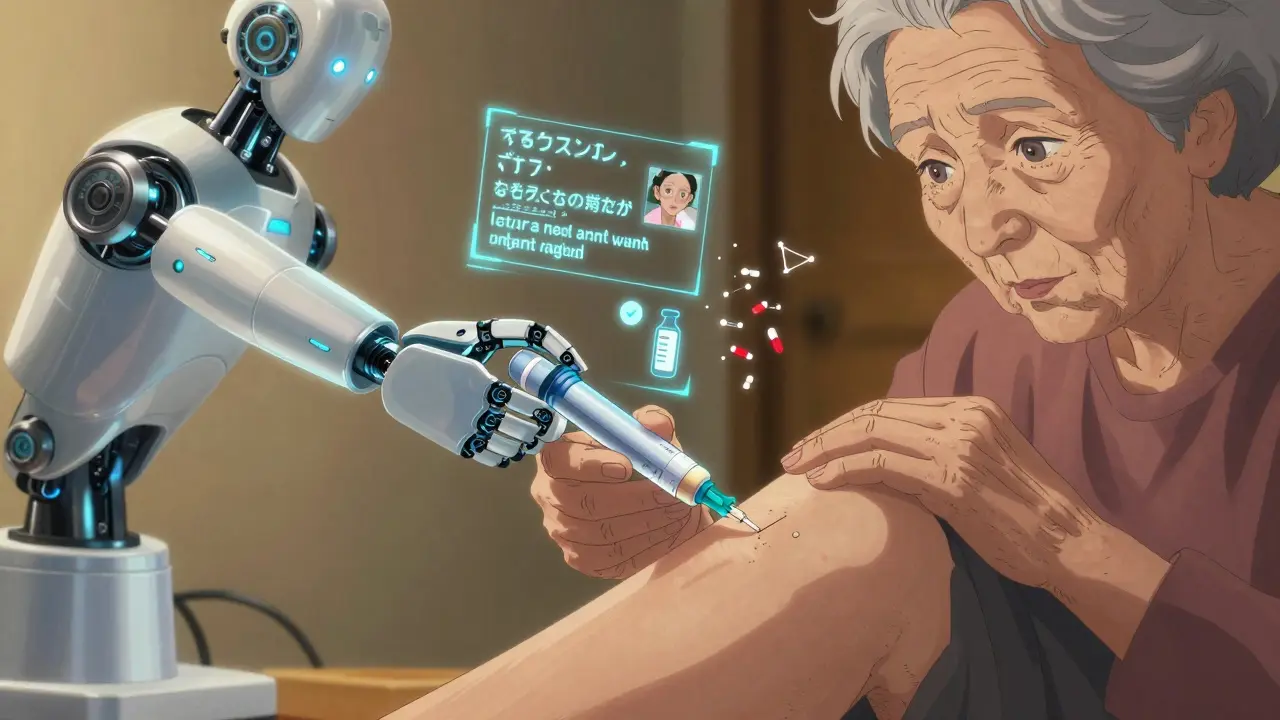
- Demonstration of how to use your device. If you’re using an inhaler, insulin pen, auto-injector, or nebulizer, insist on watching the pharmacist show you how to use it-and then let them watch you do it. A 2023 study found that 76% of patients who got a live demo got the technique right. Only 41% did if they just heard instructions.
- Written instructions in your preferred language. If English isn’t your first language, or if you’re older and struggle with small print, say so. Pharmacies have access to multilingual resources. PERC offers Spanish versions for 92% of common medications. Don’t settle for a translated app or Google Translate printout-ask for the official version.
- A personalized medication schedule. Your day doesn’t look like a textbook. You work nights. You forget lunch. You travel. Ask your pharmacist to build a schedule that fits your life. A 2023 study showed 73% of patients stuck to their meds better when the schedule matched their routine, not the other way around.
- Documentation of your counseling. Ask if your visit was noted in your medical record. Under federal and state laws (47 states require it as of 2024), pharmacists must document what they told you. If they say no, ask why. This isn’t bureaucracy-it’s protection. If something goes wrong later, you’ll have proof you were properly informed.
What Most Patients Miss
There are hidden gaps in what pharmacies usually offer-and you can fill them.
First, ask about drug interactions. Your pharmacist knows what your other meds are. Ask: "Could this new pill mess with my blood pressure medicine or my arthritis pill?" One out of five hospital admissions for seniors is caused by bad drug combos. Most patients never think to ask.
Second, ask about cost alternatives. Sixty-two percent of patients need cheaper options, but only 18% of pharmacists bring it up. Say: "Is there a generic? A lower-cost brand? A patient assistance program?" Pharmacists have access to savings tools most doctors don’t. They can often switch you to a $4 generic or connect you to a manufacturer discount.
Third, ask for visual aids. If you’re over 65 or have vision issues, request pictures of your pills-actual photos of the color, shape, and imprint. Many pharmacies keep these on file. Seeing the pill before you take it reduces mistakes by up to 40%, according to the American Society of Health-System Pharmacists.
Fourth, ask about what to do if you miss a dose. Most handouts say "take as directed," but that’s useless. You need specifics: "If I forget my evening pill, should I take it when I remember, or skip it?" The answer changes depending on the drug. Your pharmacist can give you a clear rule.
Why Pharmacists Are Better at This Than Doctors
Doctors are amazing at diagnosing. But pharmacists are trained to live inside the pill bottle. On average, they have 6.2 years of focused experience managing medications, compared to doctors who juggle hundreds of conditions at once.
When it comes to administration-how to use an inhaler, how to inject insulin, how to store liquid antibiotics-pharmacists are far more effective. A 2022 study in the Journal of the American Pharmacists Association found that 87% of patients understood their medication technique better after talking to a pharmacist than after getting instructions from their doctor.
Why? Because pharmacists don’t just explain-they show. They hold the device. They watch your fingers. They adjust the timing. They notice if you’re confused. They don’t have 8 minutes to squeeze in 12 medications like a doctor might.
And they’re the only ones legally required to counsel you on all nine key points: what the drug is for, how to take it, what to do if you miss a dose, side effects, storage, interactions, monitoring, benefits, and duration.
The 7 Questions You Need to Ask
Don’t leave without covering these. Write them down. Use them.
- What is this medication for? (Not just "for your blood pressure"-"Does it lower pressure, prevent clots, or reduce inflammation?" Be specific.)
- How and when should I take it? (Morning? With food? On an empty stomach? Every 12 hours?)
- What should I do if I miss a dose?
- What side effects should I watch for? Which ones mean I need to call you or go to the ER?
- How will I know if it’s working? (When will I feel better? What test will show it’s helping?)
- How should I store it? (Fridge? Room temp? Away from light?)
- Is there anything else I need to know? (This is the most important one. It opens the door for everything else: alcohol, supplements, driving, pregnancy, travel.)
What’s Changing in 2026
The rules are shifting-and you’re going to get more support.
Starting January 2026, Medicare Part D plans must include pharmacist-led medication therapy management as a covered benefit. That means 52 million seniors will have access to structured, ongoing education-not just a one-time chat at pickup.
Also, the FDA is pushing for simpler language on Medication Guides. By 2026, they’ll require instructions at an 8th-grade reading level, not the college-level jargon you often see. And QR codes will link to video demos you can watch on your phone.
Meanwhile, pharmacies are rolling out digital tools. UpToDate, Epocrates, and other platforms now let pharmacists print customized handouts with your name, dose, and even a photo of your pill. Ask if your pharmacy uses them.

What to Do If You’re Rushed
Chain pharmacies (CVS, Walgreens, Rite Aid) average just 1.8 minutes per counseling session. Independent pharmacies often take longer. If you feel rushed:
- Ask: "Can I come back later when you have more time?"
- Request a callback from the pharmacist.
- Ask if you can schedule a 10-minute consultation for your new meds.
- Go to a pharmacy that offers medication synchronization-where you pick up all your meds once a month, and they review everything with you.
Don’t accept "I don’t have time" as an answer. You’re paying for this service. It’s not optional-it’s required by law in most states.
Real Stories, Real Results
One patient, u/HealthyWarrior88 on Reddit, shared how their pharmacist printed a custom sheet showing exactly how to rotate insulin injection sites-something their doctor never explained. Adherence jumped from 50% to 95% in two weeks.
Another woman in Florida asked for a simplified schedule with pictures for her diabetes meds. She’d been missing doses because she couldn’t read the tiny print. After getting a large-font chart with icons for morning, afternoon, and night, her A1C dropped from 9.2 to 7.1 in six months.
These aren’t miracles. They’re just good care.
Final Tip: Make It a Habit
Don’t wait for a crisis. Every time you get a new prescription-whether it’s for antibiotics, thyroid meds, or pain relief-ask for the materials. Keep them. Review them. Bring them to your next doctor’s visit. If you don’t understand something, say so. Pharmacists are trained to help you. But they can’t help if you don’t speak up.
Your health isn’t a guessing game. It’s a partnership. And your pharmacist is the one who knows the map.
Can I ask my pharmacist for written instructions even if I didn’t get them at pickup?
Yes. Federal and state laws (in 47 states) require pharmacists to provide written materials upon request. Even if you didn’t get them at the time, call or visit the pharmacy and ask for the handouts related to your medication. Most pharmacies keep digital copies and can print them for you.
Do pharmacists really know more about my meds than my doctor?
In terms of medication details-how they work, how to take them, interactions, side effects, storage, and administration-yes. Pharmacists spend years training specifically on drugs. Doctors are trained to diagnose and manage overall health. A 2022 study found patients understood how to use their inhalers or insulin pens 87% better after talking to a pharmacist than after getting instructions from their doctor.
What if my pharmacist doesn’t have materials in my language?
Ask if they can access resources from the Patient Education Reference Center (PERC) or UpToDate. Both offer materials in over 18 languages. If they say no, request a phone consultation with a bilingual pharmacist or ask for a referral to a pharmacy that offers multilingual support. You have the right to understand your medications.
Can I get help if I can’t afford my meds?
Absolutely. Pharmacists can check for generic alternatives, manufacturer coupons, patient assistance programs, and state-funded programs. Sixty-two percent of patients need cheaper options, but only 18% of pharmacists bring it up-so you need to ask. Say: "Is there a lower-cost version or a program that can help me pay?"
Are these materials only for seniors or people with chronic conditions?
No. Anyone taking prescription medication-whether it’s a short-term antibiotic, a birth control pill, or a daily heart medication-can benefit from clear, personalized education. Even if you’re young and healthy, understanding how to take your meds correctly prevents mistakes and side effects.
Why do some pharmacists seem rushed or uninterested?
Many chain pharmacies have high patient volumes and limited time-average counseling lasts just 1.8 minutes. That’s not enough for real education. If you feel rushed, ask if you can schedule a longer appointment or visit an independent pharmacy. Your health is worth the time. Don’t accept poor service as normal.
What if I don’t remember what the pharmacist told me?
Ask for a printed summary or digital copy. If you’re still unsure, call the pharmacy back. Most have a toll-free line for medication questions. You can also ask your doctor to review the instructions with you. Never guess-medication errors cause 7,000 deaths in the U.S. every year.