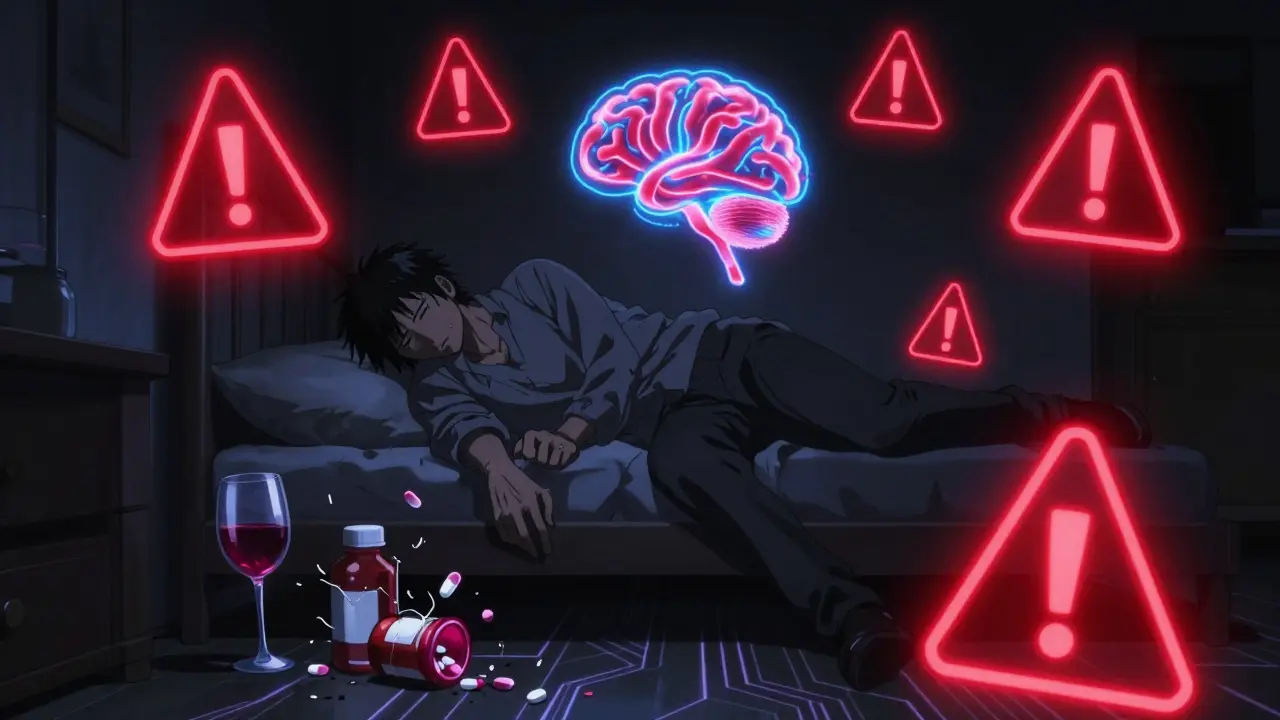
It’s 11 p.m. You’ve had a long day. A glass of wine helps you unwind. You pop your sleep pill-maybe Ambien, maybe Unisom-and crawl into bed. Sounds harmless, right? Alcohol and sleep medications might seem like a natural combo, but this mix is one of the most dangerous interactions you can accidentally create. And it’s happening more often than you think.
What Happens When Alcohol Meets Sleep Pills?
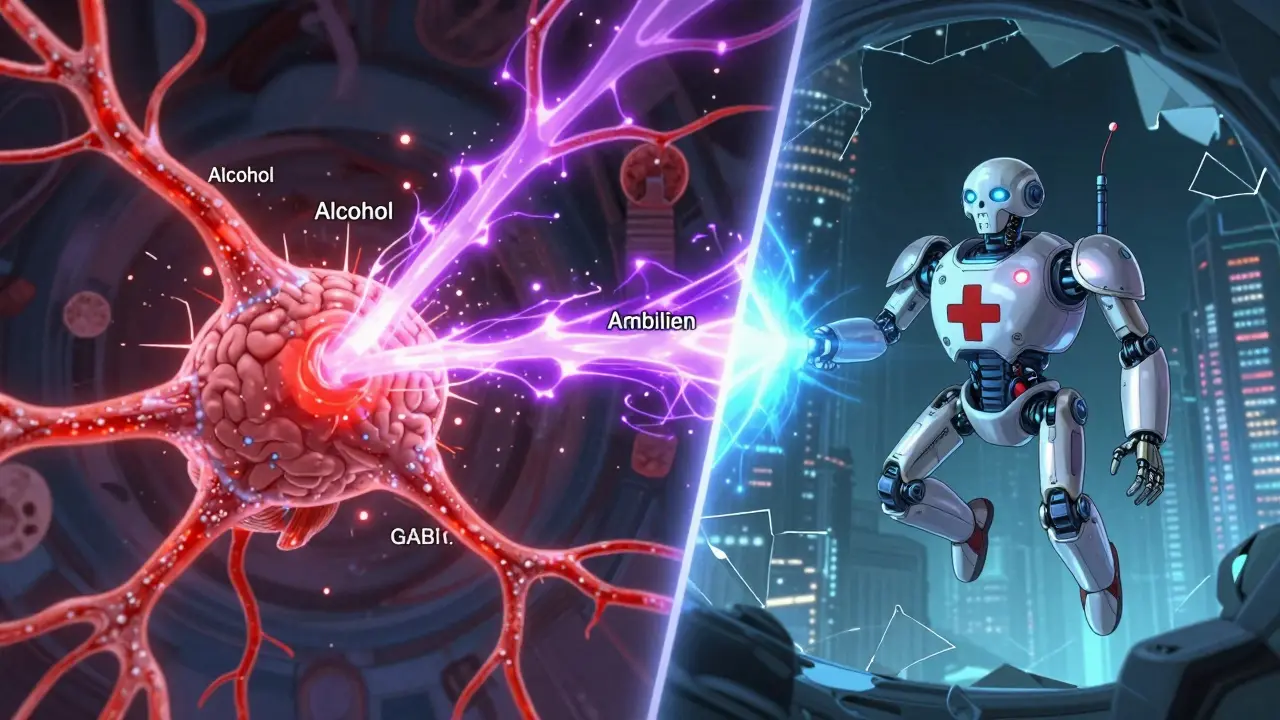
Both alcohol and sleep medications slow down your central nervous system. Alone, they make you drowsy. Together, they don’t just add up-they multiply. Think of it like pressing the brake and the gas pedal at the same time. Your body doesn’t know what to do, so it shuts down faster and harder.
The science behind this is simple but terrifying. Both substances boost the effect of GABA, a brain chemical that calms nerve activity. Alcohol and drugs like zolpidem (Ambien), eszopiclone (Lunesta), or benzodiazepines like lorazepam all bind to the same receptors. When they team up, your brain gets flooded with calming signals-so much that your breathing slows to dangerous levels. In some cases, it stops.
Studies show that even one drink with a sleep pill can turn a normal 2.5-hour half-life of Ambien into over 6 hours. That means you’re sedated for longer, with no control over what your body does during that time.
Which Sleep Medications Are the Most Dangerous With Alcohol?
Not all sleep aids are created equal when mixed with alcohol. The risk varies by type:
- Z-drugs (Ambien, Lunesta, Sonata): These are the worst offenders. They act fast, bind tightly to brain receptors, and dramatically increase sedation with even small amounts of alcohol. One study found that combining Ambien with just 0.02% blood alcohol (about one drink) made people 2.7 times more impaired than alcohol alone-enough to fail a driving test.
- Benzodiazepines (Ativan, Klonopin, Restoril): These older drugs are also risky. They cause deeper sedation and memory loss. Mixing them with alcohol raises the chance of falling, confusion, and overdose. Emergency visits for this combo rose 19% between 2018 and 2022.
- OTC sleep aids (ZzzQuil, Unisom): These contain diphenhydramine or doxylamine-antihistamines that cause drowsiness. They’re sold as "natural" or "gentle," but with alcohol, they turn dangerous. For adults over 65, the risk of falling and breaking a hip jumps by 300%. In one study, emergency room visits for hip fractures from this mix more than quadrupled.
- Melatonin: This is the exception. Melatonin doesn’t work on GABA receptors. It’s not a sedative in the same way. Mixing it with alcohol won’t cause respiratory depression, but it can make next-day grogginess 35% worse. Still, it’s far safer than the others.
The FDA now requires a Black Box Warning-its strongest safety alert-on all Z-drugs. The label says clearly: "Concomitant use with alcohol is contraindicated." That’s medical jargon for "don’t do this, or you could die."
Real Stories: When "Just One Drink" Goes Wrong
People don’t always realize how fast things can spiral. One Reddit user, u/SleepWalker99, posted about waking up two miles from home after taking half an Ambien with two glasses of wine. No memory of driving. No memory of how they got there.
This isn’t rare. Clinical trials show that when alcohol is mixed with Z-drugs, the chance of sleepwalking, sleep-driving, or doing other complex behaviors jumps from 0.15% to 2.4%. That’s a 16-fold increase.
Emergency room data from 2021 shows 1,872 reported cases of alcohol-sleep medication interactions. Over 60% of those people had no memory of what happened. Nearly 30% needed urgent medical help.
On Drugs.com, Ambien has a 1.8 out of 5-star rating for safety when combined with alcohol. The top complaint? "Extreme drowsiness lasting 12+ hours." Lunesta users report "confusion and memory loss" in over half of their negative reviews.
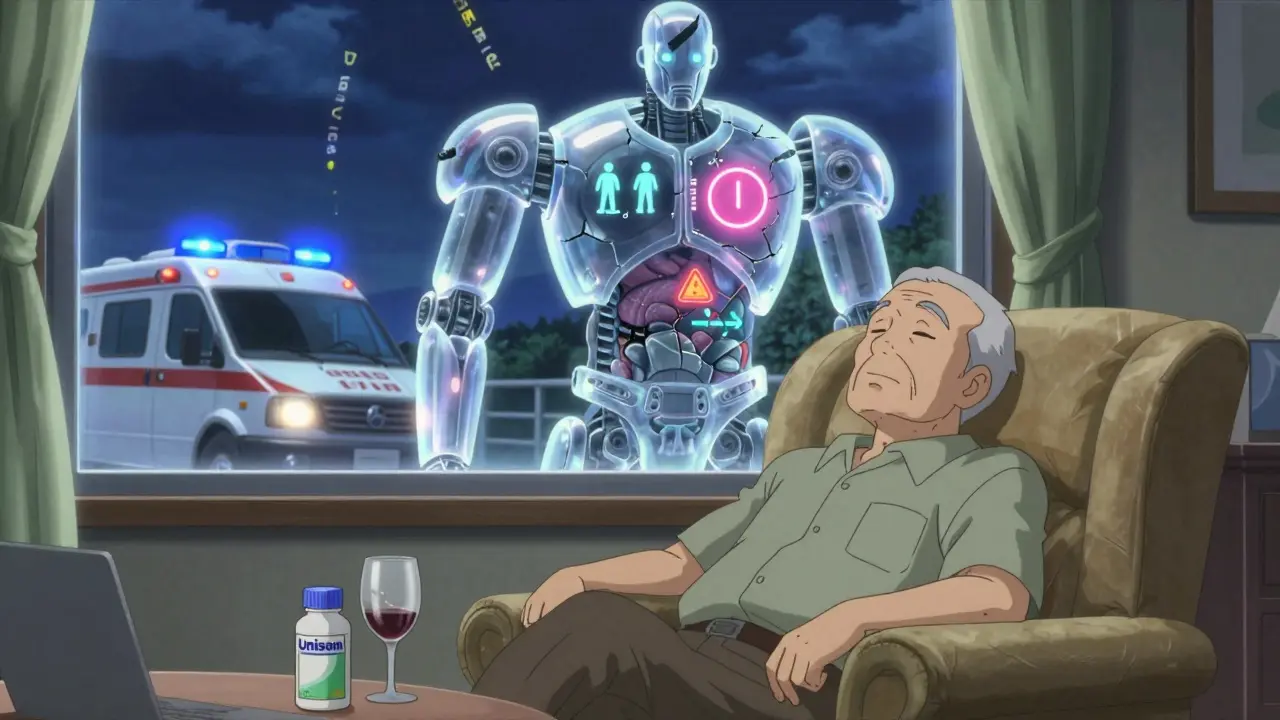
And it’s not just young adults. Older adults are hit hardest. AARP community posts describe seniors being hospitalized after mixing a single glass of wine with Unisom. Their bodies metabolize alcohol slower. Their brains are more sensitive. The result? Severe disorientation, falls, and sometimes coma.
Why People Keep Doing It (And Why They Shouldn’t)
Many people think, "I’ve had a drink and taken my pill before. Nothing happened." But that’s how accidents start. Risk doesn’t always show up immediately. Sometimes, it’s the third time you do it. Or the time you drink a little more than usual. Or the time you’re tired, stressed, or sick.
Doctors and pharmacists warn about this-but most patients aren’t told properly. A 2022 survey found that 68% of people prescribed sleep meds said they received "inadequate counseling" about alcohol risks. Even though 92% of sleep specialists know the danger, the message isn’t getting through.
Part of the problem? People don’t think of alcohol as a drug. It’s legal. It’s social. It’s in every movie, every party, every dinner. But when it’s paired with a sedative, it becomes a silent killer.
And here’s the cruel twist: many people use sleep meds because they’re trying to cut back on alcohol. They’re trying to sleep better after a night of drinking. But then they reach for the pill the next night-and the cycle continues.
What You Should Do Instead
If you take sleep medication, the rule is simple: no alcohol. Not one sip. Not even a splash in your tea.
Here’s how to stay safe:
- Wait 6 hours after drinking before taking Z-drugs. For benzodiazepines, wait 12 hours. This isn’t arbitrary-it’s based on how long it takes your liver to clear alcohol.
- Never use OTC sleep aids if you drink regularly. Especially if you’re over 65. The risk of delirium, falls, and hospitalization is too high.
- Ask your doctor about alternatives. Newer sleep drugs like Dayvigo (lemborexant) don’t interact as dangerously with alcohol. They work on a different brain pathway and only increase half-life by 15%, not 150% like Ambien.
- Try non-drug solutions. Cognitive behavioral therapy for insomnia (CBT-I) is proven to work better than pills over time-and has zero interaction risks. The American Medical Association now recommends it as first-line treatment, especially for people who drink.
And if you’re using sleep meds because you’re self-medicating anxiety or trauma? That’s a sign you need deeper help. Sleep pills don’t fix the root problem. They just mask it-until something worse happens.
The Bigger Picture: A Public Health Crisis
This isn’t just about one bad habit. It’s a growing crisis. In 2022, 58.7 million prescriptions for Z-drugs were filled in the U.S. That’s up 12% since 2018. Alcohol-sedative combinations now account for 18% of all prescription drug overdose deaths-up from 9% in 2015.
The FDA has responded by forcing clearer warnings. Now, all sleep medication packaging must say "Do not consume alcohol while taking this medication" in bold, 14-point font. Pharmacists are required to give verbal warnings at pickup. Compliance is at 87%-but it’s still not enough.
Researchers are now working on biomarkers to identify who’s most at risk. Some people’s genes make them metabolize alcohol and drugs slower. Others have liver damage from years of drinking. These people could be flagged before they ever take a pill.
Meanwhile, the pharmaceutical industry is shifting. Of the 12 new sleep drugs in clinical trials, 7 don’t work on GABA at all. They target orexin receptors instead. These could be game-changers-effective sleep aids without the deadly alcohol interaction.
Final Warning: This Isn’t a Risk Worth Taking
You might think you’re in control. You might think you’re "just having one glass." But your brain isn’t. Your breathing isn’t. Your body doesn’t know the difference between a little alcohol and a lot when a sleep pill is in the mix.
Every year, people die quietly in their sleep after mixing these substances. No scream. No struggle. Just stopped breathing. And often, they’re found with a half-empty wine glass beside them.
If you’re taking sleep medication, treat alcohol like a loaded gun. Keep it away. Don’t test it. Don’t rationalize it. Don’t assume "it won’t happen to me."
Your life isn’t worth the gamble.
Can I have one glass of wine with Ambien if I wait a few hours?
No. Even one drink with Ambien can dangerously increase sedation, slow your breathing, and cause memory loss or sleepwalking. The FDA and medical experts say no amount of alcohol is safe with Z-drugs like Ambien. Waiting 6 hours reduces risk slightly, but doesn’t eliminate it. The only safe choice is to avoid alcohol completely while taking these medications.
Is melatonin safe to take with alcohol?
Melatonin is much safer than prescription sleep meds or OTC antihistamines when mixed with alcohol. It doesn’t affect GABA receptors, so it won’t cause respiratory depression. However, combining melatonin with alcohol can still make you feel extremely groggy the next day-up to 35% worse. It’s not life-threatening, but it’s not ideal. Avoid mixing if you need to drive or operate machinery.
Why are older adults at higher risk?
As people age, their liver processes alcohol and drugs more slowly. This means both substances stay in the body longer, increasing sedation. Older adults also have reduced muscle mass and balance, making falls more likely and more dangerous. The American Geriatrics Society warns that mixing alcohol with any sleep aid can increase delirium risk by 400% in people over 65.
What should I do if I accidentally mixed alcohol and sleep medication?
If you’ve taken both and feel extremely drowsy, confused, dizzy, or have trouble breathing, call emergency services immediately. Do not wait. If you’re with someone who’s passed out or unresponsive, stay with them, keep them on their side, and call 911. Never let someone sleep it off-this can be fatal.
Are there sleep aids that don’t interact with alcohol?
Yes. Newer medications like Dayvigo (lemborexant) target orexin receptors instead of GABA, and studies show only a 15% increase in sedation when combined with alcohol-far less than the 150-200% spike seen with Ambien or Lunesta. However, no medication is completely risk-free with alcohol. The safest option is always to avoid alcohol while using any sleep aid, and consider non-drug treatments like CBT-I.
How can I stop using sleep meds if I rely on them with alcohol?
Talk to your doctor about tapering off safely. Abruptly stopping can cause rebound insomnia or withdrawal. Cognitive Behavioral Therapy for Insomnia (CBT-I) is the gold standard for long-term sleep improvement without drugs. It teaches you how to reset your sleep habits, manage anxiety, and improve sleep hygiene. Many insurance plans cover it, and it’s more effective than pills over time.
If you’re struggling with sleep and alcohol, you’re not alone-but you don’t have to stay stuck. Help is available. Start by talking to your doctor, your pharmacist, or a sleep specialist. Your future self will thank you.