
Medication-Induced Constipation Guide
Select the medication type you are taking to see the recommended management strategy and first-line options.
💡 Pro Tip:
Quick Summary: Key Takeaways
- Not all constipation is the same: Standard fiber supplements can actually worsen constipation caused by certain meds.
- Mechanism matters: Opioids, anticholinergics, and calcium channel blockers all slow the gut in different ways.
- Timing is everything: Prophylactic (preventative) treatment should start at the same time as the medication, not after the problem starts.
- Targeted relief: Specific drugs like PAMORAs are designed specifically for opioid-related issues and work much faster than standard laxatives.
Why Some Medications Stop Your Gut
To fix the problem, you have to understand why it's happening. Your gut is essentially a long tube of muscle that uses electrical signals and chemicals to push food along. Different drugs interfere with this process in unique ways.For those taking Opioids is a class of drugs used for pain relief that bind to mu-opioid receptors in the gut, slowing down motility and increasing water absorption, the effect is profound. These drugs make the nerves in your gut "sleep," which stops the rhythmic contractions needed to move waste. It also increases the tone of the anal sphincter, making it physically harder to go.
Then there are Anticholinergics is medications that block acetylcholine, a neurotransmitter essential for triggering muscle contractions in the digestive tract. This group includes certain antidepressants, antipsychotics, and even some over-the-counter allergy meds like diphenhydramine. By blocking acetylcholine, these drugs can slash your gut's secretions and movement by up to 40%.
Other common culprits include:
- Calcium Channel Blockers: These relax the smooth muscles in your GI tract, which slows down the transit time of waste.
- Diuretics: These cause you to lose water, which leaves your stools dry and hard. If they also lower your potassium levels, the gut muscles simply stop pumping effectively.
- Iron Supplements: These can cause oxidative stress and disrupt your gut bacteria, which often slows everything down.
Matching the Treatment to the Trigger
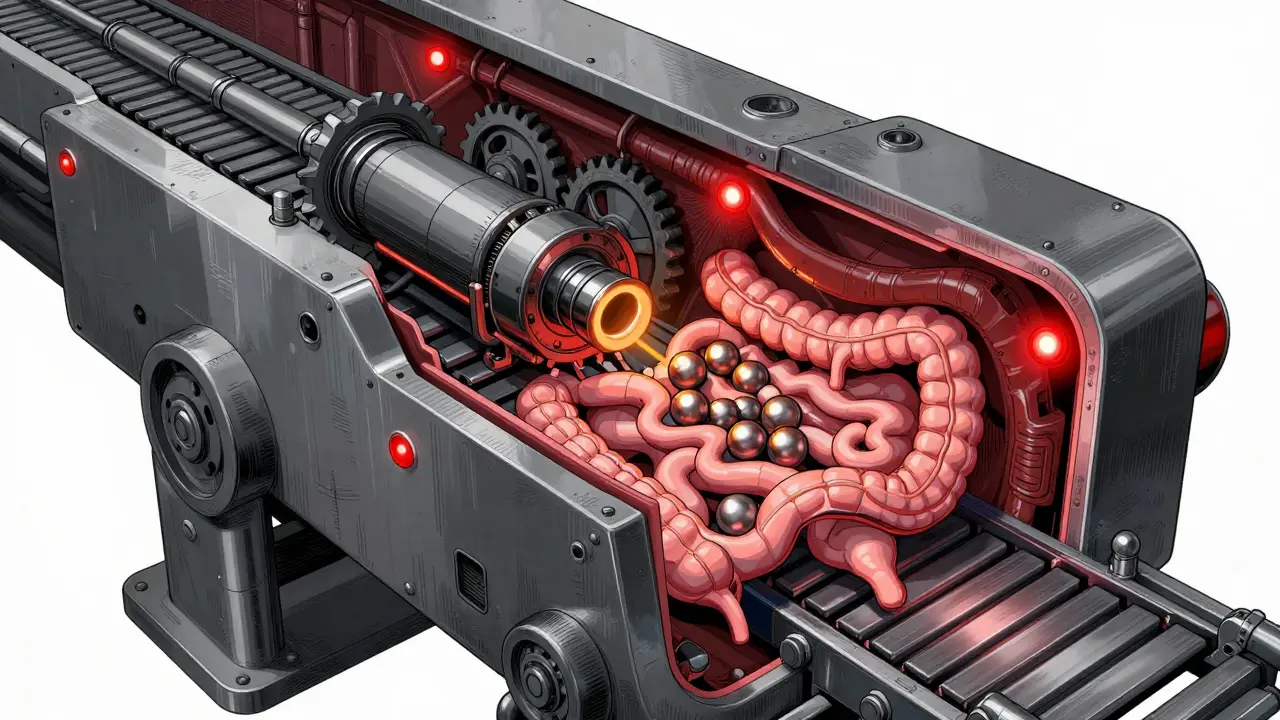
Because different drugs cause constipation in different ways, a "one size fits all" approach rarely works. For example, if you use a bulk-forming laxative like psyllium when your gut muscles aren't moving, you're just adding more mass to a stationary conveyor belt.| Medication Causing Issue | Best Approach | Common First-Line Agents | Typical Result |
|---|---|---|---|
| Opioids | PAMORAs or Stimulants | Methylnaltrexone, Sennosides | Fast relief (4-6 hours) |
| Anticholinergics | Switching Meds / Osmotics | Polyethylene glycol (PEG) | Gradual softening |
| Calcium Blockers | Dose adjustment / Osmotics | PEG 3350 | Improved transit time |
| Diuretics | Hydration + Osmotics | Increased fluids, PEG | Softer stools |
For those struggling with opioids, PAMORAs is Peripheral Mu-Opioid Receptor Antagonists, which block opioid receptors in the gut without affecting the pain-relief receptors in the brain are a game changer. Unlike standard laxatives that take days to work, drugs like methylnaltrexone (Relistor) can produce a bowel movement within a few hours because they target the actual cause of the blockage.
The Proactive Strategy: Don't Wait for the Blockage
One of the biggest mistakes people make is waiting until they are already constipated to start treatment. By the time you feel the pressure, the stool has often become hard and dry, making it much harder to move.The gold standard for management is prophylaxis-starting your bowel regimen the very same day you start the medication. If you're beginning an opioid therapy, for example, starting sennosides (around 17-34mg daily) can prevent the problem from ever starting. Combined with a daily dose of polyethylene glycol (PEG), this approach has been shown to be highly effective, with some patient reports indicating a complete prevention of symptoms.
If you're already in the thick of it, follow this step-by-step adjustment plan:
- Audit your meds: Identify which of your prescriptions are on the high-risk list (opioids, calcium channel blockers, etc.).
- Hydrate aggressively: Aim for 2-3 liters of fluid daily. If you're on diuretics, this is non-negotiable.
- Test an osmotic: Try PEG 3350. It draws water into the colon to soften the stool without stimulating the nerves too harshly.
- Add a stimulant if needed: If the stool is soft but won't move, a stimulant like sennosides can "kickstart" the muscles.
- Consult for PAMORAs: If you're on long-term opioids and the above doesn't work, ask your doctor about receptor antagonists.

Common Pitfalls and Misconceptions
There is a lot of conflicting advice about fiber. In a normal healthy gut, fiber is great. In a med-induced "frozen" gut, it can be a nightmare. Adding too much bulk when the muscles can't push it forward often leads to severe bloating and even worse constipation. While a moderate amount of fiber (25-30g) is generally good, it should be a secondary support, not the primary treatment.Another common trap is the "laxative cycle." Some people rely on heavy stimulants every day, which can lead to electrolyte imbalances in about 5-10% of patients. The goal is to find a sustainable balance-usually a combination of a mild osmotic for softness and a low-dose stimulant for movement.
When to Call the Doctor
While most cases of medication-induced constipation are manageable at home, some signs indicate a medical emergency. If you experience a sudden stop in bowel movements accompanied by severe abdominal pain, vomiting, or a rigid stomach, you could be facing a bowel obstruction. This is a critical situation that requires immediate medical attention, not more laxatives.Can I just take more water and fiber to fix this?
For most people, dietary changes alone only have about a 20-30% success rate when medications are the cause. While hydration is crucial, the drugs are physically blocking the signals that tell your muscles to move. You usually need a pharmacological agent (like an osmotic or stimulant) to override the drug's effect.
Will I get addicted to laxatives if I use them daily?
Osmotic laxatives like PEG are generally not habit-forming. Stimulant laxatives can cause some dependency if used excessively over many years, but when used to counteract the effects of a necessary medication (like an opioid), the benefits of maintaining bowel health usually outweigh the risks. Always discuss the long-term plan with your provider.
Why are PAMORAs so expensive compared to regular laxatives?
PAMORAs are specialized biological drugs that target specific receptors in the gut without crossing the blood-brain barrier. This precision engineering makes them more expensive to produce and market than simple salt-based or stimulant laxatives, though they are often significantly more effective for opioid users.
Are there any a-drug alternatives that don't cause constipation?
Yes, in some cases. For example, if an old-school antihistamine like diphenhydramine is causing issues, switching to a newer generation like loratadine can drastically reduce the risk of constipation (from 15-20% down to about 2-3%). Always check with your doctor before switching prescriptions.
How long should I wait before trying a stronger laxative?
If you haven't had a bowel movement in three days despite using a mild osmotic, it's time to contact your doctor. Waiting too long can lead to fecal impaction, which may require more invasive treatments than a simple pill.