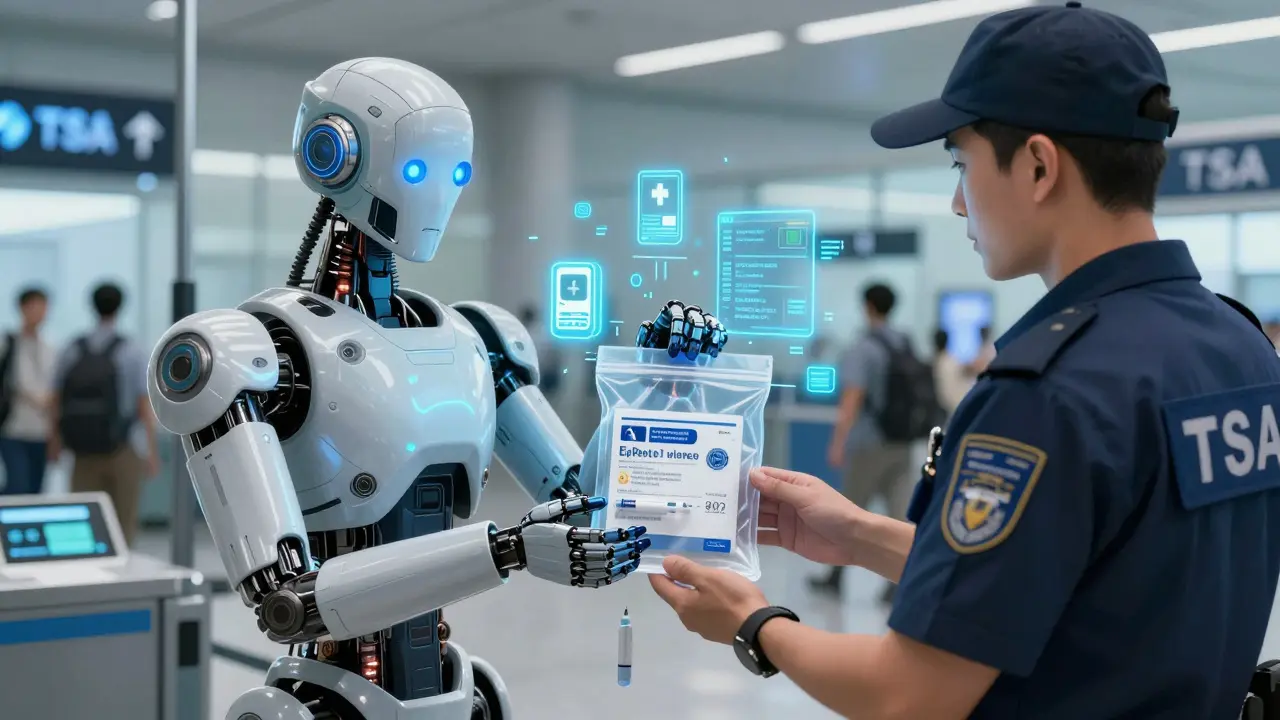
Traveling with liquid medications doesn’t have to be a nightmare. Millions of people fly every year with insulin, chemotherapy drugs, EpiPens, and other essential liquids-and most of them breeze through security without a hitch. But if you’ve ever been pulled aside, asked to open your bag, or had your medication held up for inspection, you know how stressful it can be. The good news? The rules are simpler than you think. You just need to know what to do, when to do it, and how to avoid the common mistakes that slow everyone down.
What’s Allowed? Everything You Need, No Limits
The TSA doesn’t limit how much liquid medication you can bring. That’s right-no 3.4-ounce rule for your insulin, asthma inhalers, liquid pain relievers, or eye drops. As long as it’s medically necessary, you can carry a full bottle, a cooler full of vials, or even a large tube of prescription cream. This applies to prescription drugs only. Over-the-counter liquids like cough syrup or allergy meds still count toward your 3-1-1 bag unless they’re prescribed.
Here’s what counts as exempt:
- Insulin and insulin pens
- Injectable medications (including glucagon, epinephrine, and GLP-1 agonists)
- Liquid prescription painkillers or anti-nausea drugs
- Prescription creams for eczema, psoriasis, or other skin conditions
- Oral liquids for chronic conditions (like liquid seizure meds or chemotherapy)
- Medical devices with liquid components (like nebulizers)
Even if you’re carrying 10 vials of insulin or a 16-ounce bottle of liquid medication, you’re still within your rights. The TSA doesn’t cap quantity. What they care about is whether you can prove it’s real medicine.
How to Pack It Right
Don’t toss your meds into your carry-on with your toothpaste and shampoo. That’s the fastest way to get delayed. The best practice? Keep all your liquid medications in one clear, resealable bag-separate from your 3-1-1 liquids bag. Put this bag in an easy-to-reach spot, like an outer pocket of your carry-on or a side pouch on your backpack. That way, when you get to the checkpoint, you can pull it out without fumbling.
Here’s what experts recommend:
- Keep meds in their original pharmacy-labeled bottles. The label should show your name, the drug name, dosage, and the prescribing doctor’s info.
- Don’t transfer liquids into unlabeled containers or pill organizers. Even if it’s more convenient, 63% of delays in 2024 happened because officers couldn’t verify what was inside.
- If you’re carrying multiple medications, make a printed or digital list: drug names, dosages, reason for use, and doctor’s contact info. TSA officers appreciate this. It cuts screening time by nearly half.
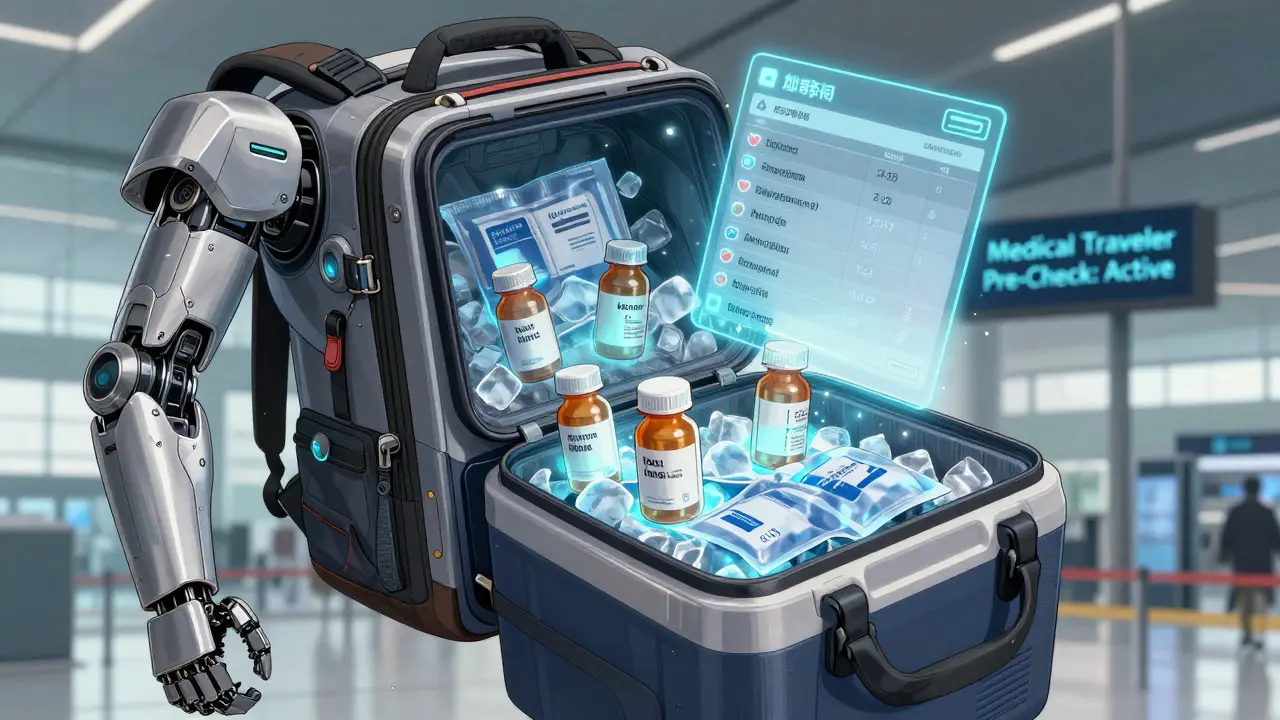
- For refrigerated meds like insulin, use a small cooler with ice packs. The cooler can’t be bigger than 8x6x2 inches. Ice packs must be partially frozen-not completely liquid-when you go through security.
Pro tip: If you’re flying often, consider signing up for the Medical Traveler Pre-Check program. Launching in pilot form in September 2025 at 12 major U.S. airports, this voluntary program lets you register your medications ahead of time. Registered travelers report screening times dropping from over 3 minutes to under 1.2 minutes.
What Happens at the Security Checkpoint
When you reach the security line, don’t wait for the officer to ask. As soon as you’re in front of the X-ray machine, say: “I have liquid medications that need to be screened.” This is key. It tells them you’re prepared, not hiding anything.
Here’s what you’ll likely see:
- The officer will ask you to remove your medication bag and place it on the belt separately.
- Your liquids will go through the X-ray machine. They might swab the containers for residue.
- If you’re carrying a cooler with ice packs, they’ll ask you to open it. Frozen or slushy ice is fine. Completely melted ice? That’s a problem-TSA requires it to be solid or partially frozen.
- You can request a visual inspection instead of X-ray. Just say: “I’d prefer a visual check.” Most officers will honor this. No need to argue.
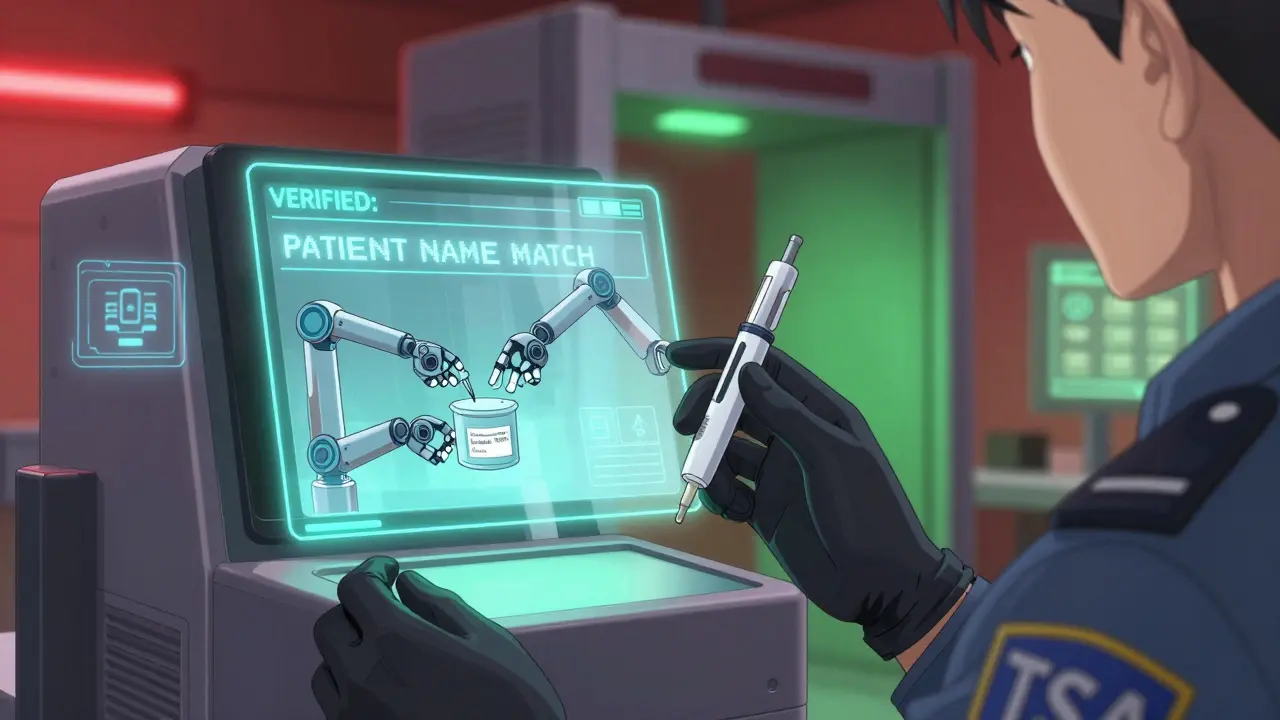
Don’t be surprised if they ask to see your prescription. You don’t need to show it unless they request it. But if you have it handy, it helps. A 2025 TSA internal survey found that 98% of officers felt more confident screening medications when labels matched patient names.
Common Mistakes That Cause Delays
Most delays aren’t because of the meds themselves-they’re because of how they’re packed or presented.
- Mixing meds with toiletries. Putting insulin next to shampoo confuses scanners. Keep them separate.
- Using unlabeled containers. A clear vial with no label looks suspicious. Even if it’s legit, officers can’t verify it.
- Forgetting documentation. If you’re carrying controlled substances (like opioids or benzodiazepines), have your prescription handy. Some officers are trained to flag these.
- Not declaring ahead of time. Waiting until you’re asked means you’ll be rushed. Announce it early, calmly, and clearly.
- Overpacking coolers. TSA limits cooler size. If it’s too big, they’ll ask you to repack or check it.
Reddit users report wide variations. One traveler at Chicago O’Hare had their 10 insulin vials cleared in under 2 minutes. Another at Atlanta Hartsfield waited 22 minutes because the officer didn’t recognize a glucagon kit. The difference? Preparation.
What About Controlled Substances?
If you’re traveling with opioids, sedatives, stimulants, or other controlled substances, you’re not breaking any rules-but you might get asked more questions. The TSA doesn’t care if you’re legally prescribed. They care if you can prove it.
Bring:
- Your original prescription bottle with your name on it
- A printed copy of the prescription
- The prescribing doctor’s phone number (in case they need to verify)
Don’t assume your doctor’s note is enough. A pharmacy label with your name is the gold standard. A 2024 survey by the American Pharmacists Association found that 89% of travelers with original containers had zero issues. Only 43% of those who used unlabeled containers got through without delays.
What’s Changing in 2025 and Beyond
The TSA is getting better. In 2024, they processed nearly 2.9 million liquid medication declarations monthly-up 17% from 2023. More travelers mean more training. Officer familiarity with insulin pens, EpiPens, and nebulizers has improved. Airlines for America reports that medication-related delays dropped from 8.2% of all delays in early 2024 to 5.7% by May 2025.
By late 2026, 50 major U.S. airports will have AI-assisted screening tools that can automatically identify medication containers based on shape, labeling, and density. Trials in Dallas-Fort Worth cut screening errors by 41%. This means fewer manual checks, less stress, and faster lines.
And if you’re a frequent traveler with chronic medication needs, keep an eye out for the Medical Traveler Pre-Check program. It’s not mandatory, but it’s designed for people like you-people who fly often and rely on liquid meds. Registration will be free and available through the TSA app.
Final Checklist Before You Fly
Use this before you pack:
- ✅ All liquid meds in original pharmacy containers with labels
- ✅ Medications separated from toiletries in their own clear bag
- ✅ Printed or digital medication list (drug, dose, reason, doctor)
- ✅ Ice packs partially frozen (not liquid) for refrigerated meds
- ✅ Prescription copies for controlled substances
- ✅ Cooler under 8x6x2 inches (if needed)
- ✅ Declare meds before screening starts
If you follow this, you’ll be in the 87% of travelers who clear security without delays. And if you do get questioned? Stay calm. You’re not doing anything wrong. You’re just following the rules.
Can I bring liquid medication in my checked luggage?
Yes, but it’s not recommended. Checked bags can get lost, delayed, or exposed to extreme temperatures. Liquid medications like insulin can spoil if they freeze or get too hot. Always keep them in your carry-on where you can monitor them. If you must check a cooler, use a hard-sided case with dry ice (follow airline rules for dry ice limits).
Do I need a doctor’s note to bring liquid meds on a plane?
No, a doctor’s note isn’t required by TSA. But having your prescription label with your name, drug name, and dosage is the best proof. If you’re carrying controlled substances, a printed prescription copy adds extra confidence. Officers rarely ask for notes-but if they do, having one ready helps avoid delays.
Can I bring more than one type of liquid medication?
Yes. There’s no limit on the number of different liquid medications you can carry. Whether you need insulin, eye drops, liquid painkillers, and a cream for eczema-all are allowed. Just keep them together in one clear bag and declare them as a group. Organizing them by type (injections, oral liquids, topical) helps officers screen faster.
What if I’m flying internationally?
U.S. TSA rules apply only in U.S. airports. Other countries have their own rules. For example, the UK allows larger quantities of liquid meds but requires a letter from your doctor. Canada and Australia have similar exemptions but may ask for documentation. Always check the destination country’s aviation authority website before you fly. If you’re on a U.S.-based airline, TSA rules still apply for U.S. departures, even if you’re flying abroad.
Are EpiPens and glucagon kits treated the same as insulin?
Yes. EpiPens, glucagon kits, and other emergency injectables are considered essential medical supplies. They’re exempt from size limits and don’t need to be in a 3-1-1 bag. Keep them in their original packaging and declare them just like insulin. TSA officers are trained to recognize these devices. If you’re unsure, carry a note from your doctor-even a simple one saying “patient requires EpiPen for anaphylaxis” can help.