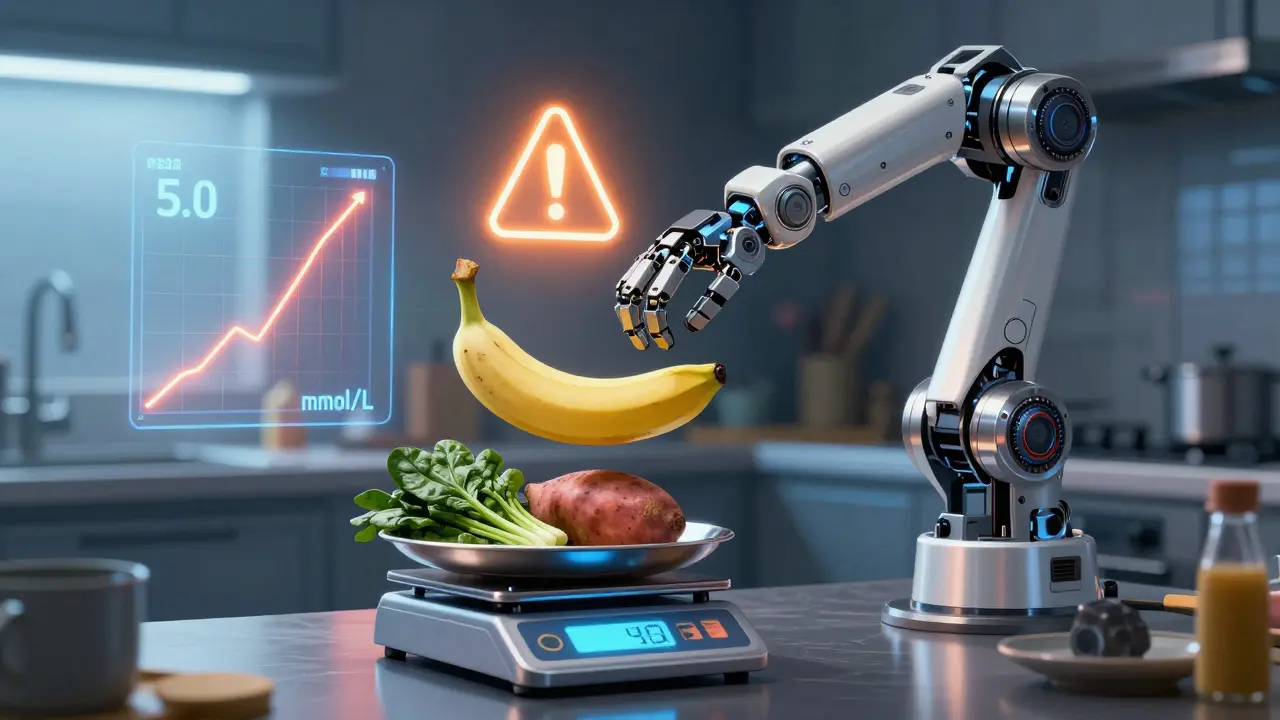
When you're managing high blood pressure, what you eat can be just as important as the pills you take. Many people know they should eat more fruits and vegetables, but few realize that some of the healthiest foods - like bananas, spinach, and sweet potatoes - can interfere with common blood pressure medications. This isn’t about avoiding good food. It’s about balancing what’s healthy with what’s safe, especially when you're on medications like lisinopril, losartan, or spironolactone.
Why Potassium Matters for Blood Pressure
Potassium isn’t just another mineral. It’s a natural blood pressure lifter. Studies show that getting enough potassium can lower systolic blood pressure by over 5 mm Hg - that’s as much as some medications. The reason? Potassium helps your kidneys flush out excess sodium and relaxes your blood vessel walls. The American Heart Association recommends 3,500 to 5,000 mg daily. But here’s the problem: most Americans get less than half that - around 2,400 mg. That’s a gap big enough to contribute to 15% of hypertension cases.
It’s not about supplements. Whole foods deliver potassium safely. A medium banana has 422 mg, one cup of cooked spinach has 839 mg, and a baked sweet potato? That’s 542 mg. Even salmon packs in 534 mg per 3-ounce serving. These aren’t just nutrient-packed choices - they’re tools for lowering blood pressure without drugs.
The Dangerous Mix: Potassium and RAAS Inhibitors
But if you’re taking ACE inhibitors (like lisinopril or enalapril), ARBs (like losartan or valsartan), or potassium-sparing diuretics (like spironolactone), your body holds onto potassium. That’s the whole point - these drugs help reduce fluid and lower pressure. But when you add a potassium-rich diet on top? You can tip the scales too far.
Serum potassium above 5.0 mmol/L is considered hyperkalemia. Above 6.0? That’s a medical emergency. Too much potassium can cause irregular heartbeats, muscle weakness, and even cardiac arrest. The risk isn’t theoretical. A 2021 review in the European Heart Journal found that 11.3% of elderly patients on ACE inhibitors developed dangerous potassium levels when eating high-potassium diets. And it’s not just seniors - people with even mild kidney issues are at higher risk. If your eGFR is below 60 mL/min, your chance of hyperkalemia jumps to 28%.
What Foods to Watch
Not all high-potassium foods are equal. Some are easy to overdo. Here’s what to be careful with:
- Bananas: 422 mg each. Eating three a day? That’s over 1,200 mg from fruit alone.
- Avocados: Nearly 1,000 mg per fruit. A smoothie with half an avocado? You’re halfway to your daily limit.
- Spinach (cooked): 839 mg per cup. Great in salads, risky if you’re eating it daily with your meds.
- Sweet potatoes: 542 mg each. A favorite for healthy eating - but a red flag if you’re on spironolactone.
- Coconut water: 600 mg per cup. Marketed as a “natural sports drink,” but it’s a hidden potassium bomb.
- Salt substitutes: Many contain potassium chloride. One-quarter teaspoon can give you 250-700 mg. If you’re on an ACE inhibitor, this can push your levels over the edge.
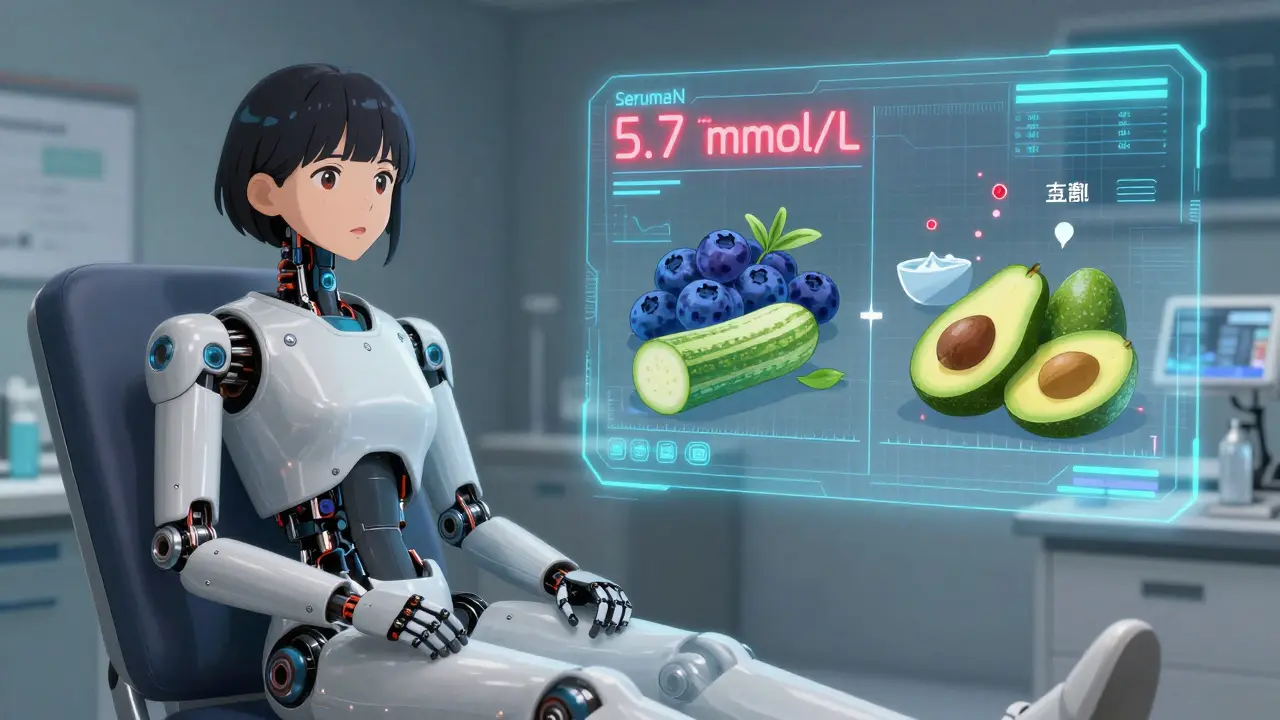
On the flip side, low-potassium alternatives exist. Blueberries (only 114 mg per cup), apples (195 mg), cabbage (170 mg per cup), and white rice (55 mg per cup) are safer bets. Switching from bananas to blueberries, as one patient on Reddit shared, helped stabilize their potassium from 5.4 to 4.8 mmol/L.
What the Research Says
Here’s the good news: if your kidneys are working fine, adding more potassium through food doesn’t usually cause problems. A 2016 study tracked hypertensive patients on ACE inhibitors for four weeks while increasing their dietary potassium. Their blood levels stayed steady - between 4.1 and 4.3 mmol/L. That’s within the normal range (3.5-5.0 mmol/L).
But there’s a catch. This safety only applies to food. Potassium supplements? Different story. A 2017 study in Kidney International found that patients with chronic kidney disease who took 40 mmol of potassium chloride daily (about 1,560 mg) had an 11% rate of hyperkalemia. Supplements bypass the body’s natural buffers - food doesn’t.
And it’s not just about the amount. Timing matters too. Taking your ACE inhibitor with a high-potassium meal increases absorption. One study suggests spacing your medication and meal by at least two hours reduces this risk.
Real People, Real Experiences
Online forums are full of stories. On MyHealthTeams, 19% of 872 hypertension patients reported muscle weakness or palpitations after ramping up their potassium intake without medical advice. Seven percent ended up in the ER. One woman said she started eating more avocado and spinach after reading a “heart-healthy” article - then got dizzy and had chest pain. Her potassium was 5.7.
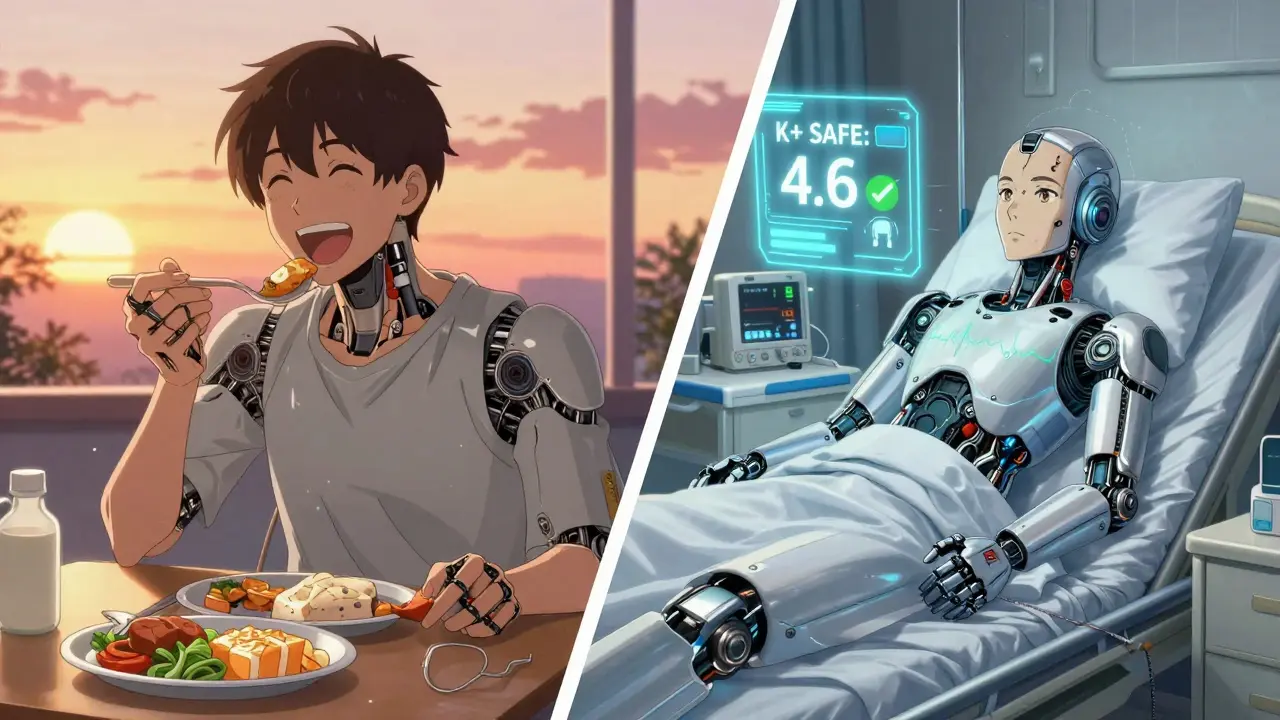
But there are success stories too. A 2022 analysis of 1,200 patients on PatientsLikeMe showed that 63% who followed a guided potassium-rich diet (under doctor supervision) lowered their systolic pressure by 5 mm Hg or more in eight weeks. One man on lisinopril started tracking his intake with Cronometer. He swapped out his daily banana for a pear and added more zucchini and cucumbers. His potassium stayed at 4.6. His blood pressure dropped from 148/92 to 132/84.
What You Should Do
If you’re on blood pressure medication, here’s what to do - and what not to do:
- Don’t stop eating healthy foods. You don’t need to ditch spinach or sweet potatoes - just know your limits.
- Get your serum potassium tested. Ask your doctor for a simple blood test before and 4-6 weeks after changing your diet. Normal is 3.5-5.0 mmol/L.
- Track your intake. Use an app like the National Kidney Foundation’s “Potassium Counts” (downloaded over 285,000 times). It shows real-time potassium values for common foods.
- Avoid salt substitutes if you’re on ACE inhibitors or ARBs. They’re not safer - they’re riskier.
- Don’t take potassium supplements unless your doctor prescribes them. Food is your best source.
- Ask about monitoring. The European Society of Cardiology recommends checking potassium every 3-6 months for people on RAAS inhibitors.
And if you have kidney disease, diabetes, or are over 65? Be extra cautious. These groups are most at risk. A 2023 study found that 72% of U.S. hypertension patients get some dietary advice - but only 38% get specific guidance on potassium-medication interactions.
The Bigger Picture
This isn’t just about one mineral. It’s about how medicine and nutrition work together. The FDA now requires potassium warnings on all ACE inhibitor and ARB packaging. Pharmaceutical companies are developing new tools - like patiromer (Veltassa), a potassium binder approved in 2023, which helps patients stay on their meds while eating well. And by 2024, smartwatches like Omron’s HeartGuide will start tracking potassium trends in real time.
The goal isn’t to scare you off potassium. It’s to help you use it wisely. For most people, eating more fruits and vegetables lowers blood pressure and reduces heart disease risk. But if you’re on certain medications, that same diet can become a hidden danger. The key? Know your numbers. Talk to your doctor. And don’t assume that because a food is healthy, it’s always safe - especially when you’re on medication.
Can I still eat bananas if I take lisinopril?
Yes - but in moderation. One banana a day is generally safe for people with normal kidney function. Eating three or more daily, especially with other high-potassium foods, can raise your risk of hyperkalemia. Monitor your blood potassium levels every 4-6 weeks if you eat bananas regularly while on lisinopril. Consider swapping one banana for a lower-potassium fruit like apple or blueberry.
Do all blood pressure medications interact with potassium?
No. Only medications that affect the renin-angiotensin-aldosterone system (RAAS) - like ACE inhibitors (lisinopril), ARBs (losartan), and potassium-sparing diuretics (spironolactone) - increase potassium retention. Beta-blockers, calcium channel blockers, and thiazide diuretics don’t have the same effect. Always check with your doctor to see which class your medication belongs to.
Is potassium from food safer than supplements?
Yes, significantly. Food contains fiber, water, and other compounds that slow potassium absorption and help your body regulate it. Supplements deliver a concentrated dose all at once, which can overwhelm your system - especially if your kidneys aren’t functioning perfectly. Studies show that hyperkalemia is far more common with potassium chloride tablets than with dietary sources.
What are the early signs of high potassium?
Early symptoms are subtle: tingling in hands or feet, muscle weakness, fatigue, or an irregular heartbeat. These often go unnoticed until levels are dangerously high. By the time you feel chest pain or nausea, it’s already an emergency. The best defense is regular blood tests - don’t wait for symptoms.
Should I avoid all high-potassium foods if I’m on blood pressure meds?
No. Avoiding them entirely can lead to potassium deficiency, which also raises blood pressure. The goal is balance. Work with your doctor to find your personal threshold. Many people can safely enjoy spinach, sweet potatoes, and beans - just not every day, and not in huge portions. Tracking your intake and getting regular blood tests is the smartest approach.