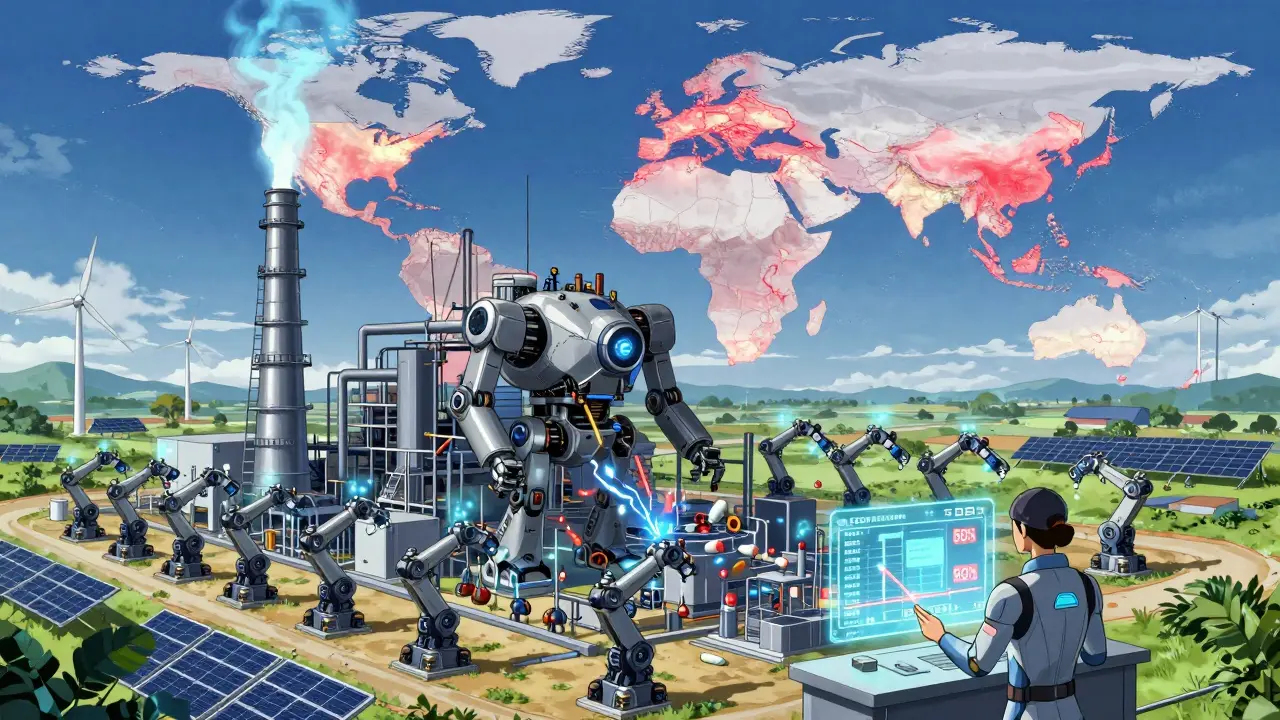
India’s Generic Drug Industry: Feeding the World’s Medicine Needs
When you take a generic pill for high blood pressure, diabetes, or an infection, there’s a good chance it came from India. The country produces one in five of all generic medicines sold globally. That’s not a guess-it’s a fact backed by the World Health Organization and global trade data. India doesn’t just make cheap drugs; it makes the kind that keep millions alive in low-income countries and save billions in healthcare costs in rich ones.
The story starts in the 1970s. India changed its patent laws to allow local companies to copy patented drugs. No more waiting for expensive brands to come down in price. No more relying on foreign suppliers. Indian manufacturers reverse-engineered medicines, made them cheaper, and started exporting them. That decision turned a small domestic industry into a global force. Today, India is the largest vaccine producer on Earth, making over 60% of all vaccines used worldwide. It also supplies 40% of the U.S. generic drug market and half of all medicines used in Sub-Saharan Africa.
How India Makes So Many Drugs So Cheaply
It’s not magic. It’s scale, skill, and smart cost control. India has over 10,000 drug manufacturing units and more than 3,000 pharmaceutical companies. But what really sets them apart is compliance. India has 650 factories approved by the U.S. Food and Drug Administration (FDA)-more than any other country outside the U.S. Another 2,000 meet WHO Good Manufacturing Practice (GMP) standards. That means these plants aren’t just cheap-they’re trusted.
Indian companies produce over 60,000 different generic drugs and more than 500 active pharmaceutical ingredients (APIs). These include complex medicines like extended-release tablets, injectables, and transdermal patches. Companies like Sun Pharma and Cipla invest 6-8% of their revenue in R&D, not just to copy drugs, but to improve how they’re made. They’ve mastered the art of making high-quality versions of complex drugs at a fraction of the cost.
The price difference is staggering. A branded heart medication might cost $200 a month in the U.S. The Indian generic version? Often under $20. That’s why 9 out of 10 prescriptions in the U.S. are for generics-and nearly half of those come from India. In the UK, Indian generics make up one-third of NHS prescriptions. In Africa, they’re the backbone of public health programs for HIV, malaria, and tuberculosis.
The Hidden Weakness: Dependence on China
For all its strength, India’s pharmaceutical industry has a major vulnerability: it relies on China for 70% of its active ingredients. APIs are the building blocks of every pill. Without them, no medicine can be made. India produces the finished drug, but it imports the core chemical from China. That’s a risk. When China slowed exports during COVID-19, India felt it immediately. Drug shortages popped up. Prices rose. Governments panicked.
The Indian government is trying to fix this. In 2020, it launched a ₹3,000 crore ($400 million) Production Linked Incentive (PLI) scheme to boost domestic API production. The goal? To cut China’s share from 70% to 53% by 2026. It’s a tough challenge. Building API plants takes years and billions of dollars. But it’s necessary. If India wants to be more than just a manufacturer, it needs control over its supply chain.
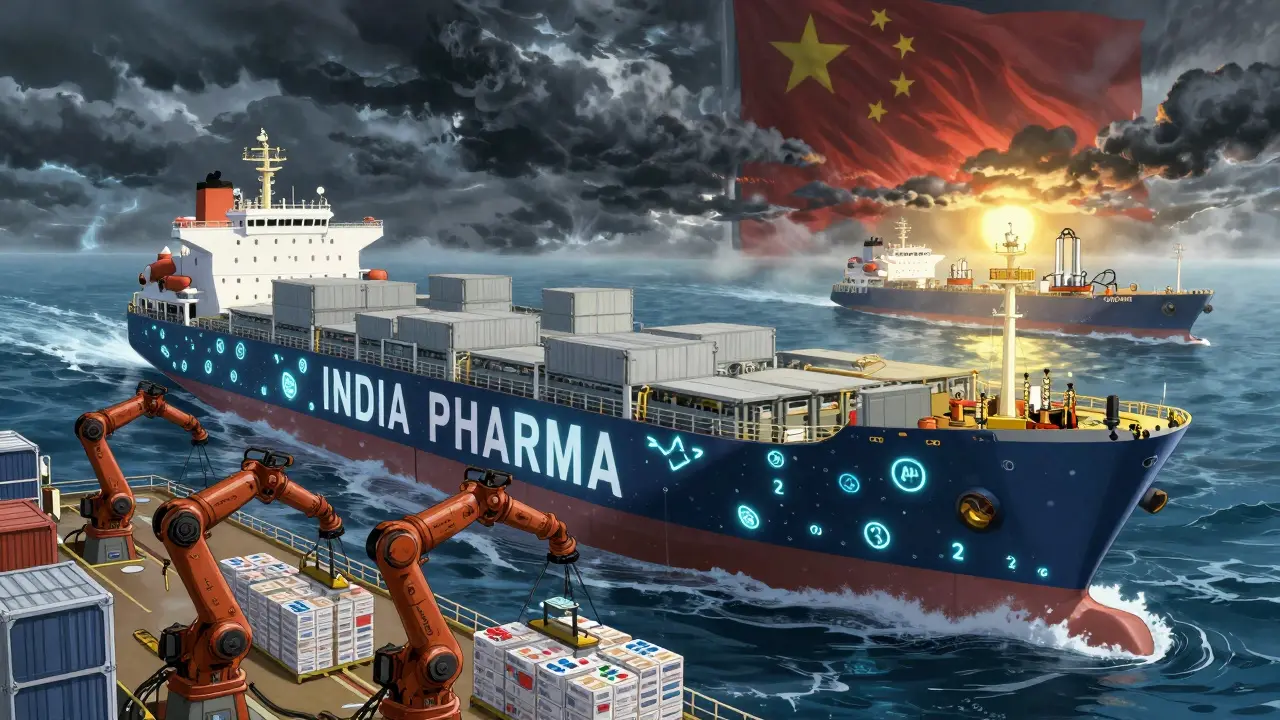
India vs. China vs. Europe: Who Wins in Generics?
China makes cheaper APIs, but its factories don’t meet global standards as consistently. The U.S. FDA has approved only 153 Chinese plants compared to India’s 650. That’s why American and European buyers stick with India-even if it costs a little more.
European companies like Teva and Sandoz make generics too, but they focus on niche, high-margin products. They don’t compete on volume. India does. It’s the bulk supplier. It doesn’t make the most profitable drugs-it makes the most needed ones.
By value, India ranks only 13th or 14th in global pharmaceutical exports. That sounds bad, but it’s misleading. India sells drugs by the ton, not by the price tag. A bottle of generic antibiotics might cost $2 in Africa. In the U.S., a branded version of the same drug could sell for $200. India’s exports are huge in volume, low in price. That’s the trade-off.
Quality Concerns? Yes-but Mostly Misunderstood
There have been scandals. Bad batches. FDA warning letters. A 2025 investigation by The Bureau of Investigative Journalism found dangerous drugs traced back to Indian factories. That made headlines. But here’s the real story: those cases are rare. Out of billions of pills exported, less than 1% have caused harm.
Compliance has improved dramatically. In 2015, only 60% of Indian factories passed FDA inspections. By 2024, that number was 85-90%. Former FDA Commissioner Dr. Margaret Hamburg called it a “remarkable turnaround.” Most Indian manufacturers now use electronic documentation systems and follow international standards. The real problems? Shipping delays, packaging errors, and taste differences in syrups-annoyances, not dangers.
In the U.S., 87% of patients who use Indian generics report satisfaction. In the UK, NHS users give them an average rating of 4.2 out of 5. In Africa, Doctors Without Borders says Indian antimalarials are 95% as effective as branded versions-but cost 65% less.
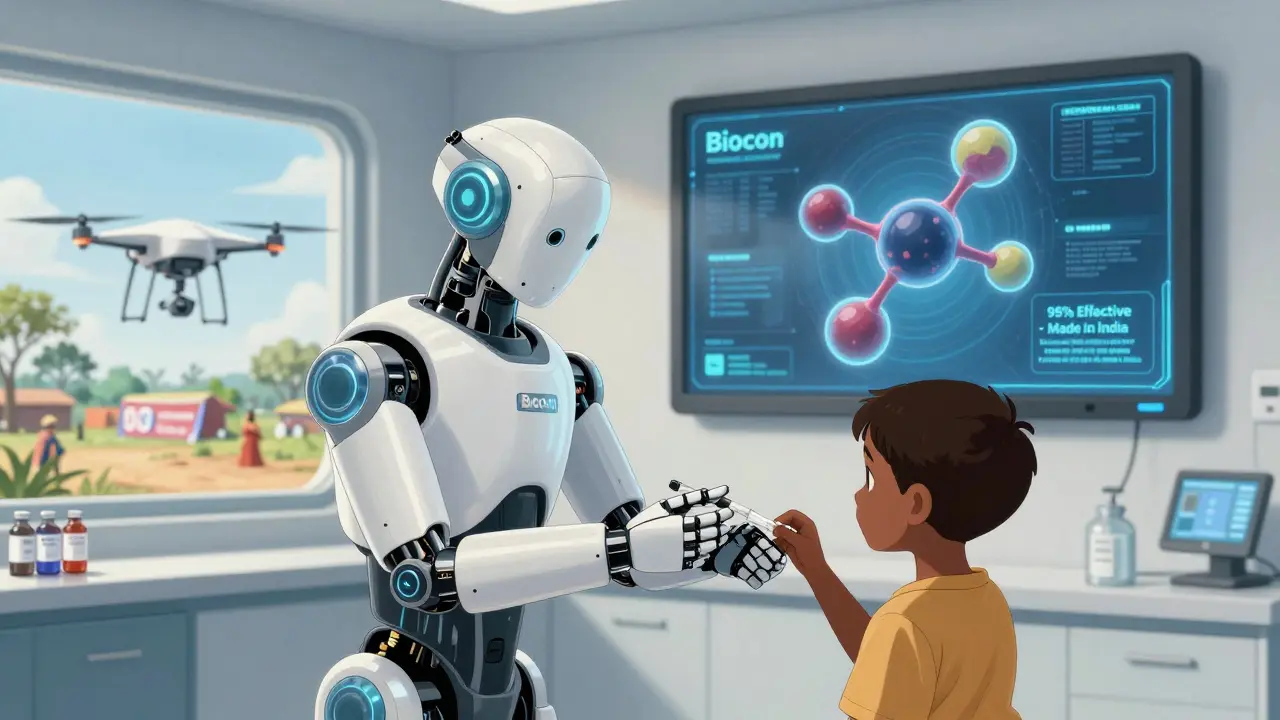
The Future: From Generics to Biosimilars
India isn’t stopping at cheap pills. It’s moving up the value chain. Biosimilars-copycat versions of expensive biologic drugs for cancer, arthritis, and autoimmune diseases-are now 8% of India’s export value, up from 3% in 2020. Companies like Biocon and Dr. Reddy’s are spending over $500 million a year on these high-tech drugs.
The government’s Pharma Vision 2047 aims to make India a $190 billion export powerhouse by 2047. That’s not just about volume anymore. It’s about innovation. If India can master biosimilars, develop its own APIs, and maintain its quality edge, it won’t just be the pharmacy of the world. It could become the engine of global drug innovation.
Right now, the industry is at a crossroads. It can stay the low-cost, high-volume player it’s been for decades. Or it can evolve into a leader in complex, high-value medicines. The choice will determine whether India remains the world’s pharmacy-or becomes something even bigger.
Who Are the Big Players?
India’s generic market isn’t run by small shops. It’s dominated by a handful of giants:
- Sun Pharma: Market cap of over $43 billion. The largest Indian pharma company. Known for complex generics and dermatology drugs.
- Cipla: Market cap of $13 billion. Famous for affordable HIV/AIDS medicines. Pioneered low-cost antiretrovirals in the early 2000s.
- Dr. Reddy’s Laboratories: Market cap of $12 billion. Strong in biosimilars and injectables. Exports to over 100 countries.
- Torrent Pharmaceuticals: Major player in cardiovascular and GI drugs. Strong in the U.S. and Europe.
- Biocon: Leader in biosimilars. First Indian company to get FDA approval for a cancer biosimilar.
These companies don’t just sell pills. They shape global health policy. Cipla’s $100-a-year HIV treatment changed the game in Africa. Sun Pharma’s transdermal patches are now standard in U.S. nursing homes. They’re not just manufacturers-they’re global health partners.
What’s Next for Indian Generics?
Three things will decide India’s future in pharma:
- API self-sufficiency: Can India make its own active ingredients at scale? The PLI scheme is a start, but it needs more time and investment.
- Biosimilars and complex drugs: Can India move beyond simple tablets to injectables, biologics, and targeted therapies? The early signs are promising.
- Regulatory excellence: Can India maintain 95%+ FDA compliance? That’s the new target. One bad inspection can shut down exports for months.
The world needs affordable medicine. India has proven it can deliver. Now it must prove it can lead.
Are Indian generic drugs safe to use?
Yes, the vast majority are. Over 650 Indian manufacturing plants are FDA-approved, and 2,000 meet WHO-GMP standards. Compliance rates have jumped from 60% in 2015 to 85-90% today. While rare bad batches have caused issues, these are exceptions, not the norm. Millions of patients worldwide use Indian generics safely every day.
Why are Indian generic drugs so much cheaper than branded ones?
Indian companies don’t pay for expensive research or marketing. They copy off-patent drugs, produce them at scale, and sell them with minimal overhead. Labor costs are lower, and the government historically allowed reverse-engineering of patented drugs. This lets them offer medicines at 30-80% lower prices without sacrificing quality.
Do Indian generics work as well as brand-name drugs?
Yes, when they’re made by reputable manufacturers. The FDA requires generics to have the same active ingredient, strength, dosage form, and bioequivalence as the brand. Studies show 95%+ efficacy for Indian generics in real-world use. Some patients report differences in fillers or taste, but the medicine works the same.
Why does the U.S. import so many drugs from India?
Because it’s the most reliable source for affordable, high-quality generics. India supplies 40% of U.S. generic drugs by volume. No other country matches its combination of scale, compliance, and price. With over 650 FDA-approved plants, India offers more regulatory certainty than China or Eastern Europe.
Is India trying to reduce its dependence on China for drug ingredients?
Yes. The Indian government launched a ₹3,000 crore ($400 million) incentive program to boost domestic production of active pharmaceutical ingredients (APIs). The goal is to cut China’s share from 70% to 53% by 2026. It’s a long-term effort, but one critical for supply chain security.
What’s the difference between generics and biosimilars?
Generics are copies of simple chemical drugs, like aspirin or metformin. Biosimilars are copies of complex biological drugs, like those used for cancer or rheumatoid arthritis. They’re harder to make, require advanced technology, and cost more. India is now a global leader in biosimilars, with companies like Biocon and Dr. Reddy’s leading the charge.