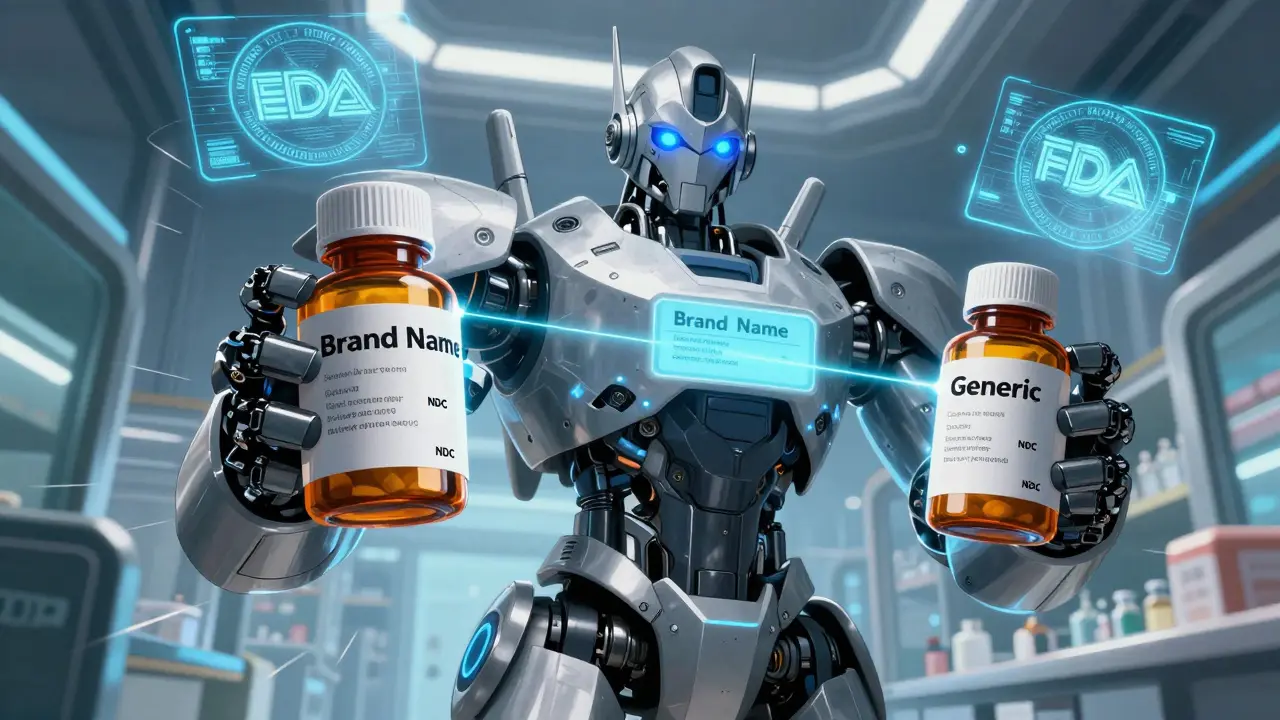
When you pick up a generic pill at the pharmacy, you expect it to work just like the brand-name version. But have you ever wondered what’s written on the label? The FDA doesn’t just approve generic drugs based on how well they work - they also demand that the labeling matches the original drug exactly. This isn’t a suggestion. It’s the law.
Under Section 505(j)(2)(A)(v) of the Federal Food, Drug, and Cosmetic Act, generic drug manufacturers must submit an Abbreviated New Drug Application (ANDA) that proves their product is bioequivalent to the brand-name drug - and that includes identical labeling. This means the warnings, dosage instructions, side effects, and even the structure of the information must be the same. The only exceptions? The manufacturer’s name, address, and National Drug Code (NDC) number. Everything else? Locked in.
Why Labeling Must Be Identical
Imagine two versions of the same heart medication. One has a warning about a rare but serious side effect. The other doesn’t. That’s not just confusing - it’s dangerous. The FDA’s goal is simple: patients and providers need to rely on one consistent set of information, no matter which version of the drug they use. If a generic drug’s label differs even slightly, doctors might miss critical safety details. Pharmacists might give incorrect advice. Patients might skip a warning they need to know.
This is why the FDA requires that generic labeling mirrors the Reference Listed Drug (RLD) - the original brand-name drug used as the benchmark. If the RLD gets updated, the generic must follow. No exceptions. No delays. No independent changes.
The Physician Labeling Rule (PLR): A Standardized Format
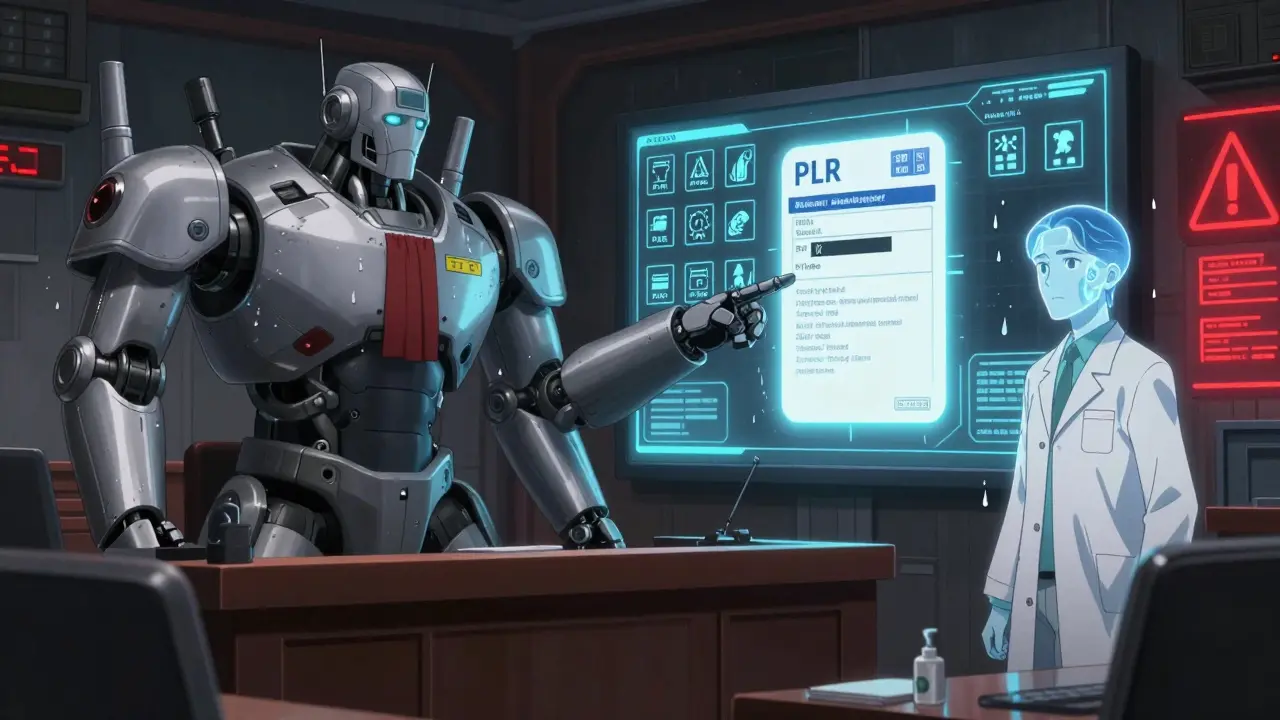
Since 2006, all prescription drug labels - brand and generic - must follow the Physician Labeling Rule (PLR). This isn’t just a formatting guideline. It’s a strict structure with 24 required sections. Here’s what’s included:
- Highlights of Prescribing Information
- Recent Major Changes
- Indications and Usage
- Dosage and Administration
- Contraindications
- Warnings and Precautions
- Adverse Reactions
- Drug Interactions
- Use in Specific Populations
- Overdosage
- Drug Abuse and Dependence
- Clinical Pharmacology
- Nonclinical Toxicology
- References
- How Supplied/Storage and Handling
- Patient Counseling Information
Generic manufacturers don’t get to pick and choose. If the RLD uses the PLR format, the generic must too. This includes the exact wording, section order, and even font size in printed materials. The FDA’s Division of Labeling Review (DLR) reviews about 1,200 ANDAs each year - and 37% of the complete response letters they issue in 2024 were due to labeling errors. That’s nearly four out of every ten applications rejected because the label didn’t match.
What Happens When the Brand Drug Changes?
This is where things get messy.
Brand-name companies can update their labels using a “Changes Being Effected” (CBE) supplement. That means they can add a new warning, change a dosage note, or update a contraindication - and implement it before the FDA even approves the change. They just notify the FDA afterward.
Generic manufacturers? They can’t do that. They have to wait. They can’t update their label until the FDA approves the RLD’s change. Then - and only then - they must mirror it. And they must do it “at the earliest time possible.”
A 2024 study in JAMA Internal Medicine found this delay affects 9,400 generic products - representing 89% of all prescriptions filled in the U.S. In some cases, critical safety updates took 6 to 12 months to reach generic labels. One real example: the 2022 valsartan recall. Contamination risks were added to the brand-name label. Generic manufacturers couldn’t update theirs until months later, leaving patients at risk.
How Generic Manufacturers Track Changes
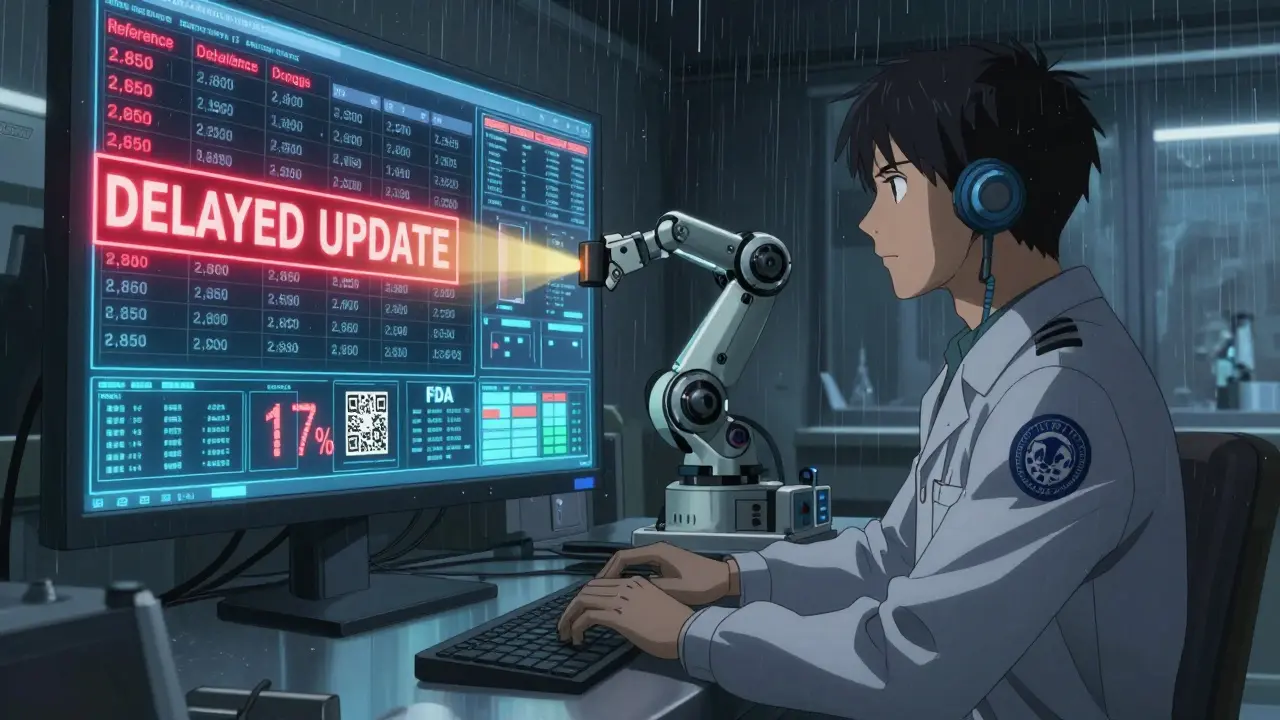
Keeping up isn’t easy. There are over 2,850 Reference Listed Drugs tracked in the FDA’s Drugs@FDA database - and updates happen weekly, usually on Tuesdays. Leading companies hire 3 to 5 full-time regulatory staff for every 50 approved products. That’s expensive. Small manufacturers spend an average of $147,500 per year just to keep their labels compliant. Large ones? About $89,200 - thanks to economies of scale.
The FDA recommends subscribing to CDER’s email alerts. Eighty-two percent of companies use this system. But even that’s not foolproof. A 2024 FDA audit found 17% of RLD entries in the Orange Book had temporary mismatches with Drugs@FDA during transitions. That means manufacturers had to cross-check multiple sources just to be sure they had the right version.
The MODERN Labeling Act and Withdrawn Drugs
Here’s a hidden problem: what happens when the brand-name drug gets pulled off the market? If the RLD is discontinued, the generic’s label becomes outdated - and stuck. That’s where the MODERN Labeling Act comes in.
Passed in 2020, this law allows generic manufacturers to update their labels even if the RLD no longer exists. But only under strict conditions. The FDA issued draft guidance in January 2025 to help companies navigate this. It applies to over 1,200 withdrawn RLDs affecting 3,500 generic products. Without this rule, patients would be using labels that haven’t been updated in years - sometimes over a decade.
What’s Coming Next
The FDA isn’t done. In Q3 2025, they plan to launch the Next Generation Generic Drug Labeling System. It will use AI to automatically detect changes in RLD labels and notify generic manufacturers in real time. Beta testing starts April 15, 2025, with 15 major companies involved. If this works, delays in safety updates could drop from months to days.
But until then, the system remains broken. Brand companies can act fast. Generics? They’re stuck waiting. As Dr. Robert Temple of the FDA wrote in the New England Journal of Medicine in January 2025: “The current labeling framework creates an unacceptable safety gap for the 6 billion generic prescriptions filled annually in the United States.”
Electronic Labels and QR Codes
Also new: the FDA now requires electronic labeling for medication guides. Instead of printing 20-page inserts, manufacturers can include a URL or QR code on the package. That code must link directly to the current FDA-approved PDF of the full prescribing information. It must use HTTPS for security. And it must be easy to scan - no tiny, faded codes.
This shift cuts printing costs and ensures patients always get the latest version. But it also puts pressure on manufacturers to maintain accurate, up-to-date web pages. One broken link? That’s a compliance violation.
Who’s Responsible When Things Go Wrong?
The FDA is clear: the generic manufacturer bears full responsibility. If the RLD label changes and your generic doesn’t update? That’s your fault. Between January 2023 and December 2024, the FDA issued 47 warning letters - all because of labeling mismatches. Some companies got shut down. Others had to recall entire batches.
And it’s not just about safety. It’s about trust. Patients assume their generic drug is as safe as the brand. If the label is wrong, that trust breaks. Pharmacists lose confidence. Doctors start prescribing brand names - even when generics are cheaper and just as effective.
The Bigger Picture
Generic drugs make up 92.6% of all prescriptions in the U.S. But they cost only 23.4% of total drug spending. That’s $647 billion saved every year. That’s huge. But it only works if the system is reliable. Labeling isn’t paperwork. It’s a lifeline. A wrong dose. A missed warning. A delayed alert. These aren’t theoretical risks. They’re real, documented dangers.
The FDA knows this. That’s why they’re pushing for reform. But until the rules change, generic manufacturers are stuck in a system designed for consistency - not speed. And in medicine, speed can mean the difference between life and death.
Can a generic drug have different warnings than the brand-name version?
No. Under FDA regulations, generic drug labeling must be identical to the Reference Listed Drug (RLD), except for the manufacturer’s name, address, and NDC number. Any difference in warnings, contraindications, or dosing instructions is a violation. If the brand-name label updates, the generic must follow - and only after FDA approval of the RLD change.
What happens if a generic drug label isn’t updated after the brand-name label changes?
The FDA considers this a serious compliance failure. The manufacturer can receive a warning letter, face product recalls, or even have their ANDA application rejected. Between 2023 and 2024, 47 warning letters were issued specifically for outdated generic labeling. The FDA may also delay approval of future applications from the same company.
Do generic manufacturers have to follow the Physician Labeling Rule (PLR)?
Yes. All prescription drug labels - brand and generic - must follow the PLR format, which includes 24 standardized sections like warnings, dosage, and clinical pharmacology. If the RLD updates to the PLR format, the generic must convert within the same timeline. Failure to comply results in complete response letters from the FDA.
Can generic manufacturers update their labels independently for safety reasons?
No. Unlike brand-name manufacturers, who can use a “Changes Being Effected” (CBE) supplement to update labels before FDA approval, generic manufacturers must wait for the RLD to update first. The FDA has proposed rule changes to allow this, but as of January 2025, those rules are still pending. This creates a dangerous delay in safety communication.
How do generic manufacturers track changes to the Reference Listed Drug?
Most rely on the FDA’s Drugs@FDA database, which is updated weekly. Leading companies also subscribe to CDER’s email alerts for labeling changes. Some use third-party monitoring tools. But audits show 17% of RLD entries have temporary mismatches with the Orange Book, so manufacturers must cross-check multiple sources to ensure accuracy.