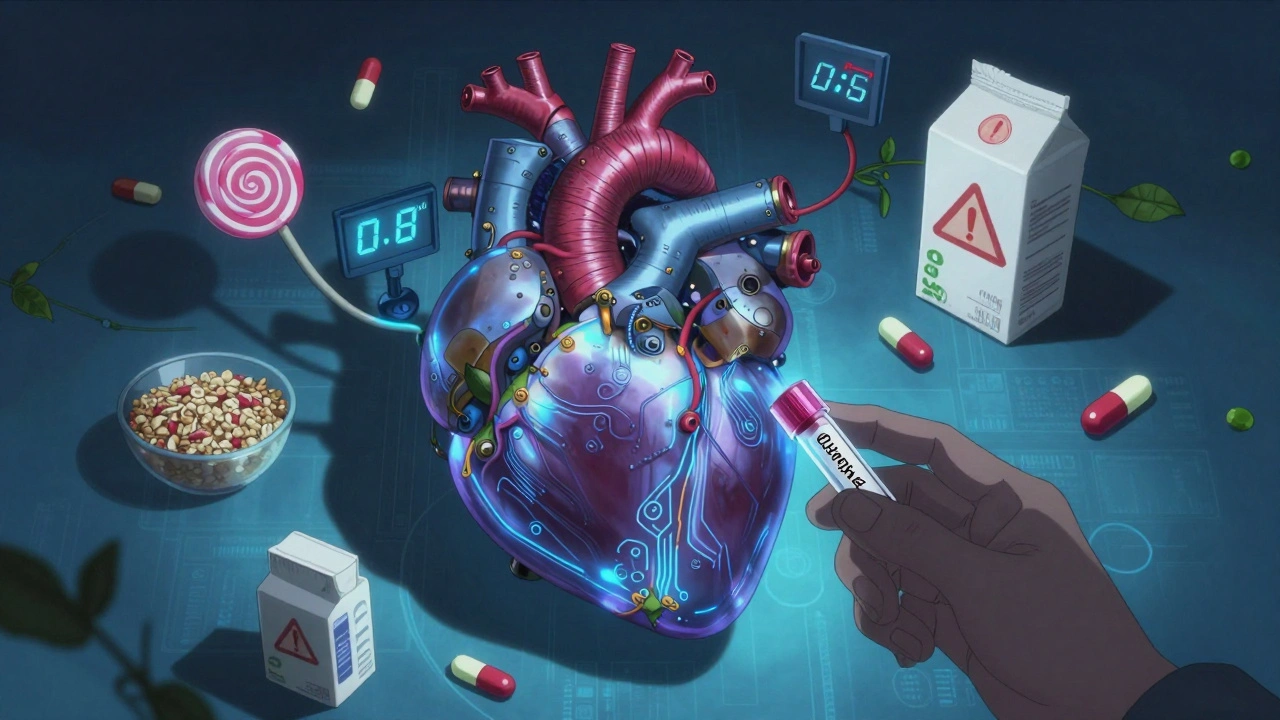
When you're managing heart failure or atrial fibrillation, digoxin can be a quiet but powerful tool. It’s been around since the 1930s, made from the foxglove plant, and still helps millions of people pump blood more effectively. But here’s the catch: digoxin doesn’t play well with others. Even small changes in what you take or eat can push your levels into dangerous territory. Too much, and you risk nausea, vision problems, or even life-threatening heart rhythms. Too little, and it stops working. The difference between help and harm is often just a few tenths of a nanogram per milliliter in your blood.
Why Digoxin Is So Tricky
Digoxin works by slowing down the heart’s electrical system and making each beat stronger. It’s not a cure, but it can reduce hospital visits and improve how you feel. The problem? Its therapeutic window is razor-thin. Doctors aim for blood levels between 0.5 and 0.9 ng/mL. Above 2.0 ng/mL, you’re in toxicity territory. And here’s what makes it worse: you don’t always feel it coming. Many patients only realize something’s wrong when they start seeing halos around lights, throwing up, or feeling their heart skip beats.
That’s why monitoring isn’t optional-it’s survival. About 1 in 25 people on digoxin will experience toxicity, even when they take it exactly as prescribed. The risk shoots up if you’re over 65, weigh less than 60 kg, have kidney issues, or your potassium is low. These aren’t rare cases. In fact, nearly 40% of digoxin-related ER visits are linked to interactions, not missed doses.
Medications That Can Turn Digoxin Dangerous
Some drugs don’t just mix poorly with digoxin-they amplify its effects like turning up a volume knob on a live wire.
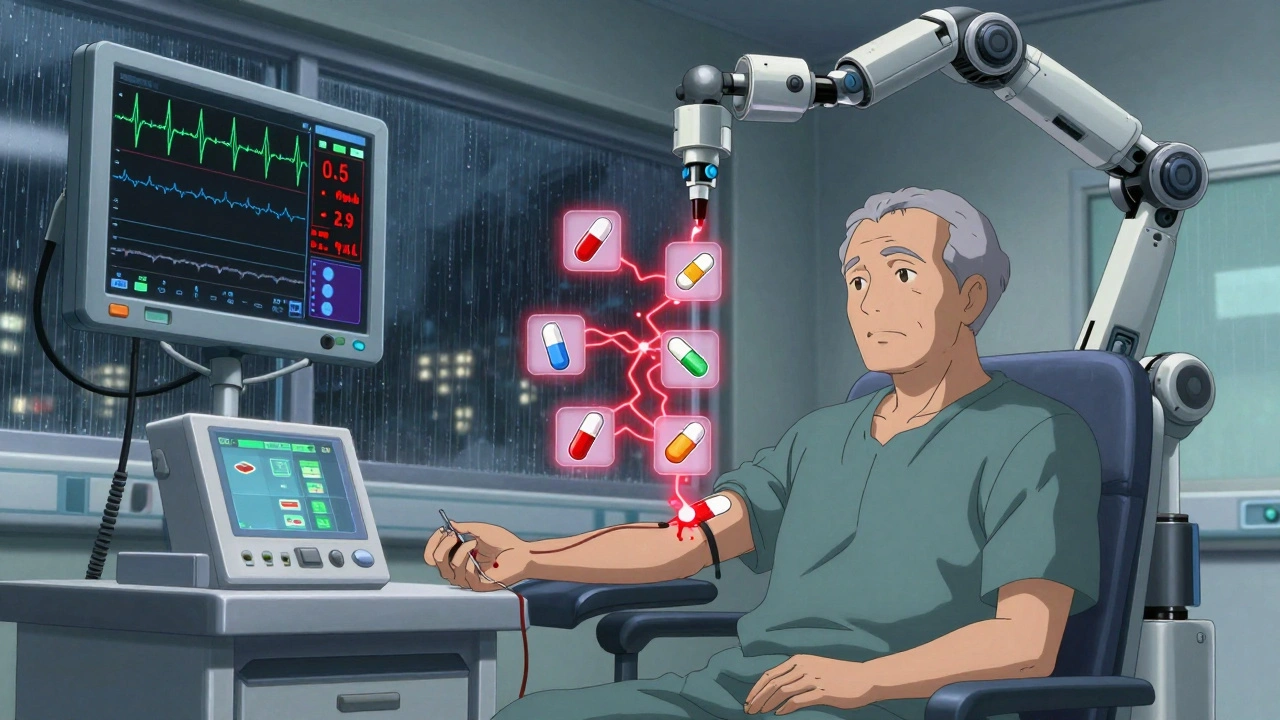
- Dronedarone (used for atrial fibrillation) can push digoxin levels over 50% higher. In one study, patients on both drugs had a 2.5-times higher risk of sudden death. If you’re starting dronedarone, your digoxin dose must drop by half-with blood tests every few days.
- Verapamil and diltiazem (calcium channel blockers for blood pressure or rhythm) can increase digoxin by 30-50%. Combine them, and your heart rate might plunge below 40 beats per minute. That’s not just slow-it’s dangerous.
- Amiodarone (another rhythm drug) is a major culprit. One patient reported their digoxin level jumping from 0.8 to 1.9 ng/mL within two weeks of starting amiodarone. They ended up in the ER with blurry vision and vomiting. Their doctor cut their digoxin dose in half.
- Quinidine can double digoxin levels by blocking its kidney clearance. This combo is now avoided entirely in most cases.
- Carvedilol (a beta-blocker) may raise digoxin by 16%. Not as dramatic, but still enough to matter over time.
- Rifampin (an antibiotic for TB) does the opposite-it lowers digoxin levels by 35-45%. You might think you’re fine because you’re not sick, but your heart could be underdosed.
- Thyroid meds like levothyroxine can reduce digoxin’s effect by speeding up how fast your body clears it. If your thyroid dose changes, your digoxin might need adjusting too.
What You Eat and Drink Can Change Everything
It’s not just pills. Your breakfast, your snacks, even your tea can interfere.
- Black licorice is a silent killer with digoxin. The compound glycyrrhizin in it drains potassium from your body. Low potassium + digoxin = high risk of fatal arrhythmias. One patient on Reddit said their doctor told them to throw out their licorice candy-no exceptions.
- Oatmeal, bran, and high-fiber foods can reduce digoxin absorption by 20-30%. If you take your pill with your morning bowl of oatmeal, you’re getting less than half the dose. The fix? Take digoxin at least two hours before or after eating fiber-heavy meals.
- Milk and dairy can also bind to digoxin and block absorption. Don’t wash it down with a glass of milk.
- Antacids with aluminum or magnesium (like Tums or Maalox) cut digoxin absorption by up to 30%. If you’re taking them for heartburn, space them out by at least two hours.
- Psyllium fiber supplements (like Metamucil) can reduce digoxin levels by 30-40% if taken too close together. That’s the same drop as missing a full dose.
Herbs and Supplements That Can Hurt
Just because something’s natural doesn’t mean it’s safe with digoxin.
- St. John’s wort (used for depression) triggers enzymes that flush digoxin out of your body. One study showed it can lower digoxin levels by 25%. You might feel like the drug stopped working-but it’s your supplement doing the damage.
- Hawthorn (a heart herb) can add to digoxin’s effects on the heart’s rhythm, increasing the risk of QT prolongation and torsades de pointes-a dangerous, twisting heart rhythm.
- Garlic, ginseng, and licorice root can all affect potassium or heart rhythm. If you’re taking any herbal remedy, tell your doctor. Don’t assume it’s harmless.
How to Stay Safe: A Real-World Checklist
You don’t need to live in fear. You need a system.
- Test your blood regularly. Get digoxin levels checked every 3-6 months if you’re stable. If you start or stop any new medication-including antibiotics or OTC drugs-get tested within 7-10 days.
- Check your potassium. Have your levels checked at least once a month. If it’s below 3.5 mmol/L, your risk of toxicity jumps. Your doctor may prescribe potassium supplements or switch your diuretic.
- Take digoxin on an empty stomach. Wait two hours after eating, and two hours before your next meal. Avoid fiber, milk, and antacids during that window.
- Never take black licorice. Not candy. Not tea. Not supplements. Period.
- Write down every medication and supplement. Include vitamins, herbal teas, and over-the-counter pills. Show this list to every doctor, pharmacist, and ER staff member.
- Know the warning signs. Nausea, vomiting, blurry vision, seeing yellow or green halos, confusion, or a heart rate below 50 bpm? Call your doctor or go to the ER. Don’t wait.
- Use a pill organizer. Missed or double doses can cause big swings in levels. Set a daily alarm.

Who’s at Highest Risk?
Not everyone on digoxin needs the same level of caution. But if you fit any of these, you’re in the danger zone:
- Over 75 years old
- Weight under 60 kg (132 lbs)
- Chronic kidney disease (creatinine clearance below 50 mL/min)
- Already on verapamil, diltiazem, amiodarone, or dronedarone
- On diuretics like furosemide or hydrochlorothiazide
- Have a history of slow heart rhythms or pacemaker dependence
A new risk score from the American College of Cardiology gives points for each of these. If you score 5 or more, you need weekly blood tests until things stabilize. That’s not overkill-it’s standard care for high-risk patients.
The Bigger Picture: Is Digoxin Still Worth It?
Digoxin prescriptions have dropped 38% since 2010. Newer drugs like SGLT2 inhibitors and ARNIs do more for heart failure with fewer risks. But digoxin hasn’t disappeared for a reason.
It’s cheap. A month’s supply costs $4-$6. Most newer drugs cost $500-$700. For elderly patients on fixed incomes, that matters. It also works well for people with persistent atrial fibrillation who still feel fatigued despite other meds. In the right person-with careful monitoring-it still saves lives.
The key isn’t avoiding digoxin. It’s managing it like a precision instrument. Not a backup. Not a last resort. A tool that demands respect.
Can I take digoxin with my multivitamin?
Yes, but not at the same time. Most multivitamins contain minerals like calcium or magnesium, which can bind to digoxin and reduce absorption. Take your multivitamin at least two hours before or after your digoxin dose. If your multivitamin includes potassium, that’s actually helpful-just confirm with your doctor first.
What should I do if I miss a dose of digoxin?
If you miss a dose and remember within 12 hours, take it right away. If it’s been more than 12 hours, skip the missed dose and take your next one at the regular time. Never double up. Digoxin builds up slowly in your body, so one missed dose won’t cause immediate problems-but doubling up can push you into toxicity. Consistency matters more than perfection.
Why does my doctor keep asking about my kidney function?
Your kidneys remove about 60-70% of digoxin from your body. If your kidney function drops-even slightly-digoxin stays in your system longer, raising your risk of toxicity. A creatinine clearance below 50 mL/min means your dose likely needs to be lowered. Regular blood tests for creatinine and eGFR aren’t just routine-they’re critical for safety.
Can I drink alcohol while taking digoxin?
Moderate alcohol (one drink a day) is usually okay, but it can worsen side effects like dizziness or low blood pressure. Heavy drinking can damage your liver and kidneys, which affects how your body processes digoxin. If you drink regularly, tell your doctor. They may need to adjust your dose or monitor you more closely.
Is there a safer alternative to digoxin?
For heart failure, newer drugs like sacubitril/valsartan (Entresto) or SGLT2 inhibitors (dapagliflozin) have stronger evidence for reducing hospitalizations and death. For atrial fibrillation, beta-blockers or non-dihydropyridine calcium channel blockers often control heart rate better with fewer risks. But digoxin still has a place-especially if you’re still symptomatic on other meds, or if cost is a barrier. It’s not about replacing it-it’s about using it wisely.
How often should I get my digoxin levels checked?
If you’re stable and not starting new meds, every 3-6 months is enough. But anytime you begin or stop any drug-even an antibiotic or a new blood pressure pill-you should get a level check within 7-10 days. Also check if you develop nausea, vision changes, or a slow heart rate. Don’t wait for your next appointment.
Final Thought: Knowledge Is Your Shield
Digoxin isn’t dangerous because it’s bad. It’s dangerous because it’s powerful-and many people don’t know how to handle it. You don’t need to be a doctor to stay safe. You just need to know the rules: check your levels, watch your diet, tell your team what you’re taking, and never ignore the warning signs. If you do, digoxin can still be one of the most reliable tools in your heart health toolkit.