When you take a generic pill for high blood pressure, diabetes, or an infection, there’s a good chance it was made halfway across the world. About 80% of the active ingredients in U.S. medicines and 40% of finished generic drugs come from foreign factories-mostly in India and China. The U.S. Food and Drug Administration (FDA) is responsible for making sure those drugs are safe, effective, and made under the same standards as those made in the U.S. But for years, the system wasn’t working the same way for everyone.
Same Rules, Different Enforcement
The FDA requires every drug manufacturer-whether in Ohio or Odisha-to follow Current Good Manufacturing Practices (CGMP). These rules cover everything from how workers wash their hands to how data is recorded and stored. The goal is simple: no contaminated, mislabeled, or ineffective drugs reach American patients. But enforcement was a different story. Domestic factories faced surprise inspections, often with zero notice. Foreign factories? They got 8 to 12 weeks’ warning. That’s like giving a student a month to study before a pop quiz. The result? Foreign facilities were more than twice as likely to be found in violation. In 2024, 45% of foreign inspections uncovered serious problems-like falsified test results, poor contamination controls, or missing records. At domestic sites, that number was just 20%.Why the Double Standard?
It wasn’t because foreign manufacturers were inherently worse. It was because the FDA didn’t have the resources-or the policy-to inspect them the same way. The agency had around 12,000 domestic inspections a year but only about 3,000 overseas, spread across more than 90 countries. Many of those foreign inspections were scheduled months in advance, giving companies time to clean up, hide issues, or even bring in extra staff just for the visit. The consequences weren’t theoretical. In 2021, the FDA banned a major Indian facility, Sun Pharma’s plant in Telangana, from exporting drugs after finding data manipulation and contamination. Yet, four drugs from that same facility were still allowed into the U.S. market for over a year. That’s not a glitch-it’s a gap in oversight.The 2025 Turning Point
On May 6, 2025, everything changed. FDA Commissioner Marty Makary announced a sweeping shift: the agency would begin conducting unannounced inspections at foreign facilities at the same rate as domestic ones. By Q2 2026, at least 50% of all foreign inspections will be unannounced-up from just 15%. This wasn’t just a policy tweak. It was a response to mounting pressure from Congress, watchdog groups, and public outcry. Senators Kirsten Gillibrand and Tim Scott demanded answers after reports surfaced that the FDA’s drug review division had overridden safety recommendations from its own inspection team. The White House jumped in too. President Trump’s Executive Order 14135, signed the day before the FDA’s announcement, ordered the agency to eliminate the inspection gap within 18 months. The message was clear: if you make drugs for Americans, you play by American rules-no advance notice, no exceptions.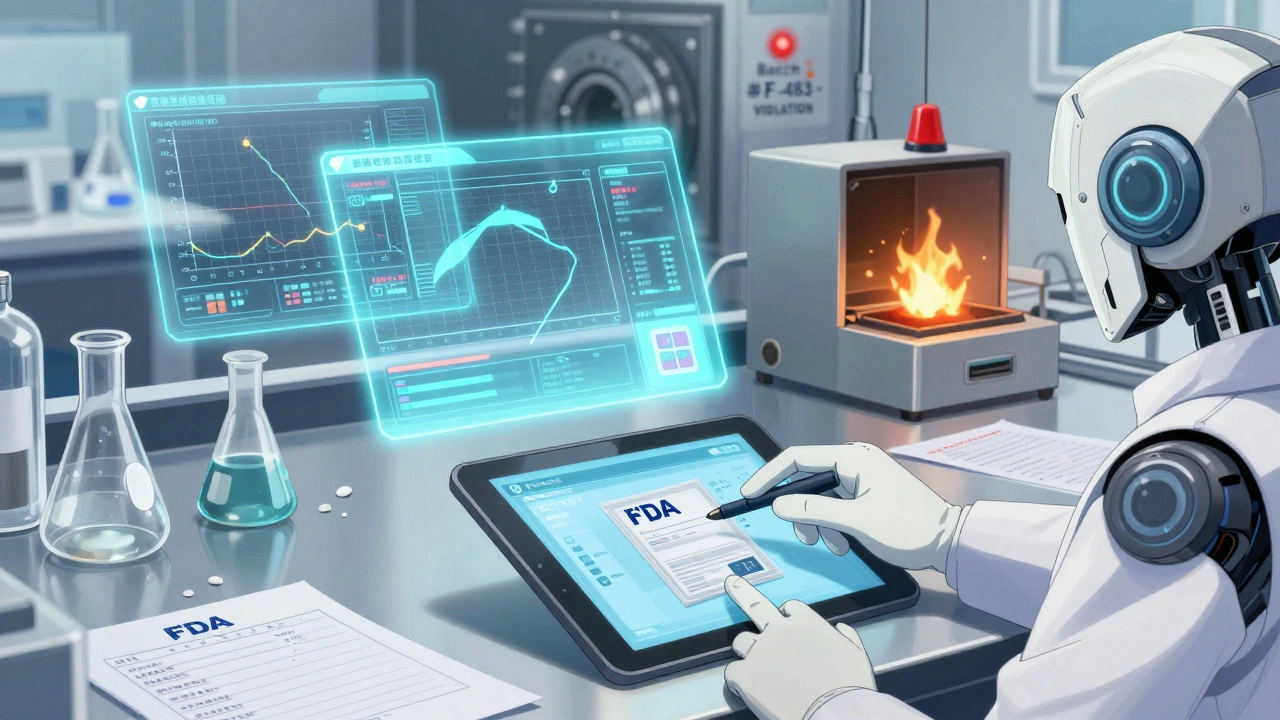
What Happens During an Unannounced Inspection?
FDA inspectors don’t show up with a checklist. They show up with questions-and a laptop. During an inspection, they’ll:- Ask to see raw data from lab tests-no summaries, no edited files
- Check equipment maintenance logs for gaps or missing entries
- Interview staff without management present to see if training is real
- Review batch records for inconsistencies or backdated entries
- Walk through production areas to spot contamination risks
How Are Foreign Factories Adapting?
The new policy is already changing behavior. According to a survey by the Generic Pharmaceutical Association, 42% of companies with overseas manufacturing have added new quality checks since May 2025. Many are doing monthly mock inspections, training staff on real-time documentation, and installing digital systems that can’t be easily altered. But it’s expensive. The Parenteral Drug Association found that 68% of foreign manufacturers expect compliance costs to rise by 15-25%. Smaller factories, especially those in India and China, are struggling. Some are hiring U.S.-based consultants just to prepare for inspections. Others are considering moving production back to the U.S. or to countries with stricter oversight, like Singapore or Ireland. Experts recommend three things for any foreign manufacturer preparing for an unannounced visit:- Keep real-time, tamper-proof digital records for every batch
- Train every employee-not just managers-on CGMP and data integrity
- Conduct at least one unannounced mock inspection per quarter
What’s Next? The Qualified Person Model
The FDA’s new inspection strategy is a big step-but it’s not enough. The European Union uses a system called the “Qualified Person” (QP) model. Every batch of medicine released in Europe must be certified by a licensed professional who works for the manufacturer but reports directly to the national regulator-not the company’s CEO. That person has legal responsibility for the quality of every pill. Brookings Institution’s Dr. Ameet Sarpatwari argues the U.S. should adopt something similar. He suggests requiring U.S.-based importers of generic drugs to designate a qualified individual who signs off on every shipment. That person would have to be independent, trained, and legally liable. “It’s not about distrust,” he says. “It’s about accountability. Right now, the system relies too much on manufacturers policing themselves. We need a second pair of eyes-on the ground, in the U.S.”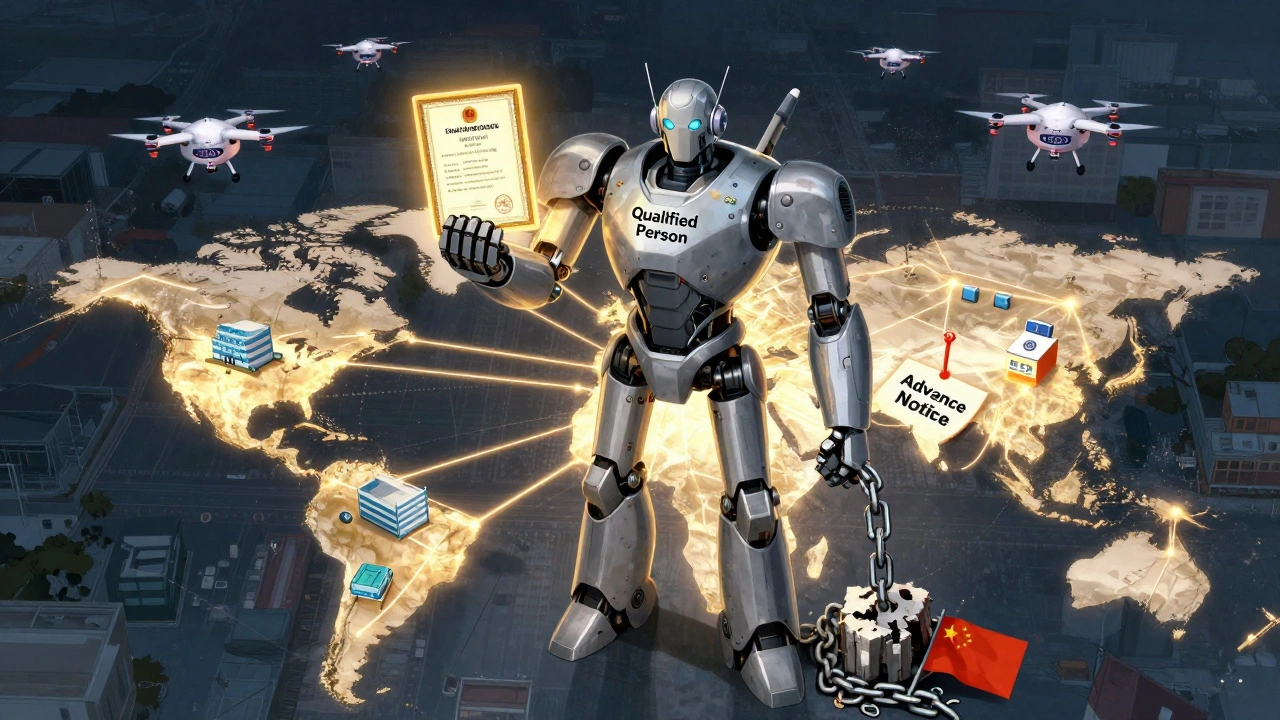
Global Cooperation and Supply Chain Risks
The FDA isn’t working alone. It shares inspection reports and training with regulators in Australia (TGA), Japan (PMDA), and the European Medicines Agency (EMA). This helps avoid duplication and builds trust. But it doesn’t fix the core problem: the U.S. still depends on two countries for most of its generic drug ingredients. India supplies 40% of active pharmaceutical ingredients. China supplies 13%. Together, they make up nearly 90% of all generic drugs used in the U.S. That’s a massive concentration risk. If a single facility fails, it can cause shortages of life-saving drugs like insulin, antibiotics, or blood pressure meds. The FDA’s plan to hire 200 new foreign inspectors by 2026 is a start. But experts warn that even with more staff, supply chains will feel the strain in the short term. Evaluate Pharma predicts a 15-20% dip in generic drug availability in late 2025 and early 2026 as facilities scramble to comply.What This Means for Patients
You shouldn’t have to wonder if your generic pill is safe. The FDA’s new approach means more inspections, fewer cover-ups, and better accountability. That’s good news for your health. But it also means delays. Some drugs may become harder to find. Prices might rise slightly as manufacturers absorb new compliance costs. That’s the trade-off for safety. The goal isn’t to shut down foreign factories. It’s to make sure they meet the same standards as U.S. ones. Because when it comes to your medicine, location shouldn’t matter. Quality should.What You Can Do
As a patient, you don’t need to track FDA inspection reports. But you can stay informed:- Check the FDA’s website for drug shortage alerts
- Ask your pharmacist if your generic drug has changed manufacturers
- Report side effects or unusual symptoms-especially if they’re new
Are generic drugs made overseas safe?
Yes-when they’re made under FDA-approved standards. The FDA requires foreign manufacturers to follow the same CGMP rules as U.S. factories. The difference used to be enforcement: foreign sites got advance notice for inspections, making it easier to hide problems. Since May 2025, the FDA has been conducting unannounced inspections at foreign facilities at the same rate as domestic ones, significantly improving oversight and safety.
How often does the FDA inspect foreign drug factories?
Before May 2025, the FDA conducted about 3,000 foreign inspections per year, mostly with weeks of advance notice. Now, the agency aims to conduct unannounced inspections at at least 50% of foreign facilities by mid-2026. That’s a major increase in enforcement, with plans to hire 200 new foreign inspectors by 2026 to support the effort.
What happens if a foreign factory fails an FDA inspection?
If inspectors find serious violations-like falsified data, contamination, or poor recordkeeping-the FDA issues a Form 483 listing the issues. If the problems aren’t fixed, the agency can issue a warning letter, block imports of the facility’s products, or even ban it from exporting to the U.S. entirely. In extreme cases, the FDA can initiate legal action or work with U.S. Customs to seize shipments.
Why are most generic drugs made in India and China?
India and China produce generic drugs at significantly lower costs due to lower labor expenses, established chemical manufacturing infrastructure, and decades of experience supplying global markets. India alone supplies 40% of the active pharmaceutical ingredients used in U.S. generics, and China provides 13%. Their scale and efficiency make them dominant players-but also create supply chain risks if oversight isn’t tight.
Will the new FDA rules make generic drugs more expensive?
In the short term, yes. Manufacturers are spending more on compliance-training, digital systems, audits, and hiring quality staff. A 2025 survey found 68% of foreign manufacturers expect costs to rise 15-25%. That could lead to higher prices or temporary shortages. But in the long run, stronger oversight reduces the risk of recalls and drug failures, which can be far more costly to the healthcare system.
How can I find out where my generic drug is made?
The FDA doesn’t require manufacturers to list the country of origin on drug labels. But you can check the FDA’s Drug Shortages database or search for the drug’s manufacturer on the FDA’s website. Some pharmacies also provide this information upon request. If you’re concerned, ask your pharmacist-they often have access to supplier details.