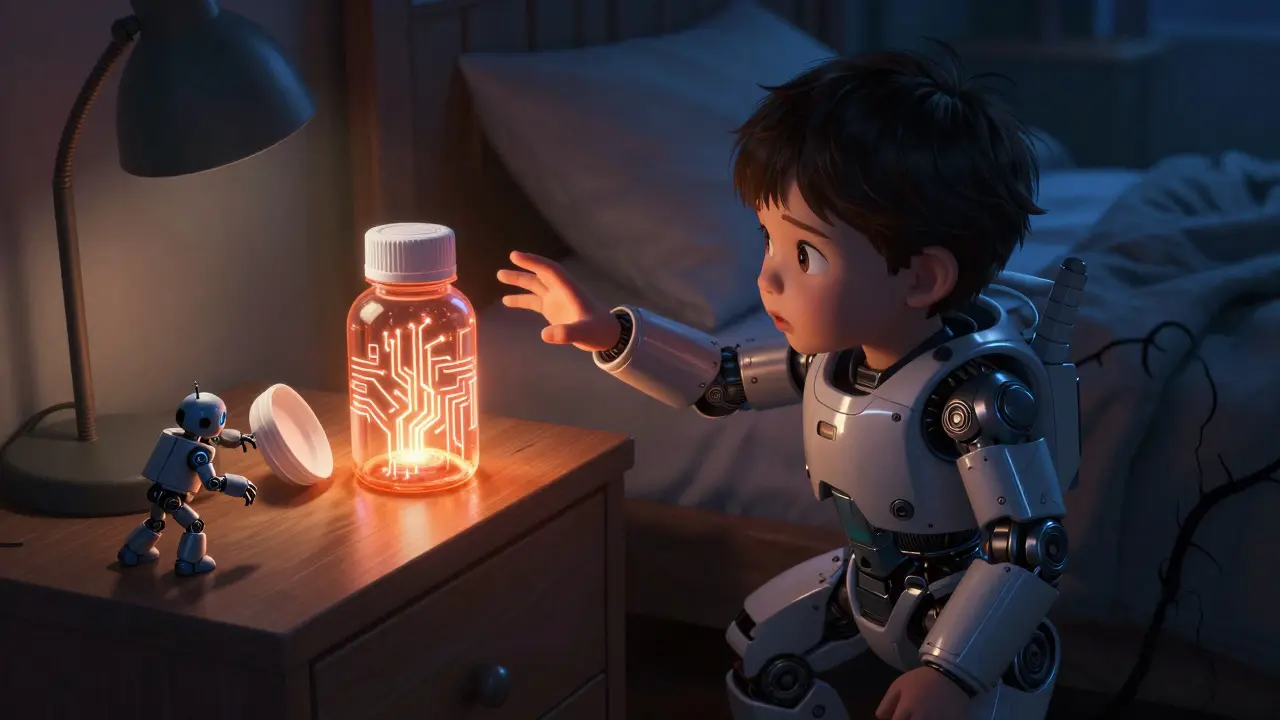
Every year, tens of thousands of children under five end up in emergency rooms because they got into medicine they weren’t supposed to. Not because they were trying to be naughty. Not because their parents didn’t care. But because medicine was left within reach, labeled confusingly, or dosed with a kitchen spoon. This isn’t rare. It’s common. And it’s preventable.
Why Kids Get Into Medicine
Children under five are natural explorers. They put things in their mouths to learn about the world. A bottle of liquid acetaminophen on the nightstand? To them, it looks like candy. A pill bottle left open on the counter after a doctor’s visit? Just another toy to twist and turn. The child-resistant cap on the bottle might seem like enough protection, but here’s the truth: 10% of kids can open it by age 3.5. That’s not a flaw in the design-it’s development. Kids are curious, persistent, and strong-willed when they want something.According to CDC data, emergency visits for accidental medication exposure in young children peaked at 76,000 in 2010. While that number has dropped since then, thanks to national efforts, it’s still far too high. The biggest culprits? Liquid pain relievers like acetaminophen and antihistamines like diphenhydramine. These are common in most homes. And they’re dangerous in even small extra doses.
How Medication Mistakes Happen
Most overdoses aren’t caused by theft or rebellion. They’re caused by simple, everyday mistakes:- Using a kitchen spoon instead of the dosing cup or syringe that came with the medicine
- Confusing infant formula (160 mg/5 mL) with children’s formula (160 mg/5 mL) - wait, they’re the same? No. Some brands changed concentrations without changing the bottle color. Parents didn’t know.
- Leaving pills or bottles on the counter, bedside table, or purse after use
- Dosing twice because they’re not sure if the first dose was given
- Not reading the label and guessing the dose based on age instead of weight
A 2022 analysis of 1,200 reported cases found that 78% of errors involved liquid medications and wrong measurements. One parent on Reddit shared how their 2-year-old got into blood pressure pills left on the nightstand. Another parent said their child opened a child-resistant cap after 10 minutes of twisting - and they didn’t even notice until the child started vomiting.
The PROTECT Initiative: What’s Being Done
In 2008, the CDC launched the PRevention of Overdoses and Treatment Errors in Children (PROTECT) Initiative. It’s not a law. It’s a collaboration. Pharmaceutical companies, packaging makers, doctors, pharmacists, and safety advocates all worked together to fix the system.They focused on three things:
- Packaging: Child-resistant caps that click when properly closed. Flow restrictors in liquid bottles to slow pouring. These aren’t optional anymore - they’re required by law for most pediatric meds.
- Labeling: All dosing instructions must now be in milliliters (mL), not teaspoons or tablespoons. That’s because a teaspoon can vary from 4-6 mL depending on the spoon. A syringe marked in mL? Precise.
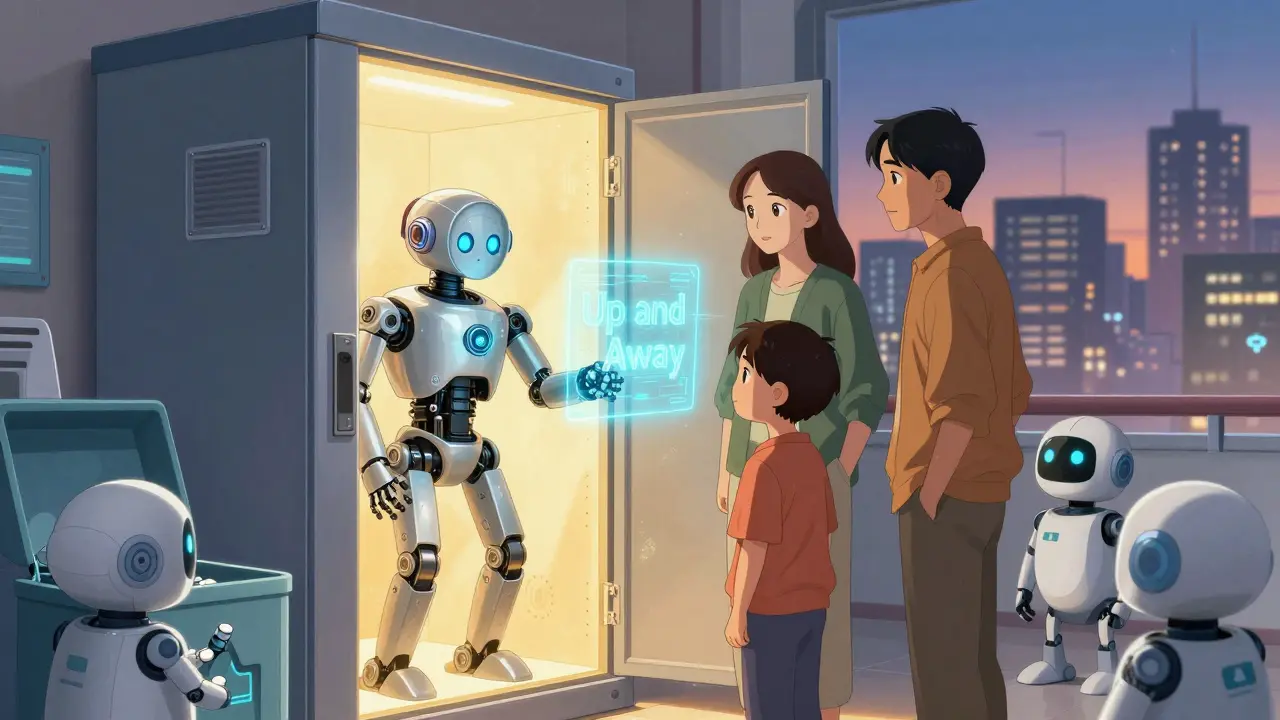
- Education: The Up and Away and Out of Sight campaign teaches parents to store meds locked up, out of reach, and never in purses or drawers kids can open.
By 2022, 95% of manufacturers had switched to mL-only labeling. That’s huge. But not everything’s fixed. Some liquid opioids still don’t have flow restrictors. And many parents still don’t know what “child-resistant” actually means - it doesn’t mean “child-proof.”
What You Can Do Right Now
You don’t need to wait for a new law or a better bottle. Here’s what works, today:- Store all meds in a locked cabinet - at least 4 feet off the ground. Not on the counter. Not in the bathroom. Not in your purse. Even if you’re just going to the next room.
- Always use the dosing device that comes with the medicine. No spoons. No shot glasses. No medicine cups from another bottle. Use the syringe or cup provided - and clean it after each use.
- Check the concentration. Infant acetaminophen and children’s acetaminophen used to be different. Now they’re mostly the same, but some older bottles or store brands might still vary. Always read the label: “160 mg per 5 mL” is standard. If it says something else, double-check with your pharmacist.
- Dispose of unused meds properly. Don’t flush them. Don’t toss them in the trash. Use a take-back program at your pharmacy or hospital. If none is available, mix pills with coffee grounds or cat litter, seal them in a bag, and throw them away. This stops kids - and pets - from getting into them.
- Keep a list of all medications in your home. Especially if you have visitors. Grandparents, babysitters, or friends might not know what’s in your medicine cabinet.
What to Do If Your Child Gets Into Medicine
If you suspect your child swallowed medicine they shouldn’t have - even if they seem fine - act fast.- Don’t wait for symptoms. Some overdoses take hours to show signs.
- Call Poison Control immediately. In the U.S., dial 1-800-222-1222. They’re free, confidential, and available 24/7. Have the medicine bottle with you when you call.
- Do not induce vomiting. That can make things worse.
- If it’s an opioid overdose - and you have naloxone - use it. Naloxone is now approved for children. It comes as a nasal spray or injection. The SAMHSA Overdose Prevention Toolkit gives clear steps for kids: one spray in each nostril, or one injection in the thigh. Even if you’re unsure, use it. It won’t hurt a child who didn’t take opioids.
- Call 911 after giving naloxone. The effects wear off in 30-90 minutes. The opioid might still be in their system.
One mother in Pennsylvania said she gave naloxone to her 3-year-old after finding an opioid pill in their mouth. The child woke up within minutes. She said, “I didn’t know I’d need it - but now I keep it in my purse.”
The Gaps Still Left
Progress has been made, but big problems remain:- Only 32% of households store meds in locked cabinets.
- Only 58% use child-resistant caps correctly - meaning they don’t click them shut.
- Just 63% of pediatricians talk about safe storage during checkups.
- Naloxone is approved for kids, but most families don’t have it. Doctors rarely prescribe it unless the child is on opioids - even though accidental exposure can happen with any pill.
Smart packaging exists - like AdhereIT’s connected pill box or Hero Health’s automated dispenser - but they cost $200-$500. Most low-income families can’t afford them. That’s why education and simple changes matter more than ever.
What’s Next
By 2025, the FDA plans to require flow restrictors on all liquid opioid medications. The CDC’s Up and Away campaign will launch in 12 new languages by 2026. And the American Society of Health-System Pharmacists will release its first-ever Pediatric Medication Safety Best Practices Guide in late 2024.The goal? Reduce emergency visits for pediatric overdoses by 10% by 2030. That’s 14,000 to 20,000 fewer hospital trips. That’s millions of dollars saved. And most importantly - it’s thousands of children kept safe.
You don’t need to be perfect. You just need to be consistent. Lock it up. Use the right tool. Know what to do. That’s how you stop an accident before it happens.
What should I do if my child swallows medicine they shouldn’t have?
Call Poison Control at 1-800-222-1222 right away - even if your child seems fine. Have the medicine bottle handy. Do not make them vomit. If it’s an opioid and you have naloxone, use it immediately, then call 911. Time matters.
Are child-resistant caps really effective?
They reduce access by about half, but they’re not foolproof. About 10% of children can open them by age 3.5. That’s why storing medicine in a locked cabinet - not just relying on the cap - is essential.
Why do medicine labels say mL instead of teaspoons?
Kitchen teaspoons vary in size - anywhere from 4 to 6 milliliters. That’s a dangerous difference when giving medicine. A dosing syringe or cup marked in mL is exact. Since 2019, federal rules require all pediatric liquid meds to use mL only.
Can I use a regular spoon if I don’t have the dosing device?
Never. A kitchen spoon is not accurate. If you lost the dosing tool, call your pharmacy. They’ll give you a new one for free. Or buy a plastic dosing syringe at any drugstore - they cost less than $2.
Is naloxone safe for young children?
Yes. Naloxone is FDA-approved for children of all ages. It reverses opioid overdoses and has no effect if opioids aren’t present. The nasal spray version is easy to use - one spray in each nostril. Keep it in your home if you or anyone nearby takes opioids.
How do I dispose of old or unused medications?
Use a drug take-back program at your pharmacy or hospital. If that’s not available, mix pills with coffee grounds or cat litter, seal them in a plastic bag, and throw them in the trash. Never flush them - they pollute water supplies.
What’s the most common cause of pediatric medication overdoses?
Dosing errors with liquid medications - especially using kitchen spoons instead of proper dosing tools. The second biggest cause is confusion between different concentrations of the same drug, like infant vs. children’s acetaminophen.
Should I keep naloxone at home even if no one takes opioids?
If you have visitors who take opioids, or if you live in an area with high opioid use, yes. Accidental exposure can happen with any pill found in the home. Naloxone is safe, easy to use, and can save a life. Many pharmacies now sell it without a prescription.