PPI for GI Protection: What You Need to Know About Acid Control and Safety
When doctors prescribe a proton pump inhibitor, a class of drugs that block acid production in the stomach to prevent damage to the digestive tract. Also known as PPIs, they are one of the most common ways to protect the stomach lining from acid-related injury. Whether you’re taking NSAIDs like ibuprofen, have a history of ulcers, or were diagnosed with GERD, PPIs are often the go-to tool. But they’re not magic pills—they come with trade-offs, and not everyone needs them long-term.
PPIs work by shutting down the acid pumps in stomach cells, which reduces the amount of acid that can irritate or burn the esophagus, stomach, or duodenum. That’s why they’re used alongside painkillers like aspirin or ibuprofen—to lower the risk of bleeding ulcers. But here’s the catch: if you’re not actually at high risk for GI damage, taking a PPI just in case might do more harm than good. Studies show long-term use can lead to nutrient deficiencies, increased infection risk, and even bone thinning. And while drugs like vonoprazan, a newer acid blocker that works differently than traditional PPIs are showing promise for faster relief and fewer side effects, they’re not yet widely available everywhere.
Who really benefits? People on long-term NSAIDs, those with a past ulcer or H. pylori infection, or patients on blood thinners like aspirin. But if you only take an NSAID once in a while, or your heartburn is mild and occasional, lifestyle changes or H2 blockers like famotidine might be just as effective—with less risk. Many patients stay on PPIs for years because it’s easier than stopping, but tapering off under medical guidance is often possible.
What you’ll find in the posts below isn’t just a list of drugs. It’s a real-world look at how PPIs fit into daily life: how they interact with other meds, what alternatives exist, how to know if you still need them, and when to question your prescription. You’ll see how people manage GI protection while avoiding unnecessary drugs, how newer options compare, and what to watch for if you’ve been on PPIs too long. This isn’t theory—it’s what patients and providers are dealing with right now.
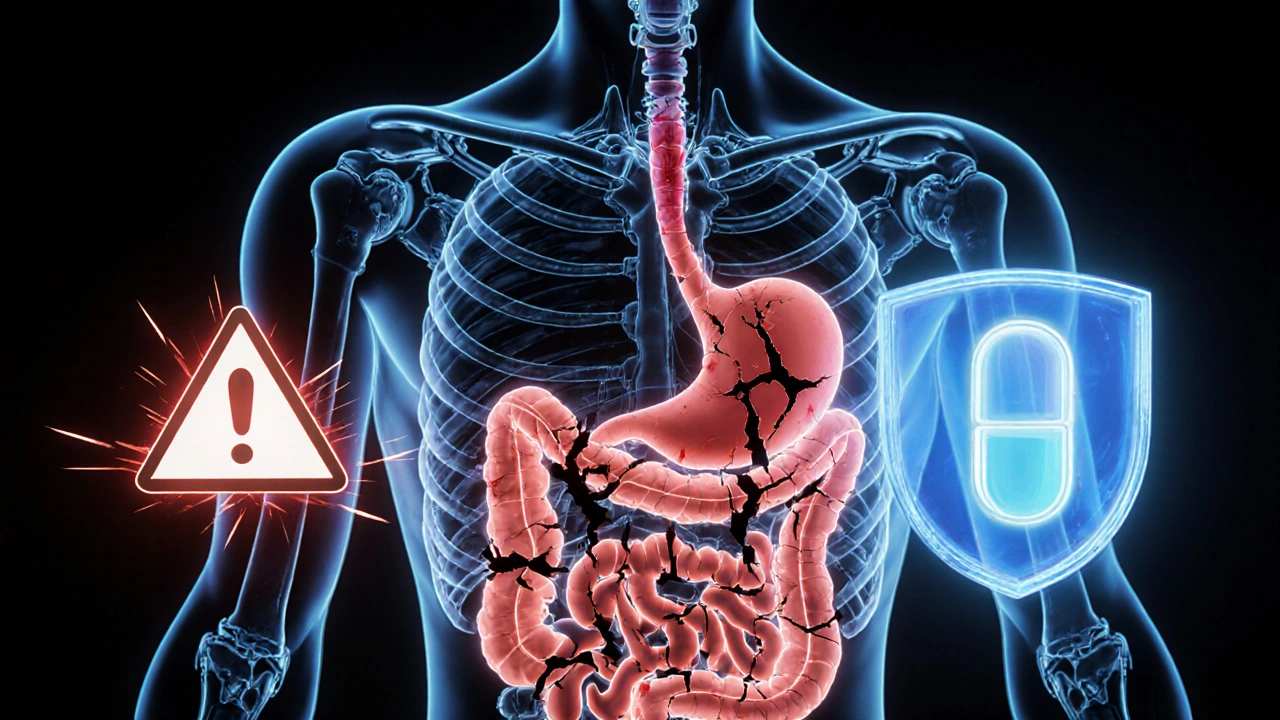
Steroids with NSAIDs: How This Common Drug Combo Raises GI Bleeding Risk and How to Prevent It
Taking steroids and NSAIDs together can raise your risk of serious GI bleeding by up to 12 times. Learn why this combo is dangerous, which NSAIDs are safest, and how a simple PPI can prevent life-threatening complications.