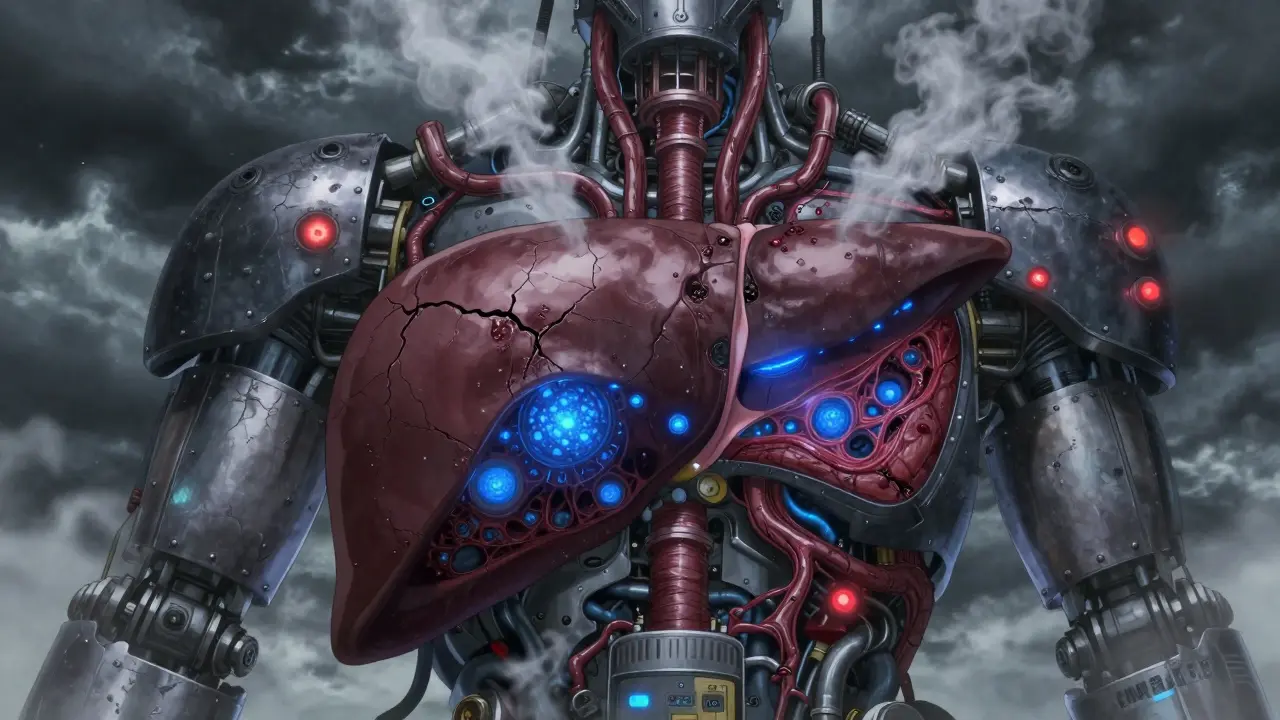
When your liver gets scarred, it doesn’t heal the way skin does. Instead of repairing itself, it builds tough, fibrous tissue that blocks blood flow and shuts down its ability to work. This isn’t just damage-it’s cirrhosis, the final stage of chronic liver disease. And once it sets in, the liver can’t undo what’s been done. The good news? You can still stop it from getting worse-if you catch it early.
What Exactly Is Cirrhosis?
Cirrhosis isn’t a disease on its own. It’s the result of years of damage. Every time your liver gets injured-by alcohol, hepatitis, fat buildup, or toxins-it tries to repair itself. But over time, the repair process goes wrong. Scar tissue piles up, replacing healthy liver cells. This scar tissue doesn’t help the liver do its job. It just gets in the way.The liver is your body’s chemical factory. It cleans your blood, makes proteins, stores energy, and breaks down medicines. When scar tissue takes over, these functions slow down or stop. That’s when symptoms start showing up: swelling in the belly, confusion, yellow skin, easy bruising, and extreme fatigue.
Doctors divide cirrhosis into two stages: compensated and decompensated. In compensated cirrhosis, your liver is badly scarred but still managing to keep you alive. You might feel fine. Blood tests might show problems, but you have no symptoms. That’s why so many people don’t know they have it until something goes wrong.
Decompensated cirrhosis is when the liver can’t keep up anymore. Fluid builds up in the abdomen (ascites), toxins flood the brain (hepatic encephalopathy), bleeding starts in the stomach or esophagus, and jaundice turns your skin yellow. At this point, survival drops sharply. Without a transplant, many won’t make it past a year.
What Causes Cirrhosis?
Not all liver damage leads to cirrhosis-but some causes are far more likely to push you there.- Alcohol misuse: Long-term heavy drinking is still one of the top causes. Even if you stop drinking, the scarring may already be irreversible.
- Non-alcoholic fatty liver disease (NAFLD): This is now the fastest-growing cause in the U.S. It’s tied to obesity, diabetes, and high cholesterol. About 24% of cirrhosis cases today come from NAFLD, and that number is rising.
- Hepatitis B and C: Chronic viral infections slowly eat away at the liver. Hepatitis C, in particular, can hide for decades without symptoms until cirrhosis is advanced.
- Autoimmune hepatitis: Your immune system attacks your liver by mistake.
- Genetic disorders: Like hemochromatosis (too much iron) or Wilson’s disease (too much copper).
What’s changing? In the past, alcohol and hepatitis were the main villains. Now, NAFLD is overtaking them. That means more people with no history of drinking or drug use are ending up with cirrhosis because of metabolic health issues.
How Is It Diagnosed?
You won’t always feel it. That’s why blood tests and imaging are critical.Doctors look for signs like:
- High bilirubin (a waste product that builds up when the liver can’t process it)
- Low albumin (a protein the liver makes-low levels mean trouble)
- High INR (a measure of how long your blood takes to clot)
- Low platelets (because scar tissue blocks blood flow to the spleen, which then traps platelets)
Imaging tools like ultrasound elastography or MRI elastography can now measure liver stiffness. A reading above 12.5 kPa strongly suggests cirrhosis. These tests have replaced liver biopsies for most people-not because they’re perfect, but because they’re safer and just as accurate in most cases.
But here’s the catch: non-invasive tests can sometimes overestimate scarring if you have active inflammation or fluid buildup. That’s why doctors always look at the full picture-your history, symptoms, lab results, and imaging-before giving a diagnosis.
Can Cirrhosis Be Reversed?
This is the question everyone wants answered. The short answer: not once it’s full-blown cirrhosis.Early fibrosis? Yes, sometimes. If you stop drinking, control hepatitis, or lose weight before the scarring becomes widespread, the liver can heal. But once the structure is permanently distorted-once the scar tissue forms thick bands around regenerative nodules-that’s it. No pill, no diet, no supplement can undo it.
That’s why timing matters. If you’re diagnosed with compensated cirrhosis, your goal isn’t to reverse it. It’s to prevent it from becoming decompensated. That means:
- Absolutely no alcohol
- Getting vaccinated for hepatitis A and B
- Taking medications like beta-blockers to lower pressure in the liver’s blood vessels
- Watching your sodium intake (under 2,000 mg a day)
- Regular monitoring for bleeding, fluid buildup, or brain fog
Many people don’t realize how much lifestyle changes can delay disaster. One Cleveland Clinic study found that patients who worked with a team of hepatologists, dietitians, and addiction specialists cut their risk of decompensation by 40%.
When Is a Liver Transplant Needed?
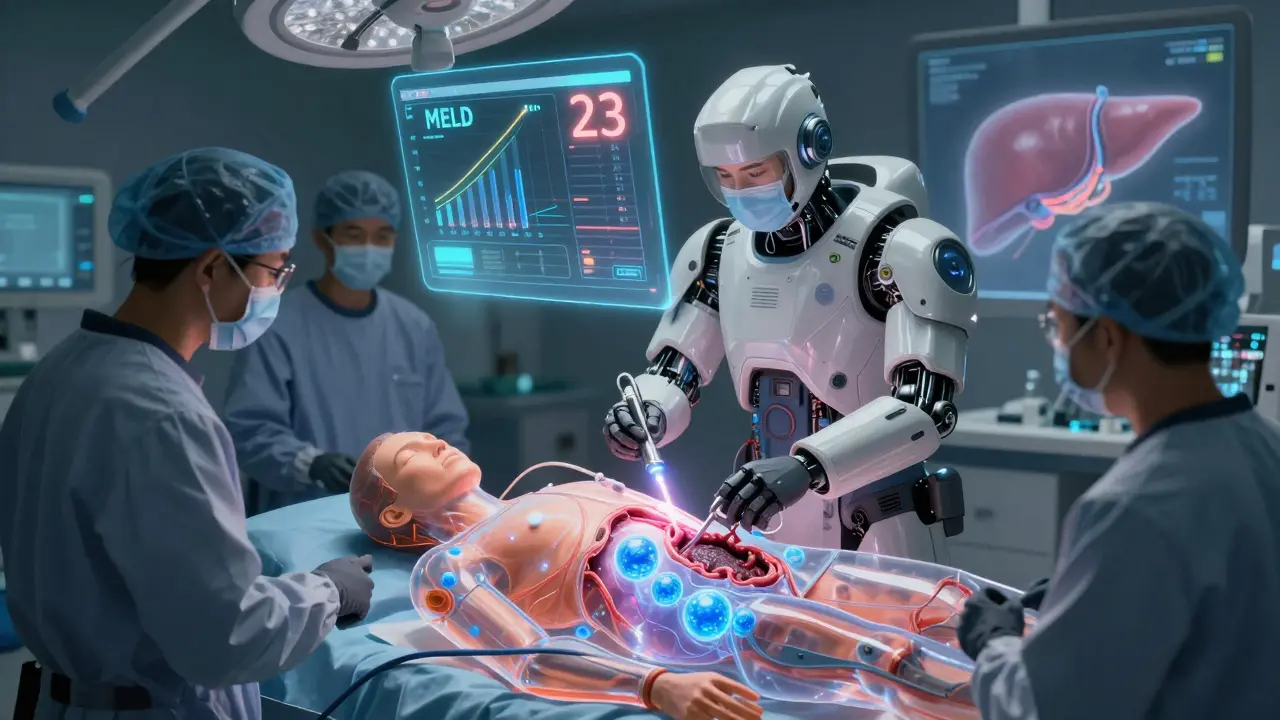
Transplantation is the only cure for end-stage cirrhosis. But it’s not simple.Doctors use two scoring systems to decide who gets priority: the Child-Pugh score and the MELD score. MELD (Model for End-Stage Liver Disease) is now the standard. It’s based on three blood tests: bilirubin, creatinine, and INR. Scores range from 6 to 40. The higher the score, the sicker you are-and the higher your chance of dying without a transplant.
If your MELD score is above 15, you’re in serious danger. Above 20, you’re on the fast track. But here’s the problem: there aren’t enough livers. In 2022, the U.S. performed just 8,780 liver transplants. There were 14,300 people on the waiting list. That means about 12% of people on the list die each year before they get a chance.
Transplant isn’t just about finding a donor. It’s about being healthy enough to survive the surgery. If you’re still drinking, you won’t qualify. If you have severe heart or lung disease, you won’t qualify. If you can’t follow complex medical instructions, you won’t qualify. It’s not just a medical decision-it’s a lifestyle commitment.
Post-transplant survival is good: 70-80% of patients live five years or more. But you’ll need to take anti-rejection drugs for life. And even then, the new liver can still get damaged by alcohol, obesity, or viruses.
What’s on the Horizon?
Science isn’t standing still. New treatments are coming.One promising area is antifibrotic drugs. In 2023, a phase 3 trial showed that a drug called simtuzumab slowed fibrosis progression in NASH-related cirrhosis by 30%. That’s not a cure-but it’s a step toward stopping the damage before it’s too late.
Another breakthrough is machine perfusion. Instead of keeping donor livers on ice, doctors now pump oxygenated blood through them. This keeps the liver alive longer and even repairs damaged ones. A 2023 Lancet study found this increased the number of usable livers by 22%.
And then there’s stem cell therapy. Early human trials showed that injecting liver cells into patients with cirrhosis lowered their MELD scores by 40% within six months. It’s not ready for wide use yet-but it’s a sign that regeneration might one day be possible.
The future of cirrhosis care is moving toward personalization. Instead of treating everyone with the same score, doctors may soon use genetic markers to predict who’s likely to progress fast-and who might respond to new drugs.
What Should You Do If You’re Diagnosed?
If you’ve been told you have cirrhosis, don’t panic. But don’t wait either.First, find a liver specialist. Not a general doctor. Not a gastroenterologist who sees liver disease once in a while. A hepatologist. They know the latest guidelines, the right tests, and how to manage complications.
Second, get your causes under control. If you drink, stop. If you’re overweight, start losing weight. If you have hepatitis, get treated. If you have diabetes, get it under control. These aren’t suggestions-they’re survival steps.
Third, learn the warning signs. If you start feeling confused, your belly swells suddenly, you vomit blood, or your skin turns yellow, go to the ER. Don’t wait for your next appointment.
And finally, connect with support. The American Liver Foundation offers nurse navigation (call 1-800-GO-LIVER). Many hospitals now have multidisciplinary clinics that include dietitians, social workers, and mental health counselors. You’re not alone in this.
Cirrhosis is serious. But it’s not a death sentence-if you act fast. The scar tissue won’t disappear. But your life can still have years left in it.
Can cirrhosis be reversed naturally?
No, once cirrhosis is fully developed, the scar tissue cannot be reversed naturally or with any known medication. However, early-stage liver fibrosis (before cirrhosis) can sometimes improve if the cause-like alcohol, hepatitis, or obesity-is removed. Once cirrhosis is diagnosed, the focus shifts to preventing further damage and avoiding complications.
How long can you live with cirrhosis?
Life expectancy depends on the stage. In compensated cirrhosis, 5-year survival is 80-90%. Once it becomes decompensated, survival drops to 20-50% within five years. Without a transplant, most people with advanced cirrhosis live less than two years after symptoms appear. The MELD score gives the most accurate prediction: a score above 20 means a 50% chance of dying within a year without a transplant.
What are the first signs of cirrhosis?
Early signs are often subtle: fatigue, loss of appetite, weight loss, nausea, or mild abdominal discomfort. Many people have no symptoms at all until the disease is advanced. Blood tests showing elevated liver enzymes, low platelets, or abnormal clotting are often the first clues. By the time jaundice, swelling, or confusion appear, the condition is already severe.
Can you drink alcohol with cirrhosis?
Absolutely not. Even small amounts of alcohol can accelerate liver damage and increase the risk of complications like bleeding, infection, and liver failure. If you have cirrhosis from alcohol, stopping immediately is the single most important step you can take to survive. If you have cirrhosis from any other cause, alcohol still adds unnecessary stress to your liver.
What foods should you avoid with cirrhosis?
Avoid high-sodium foods-like processed snacks, canned soups, deli meats, and soy sauce-to prevent fluid buildup. Limit protein only if you have hepatic encephalopathy (brain fog), as too much can worsen confusion. Avoid raw shellfish (risk of infection), and stay away from supplements or herbal products not approved by your doctor, as many can damage the liver further.
Is liver transplant the only cure?
Yes, liver transplant is currently the only cure for end-stage cirrhosis. No medication can restore a scarred liver to full function. While new therapies like antifibrotic drugs and stem cell treatments are in development, none have yet replaced transplantation. Transplant offers the best chance for long-term survival-but only if you’re eligible and a donor organ becomes available in time.
Final Thoughts
Cirrhosis doesn’t come with a warning siren. It creeps in silently, often for years. By the time you feel it, the damage is done. But that doesn’t mean you’re out of options. The key is early detection, strict lifestyle changes, and working with a specialist who knows how to manage it.The liver is one of the few organs that can regenerate-but only if you give it a chance. Stop the damage. Control the causes. Monitor the signs. And if you’re heading toward failure, don’t wait for the worst to happen before you ask about transplant.
You’re not just managing a disease. You’re buying time-for yourself, for your family, for the future.