GI Bleeding Risk: What Medications Increase It and How to Stay Safe
When you take GI bleeding risk, the chance of dangerous bleeding in your stomach or intestines from medications or health conditions, it’s not just a footnote on a prescription label—it’s something that can change your health overnight. Many people don’t realize that common pain relievers, blood thinners, and even daily aspirin can quietly wear down your gut lining. This isn’t rare. Studies show over 100,000 hospitalizations each year in the U.S. are tied to drug-induced GI bleeding, and most of those cases involve drugs people thought were harmless.
The biggest culprits? NSAIDs, nonsteroidal anti-inflammatory drugs like ibuprofen and naproxen used for pain and inflammation, and aspirin and blood thinners, medications that prevent clots but also make it harder for your body to stop bleeding. When you combine them—say, taking daily low-dose aspirin with an occasional ibuprofen for a headache—the risk doesn’t just add up, it multiplies. People over 65, those with a history of ulcers, or anyone on multiple meds are especially vulnerable. Even something as simple as drinking alcohol while on these drugs can tip the scales toward an emergency.
It’s not just about avoiding the drugs. It’s about knowing what to do if you can’t stop them. For example, if you’re on aspirin after a heart attack, your doctor might add a proton pump inhibitor like omeprazole to protect your stomach. Or if you need pain relief but have high GI bleeding risk, acetaminophen is often a safer pick than ibuprofen. And if you’re on a blood thinner like warfarin or apixaban, even green tea or certain supplements can throw off your balance. The goal isn’t to stop all meds—it’s to manage the risk smartly.
You’ll find real-world advice here on how to spot early signs of trouble—like dark stools, unexplained fatigue, or sudden stomach pain—before it turns into a crisis. We cover what combinations to avoid, which alternatives actually work, and how to talk to your pharmacist about your full med list. No fluff. Just clear, practical steps you can use today to lower your risk without sacrificing your treatment.
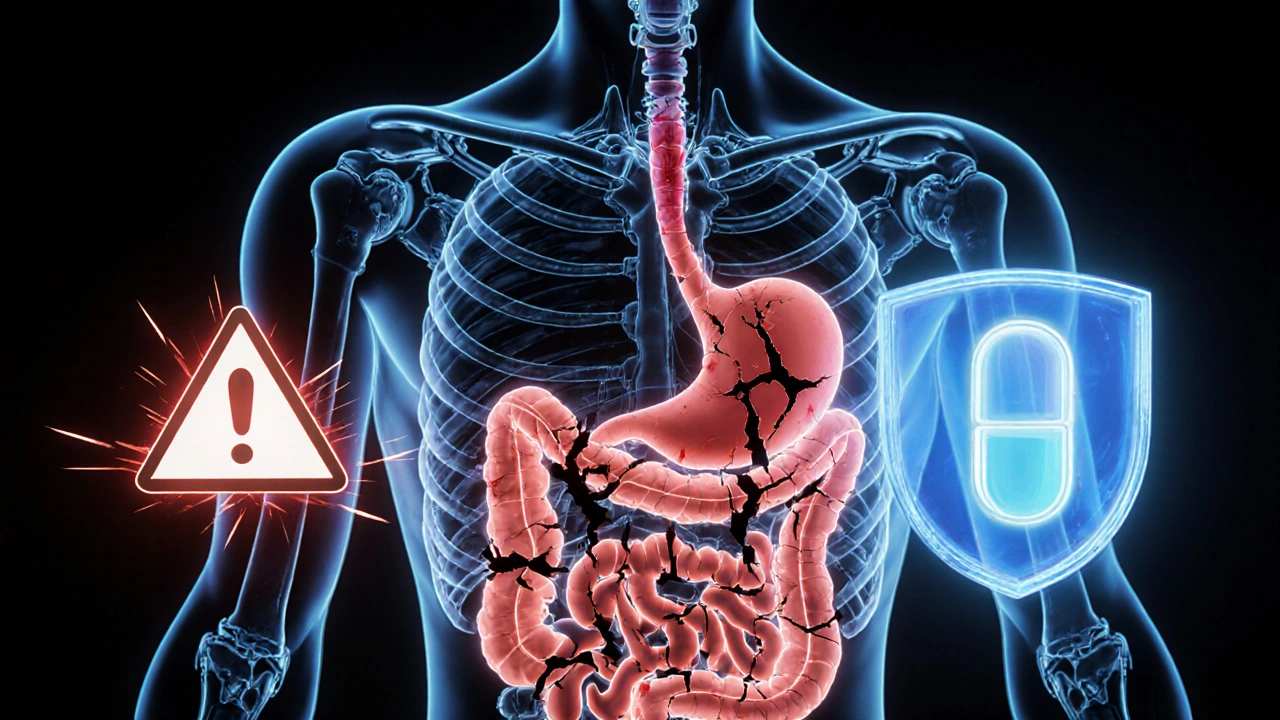
Steroids with NSAIDs: How This Common Drug Combo Raises GI Bleeding Risk and How to Prevent It
Taking steroids and NSAIDs together can raise your risk of serious GI bleeding by up to 12 times. Learn why this combo is dangerous, which NSAIDs are safest, and how a simple PPI can prevent life-threatening complications.