
Medication Risk Assessment Tool
This tool helps you understand your risk of developing medication-related suicidal thoughts based on factors discussed in the article.
When you start a new medication for depression or anxiety, you expect to feel better. But for some people, things get worse before they get better - and in rare cases, the medication itself triggers thoughts of suicide. This isn’t common, but it’s real. And if you or someone you care about is on medication and suddenly feels more agitated, restless, or overwhelmed by thoughts that don’t feel like their own, it could be a warning sign - not of failure, but of a dangerous side effect that needs immediate attention.
It’s Not Just Antidepressants
Most people think only antidepressants can cause this. But research shows it’s not that simple. While SSRIs like fluoxetine and SNRIs like duloxetine are the most commonly reported, other drugs are also linked to suicidal thoughts. Doxycycline, an antibiotic, has one of the highest causality scores for triggering these reactions. Others include painkillers like piroxicam, cancer drugs like paclitaxel, and even biologics like adalimumab. These aren’t psychiatric meds - yet they can still affect your brain chemistry. How? Some interfere with how your body processes vitamins or hormones, others alter neurotransmitter levels, and a few disrupt the liver enzymes that break down brain chemicals. The effect isn’t immediate. It can take days or even weeks. That’s why it’s easy to miss.The Three Red Flags You Can’t Ignore
There are three clear warning signs that show up before a suicidal thought becomes a plan. You don’t need to be a doctor to spot them.- Restlessness that won’t go away - This isn’t just being fidgety. It’s a deep, painful urge to move, pace, or shake. You can’t sit still. Your legs feel like they’re on fire. Your hands won’t stop twitching. This is called akathisia, and it’s the most common sign - seen in over half of cases. It’s not anxiety. It’s physical. And it’s a major risk factor for suicide.
- Thoughts that feel alien - You start having thoughts like, “I’d be better off dead,” but they don’t feel like yours. You don’t believe them. You’re horrified by them. That’s ego-dystonic thinking. It means the drug is pushing thoughts into your mind that clash with who you are. If you say, “I don’t even think like this,” but the thoughts keep coming, that’s a red flag.
- Sudden impulsiveness - You’ve always been cautious. Now you’re texting an ex at 3 a.m., canceling plans without warning, or making reckless decisions. You don’t plan ahead anymore. You act. Combine that with sadness or hopelessness, and you’ve got a perfect storm.
These don’t happen in isolation. They show up together. And they usually appear within the first four weeks - especially in the first 14 days after starting a new drug or changing the dose.
Who’s Most at Risk?
It’s not random. Certain people are more likely to experience this. Age is the biggest factor. People under 24 have more than double the risk compared to older adults. That’s why the FDA requires black box warnings on all antidepressants for this group. But it’s not just age. If you’ve tried to end your life before, your risk jumps by nearly half. If a close family member died by suicide, that adds another 32% risk. And if you already have anxiety on top of depression? Your risk goes up by almost 60%. Rapidly increasing the dose is another major trigger. Starting at full strength - instead of slowly building up - raises the chance of these reactions by over 60%.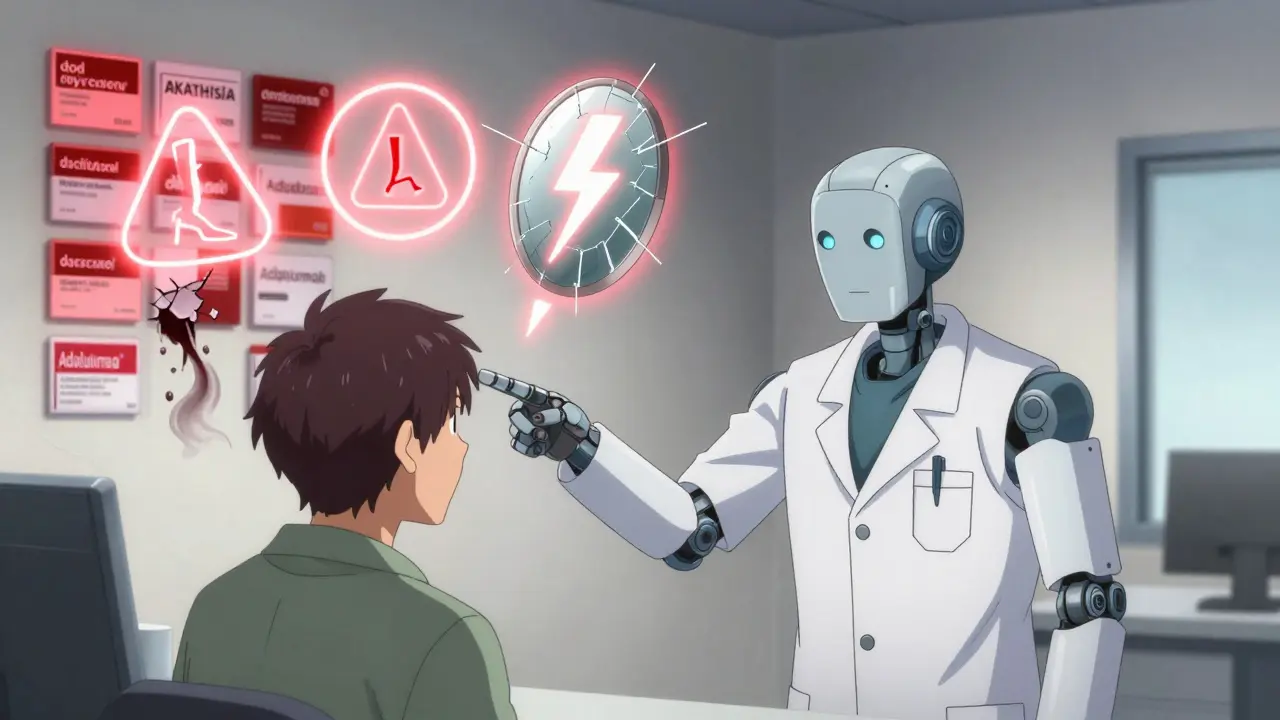
Why It Happens - And Why It’s Often Missed
Doctors are trained to look for depression getting worse. But what they’re seeing might not be depression at all. It’s something called activation syndrome - a mix of agitation, insomnia, irritability, and impulsivity triggered by the drug. The brain gets overstimulated. Serotonin surges. The body can’t adjust fast enough. And because these symptoms look like “treatment failure,” many patients are told to “stick with it” or “increase the dose.” That’s the worst thing you can do. Stopping the medication often leads to rapid improvement - in 87% of cases, the thoughts vanish once the drug is out of the system.What You Should Do - Right Now
If you’re on medication and notice any of these signs:- Don’t wait. Don’t assume it’s “just part of the process.”
- Call your prescriber immediately. Tell them exactly what you’re feeling: “I can’t sit still,” “I keep thinking about dying but I don’t want to,” “I feel like I’m losing control.”
- Ask about stopping or switching. You have the right to ask: “Could this be a reaction to the drug?”
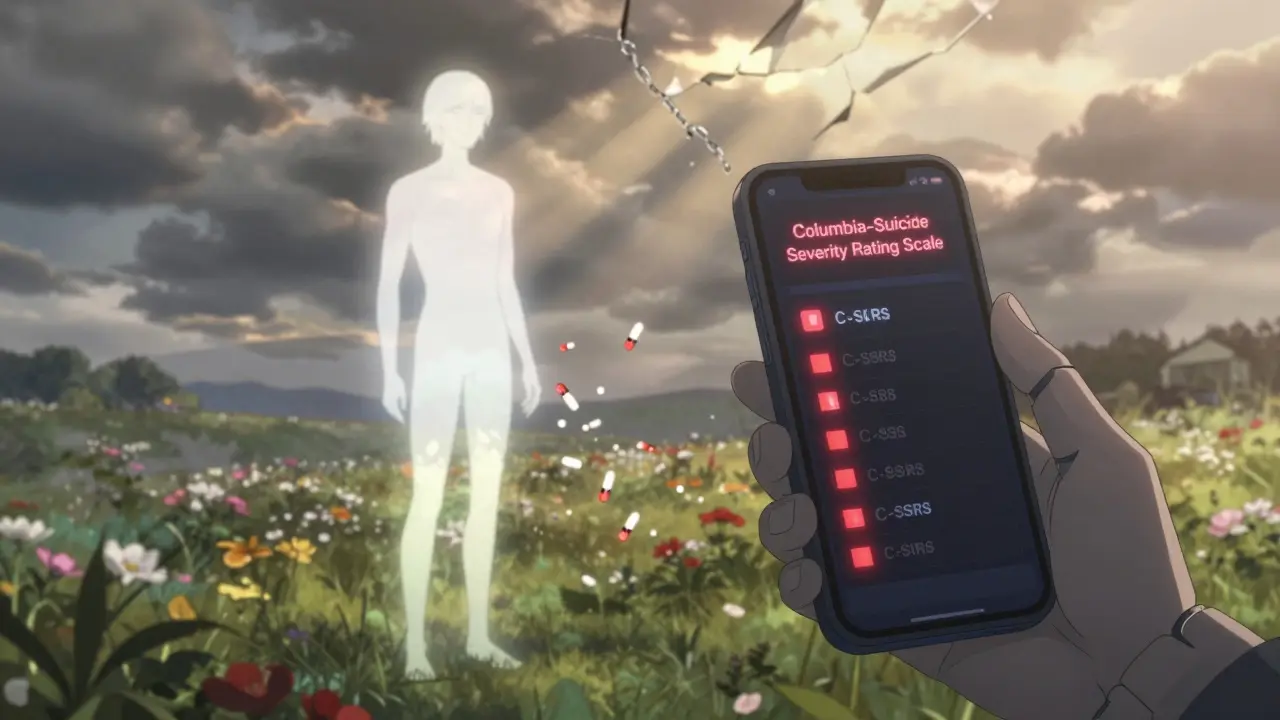
- Use the Columbia-Suicide Severity Rating Scale (C-SSRS). It’s free, simple, and used in clinics worldwide. You can find it online. Answer the questions honestly. If you score high, seek help immediately.
Many people don’t realize they can stop a medication without permission - especially if they’re in crisis. If your doctor is unavailable, go to an urgent care center or emergency room. Say: “I think this medication is making me suicidal.” They’ll listen.
What’s Being Done - And What’s Still Missing
The FDA now requires all antidepressants to carry warnings. But here’s the problem: 9 other drugs with strong links to suicidal thoughts aren’t labeled for this risk. That means millions of people are taking them without knowing the danger. Labs are now testing genetic markers that can predict who’s likely to react badly - especially variations in CYP2D6 and CYP2C19 genes. Smartphone apps are being tested to track sleep, movement, and social activity to catch early changes. And by 2025, the FDA plans to require all new antidepressants to test for activation syndrome before approval.But the biggest gap? Communication. Only 68% of doctors document warning signs during informed consent. Patients aren’t being told what to watch for. You have to ask. You have to be your own advocate.
You’re Not Alone - And This Isn’t Your Fault
Feeling this way doesn’t mean you’re weak. It doesn’t mean your treatment failed. It means your body reacted in a way that science is only now beginning to understand. Thousands of people have been through this. Many recovered fully after stopping the drug. Some switched to another medication. Others found help through therapy, lifestyle changes, or a different approach altogether. The key is catching it early. The sooner you speak up, the sooner you’ll feel like yourself again.If you’re reading this and you’re worried - reach out. Call a friend. Text a crisis line. Talk to your doctor. You don’t have to wait for a crisis to get help. And if you’re caring for someone who’s on medication - watch for the restlessness. Listen to the strange thoughts. Don’t dismiss them as “just mood swings.” That could save a life.
Can medication really cause suicidal thoughts if I’ve never had them before?
Yes. Many people who experience medication-related suicidal thoughts have never had them before. This is often triggered by drugs that overstimulate the brain - especially in the first few weeks of treatment. The thoughts feel foreign, which is a key sign they’re drug-induced, not a reflection of your true feelings.
How long does it take for these side effects to show up?
Most cases occur within the first 28 days, with 78% happening in the first two weeks. Some drugs, like antibiotics, can take up to three weeks. The timing depends on the medication, your metabolism, and whether the dose was increased too quickly.
If I stop the medication, will the thoughts go away?
In 87% of documented cases, suicidal thoughts disappeared after stopping the drug. It doesn’t happen instantly - it can take a few days to a couple of weeks - but they usually fade. Never stop cold without medical supervision, but do contact your doctor right away if you’re experiencing these symptoms.
Are children at higher risk than adults?
Yes. People under 24 have more than double the risk compared to older adults. That’s why the FDA requires black box warnings for all antidepressants in this age group. The brain is still developing, and certain medications can disrupt neurotransmitter balance more easily.
Can non-psychiatric drugs like antibiotics cause suicidal thoughts?
Yes. Doxycycline, piroxicam, and even some cancer drugs have been linked to suicidal ideation. These drugs may affect brain chemistry indirectly - by altering vitamin levels, gut bacteria, or liver enzyme activity. If you start a new non-psychiatric drug and notice sudden mood changes, restlessness, or intrusive thoughts, tell your doctor.
What should I ask my doctor before starting a new medication?
Ask: “What are the warning signs of a bad reaction?” “Could this cause restlessness or strange thoughts?” “Will we monitor me closely in the first month?” Make sure they explain akathisia, ego-dystonic thoughts, and impulsivity. If they can’t, ask for a second opinion. You have the right to understand the risks.
Is it safe to keep taking the medication if I’m having these thoughts but still feel somewhat better?
No. Feeling slightly better doesn’t outweigh the risk of a suicide attempt. Medication-related suicidal thoughts are not a sign of improvement - they’re a warning. Continuing the drug can lead to irreversible harm. Contact your prescriber immediately. Your safety matters more than any short-term gain.
Can I use a suicide risk assessment tool at home?
Yes. The Columbia-Suicide Severity Rating Scale (C-SSRS) is free, validated, and easy to use. It asks about suicidal thoughts, plans, and behaviors. You can find it online through mental health organizations. Answer honestly. If you score moderate or high, contact a professional immediately.
Why aren’t all risky drugs labeled for suicide risk?
Regulatory agencies focus first on psychiatric drugs because the link is strongest there. But research shows at least nine other drugs - including antibiotics and cancer treatments - carry significant risk. Many labels still don’t mention this. That’s why patient awareness and advocacy are critical. If you suspect a drug is causing harm, report it to your doctor and to the FDA’s MedWatch system.
What’s the long-term outlook for people who experience this?
Most recover fully once the drug is stopped. Many go on to find effective treatment through therapy, different medications, or lifestyle changes. The key is early recognition. With proper support, the risk of future episodes is low - especially if you avoid the triggering drug and work with a provider who understands these reactions.