Generic Drug Patents: What You Need to Know About Expiry, Alternatives, and Savings
When a pharmaceutical company develops a new drug, it gets a generic drug patents, legal protections that give the original maker exclusive rights to sell the drug for a set period, usually 20 years from the filing date. Also known as drug exclusivity, this system is meant to reward innovation—but it also keeps prices high until the patent runs out. After that, other companies can make and sell the same medicine under its generic name, often at a fraction of the cost.
But not all patents work the same way. Some drug makers file secondary patents, covering things like new dosages, delivery methods, or inactive ingredients. These don’t protect the active ingredient itself, but they can delay generic entry by years. That’s why you might still pay full price for a drug even after the original patent expired—because the company added a new patent on the pill’s coating or extended-release form. Regulators like the FDA have rules to stop abuse, but it still happens.
Once a patent expires, generic versions must prove they’re bioequivalent, meaning they deliver the same amount of medicine into your bloodstream at the same rate as the brand-name version. This doesn’t mean they’re identical—fillers, color, and shape can differ—but the active ingredient and how your body uses it must match. That’s why doctors trust generics: they work just as well. And if you’re on a long-term medication, switching to a generic can save you hundreds every year.
Some drugs, especially complex ones like injectables or extended-release pills, take longer to copy. That’s because proving bioequivalence for modified-release formulations, like pills that slowly release medicine over 12 hours, requires extra testing. These are the types of drugs where generic versions appear later—and sometimes not at all, if no company finds it worth the cost to develop them.
What you’ll find in this collection isn’t just about patents. It’s about what happens after they expire—and what happens when they don’t. You’ll read about how doctors push for generics to cut costs, why patients still hesitate, and how to spot when a generic switch might affect your treatment. There are real stories here: seniors saving money on blood pressure meds, parents choosing safe alternatives for kids, and people managing chronic conditions without breaking the bank.
Generic drug patents aren’t just legal paperwork—they’re the gatekeepers between high prices and real savings. Knowing how they work helps you ask the right questions, push back when needed, and make smarter choices about your health and your wallet.
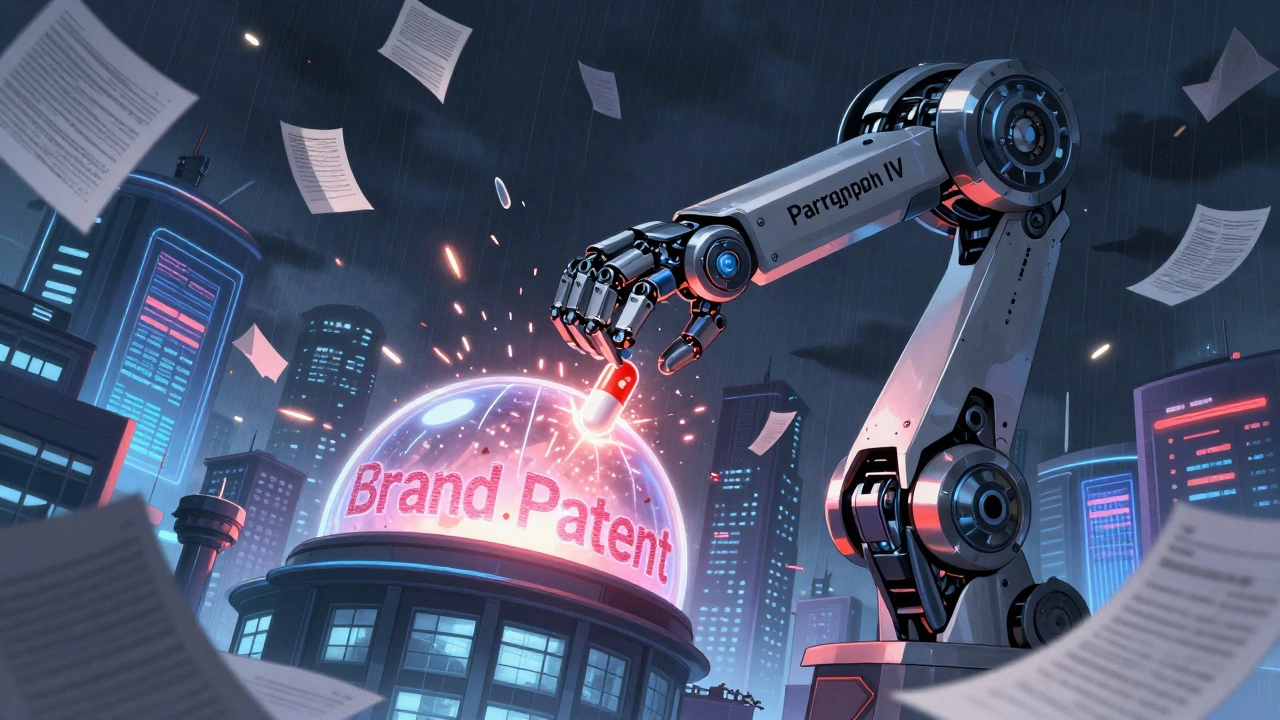
Paragraph IV Patent Challenges: How Generic Drug Makers Beat Brand Patents
Paragraph IV patent challenges let generic drug makers legally fight brand patents to bring cheaper medicines to market faster. Under the Hatch-Waxman Act, these challenges have saved patients over $1.2 trillion since 1990.