ANDA Filing: What It Means for Generic Drugs and Your Prescription Costs
When you pick up a generic pill at the pharmacy, chances are it got approved through an ANDA filing, a streamlined application process used by drug manufacturers to prove their generic version is identical in safety and effectiveness to the brand-name drug. Also known as an Abbreviated New Drug Application, it’s the backbone of how cheaper medications reach millions of patients every year. Unlike brand-name companies that spend years and billions on clinical trials, generic makers use existing data to show their version works the same way—no need to repeat every study. The FDA doesn’t require them to prove safety from scratch. They just need to prove bioequivalence: that the drug enters your bloodstream at the same rate and amount as the original.
This system isn’t just about saving money—it’s about access. A single prescription for a brand-name drug can cost $300 a month. The generic version? Often under $10. That’s not a coincidence. It’s the result of the ANDA filing, a regulatory pathway designed to encourage competition after patents expire. But it’s not simple. The FDA checks everything: how the pill breaks down in your stomach, how fast it gets absorbed, even how it reacts with alcohol. For modified-release pills—like extended-release versions of Adderall or Metformin—the testing gets even stricter. That’s why switching between generic brands of these drugs can sometimes cause noticeable differences, even if both are technically approved.
The process also ties into real-world safety. If a batch of generic drugs gets recalled, it’s often traced back to the ANDA filing, the official document that lists the manufacturer, production site, and exact formulation. That’s why knowing your medication’s lot number matters. It’s linked directly to the application that got it approved. And when a pharmacist tells you your new generic isn’t the same as your last one, it’s not just a change in packaging—it could mean a different manufacturer, different inactive ingredients, or even a different release profile. That’s why annual medication reviews and checking for drug interactions are so important, especially if you’re on multiple generics.
Behind every cheap pill is a paper trail. The ANDA filing is that trail. It’s how your doctor knows a generic is safe to prescribe, how your insurance approves it, and how you get the same effect without paying brand-name prices. But it’s not magic. It’s science, regulation, and oversight—tightened by real cases of failures, recalls, and patient harm. That’s why the posts below cover everything from bioequivalence testing to how to spot a risky generic switch, why some doctors still hesitate to recommend generics, and how the FDA catches problems before they reach your medicine cabinet. You’re not just reading about paperwork—you’re learning how to protect yourself in a system built to save you money, but only if you know what to look for.
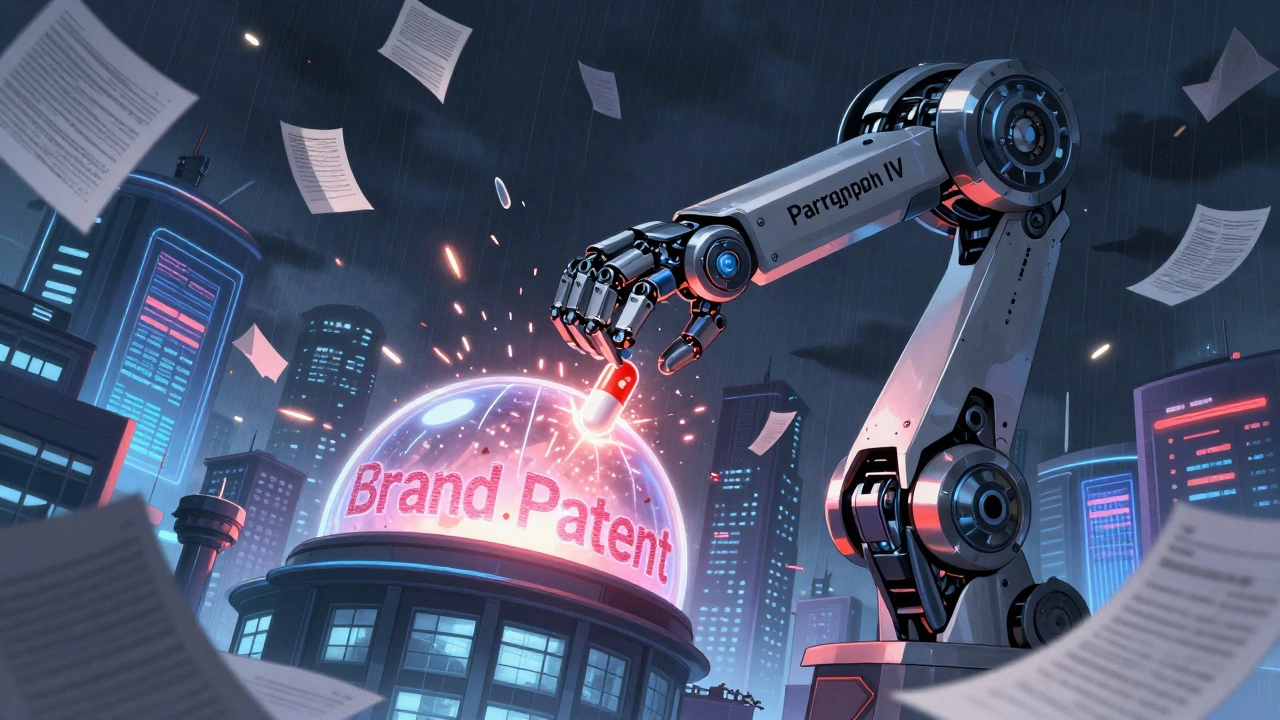
Paragraph IV Patent Challenges: How Generic Drug Makers Beat Brand Patents
Paragraph IV patent challenges let generic drug makers legally fight brand patents to bring cheaper medicines to market faster. Under the Hatch-Waxman Act, these challenges have saved patients over $1.2 trillion since 1990.