
SSRI & NSAID Interaction Risk Calculator
Patient Profile & Medications
Risk Assessment
Calculate Your Risk
Based on selected factors
--
Select options to see analysis.
Recommendations
- Start by selecting your profile details...
Imagine taking two of the most common medications on the planet. One helps you sleep better or feel less anxious; the other stops that nagging knee pain from your morning jog. On paper, they seem harmless enough. But when these two specific classes of drugs meet in your body, they can create a dangerous synergy that puts your stomach lining at serious risk.
This isn't just theoretical medical jargon. The combination of Selective Serotonin Reuptake Inhibitors (SSRIs), which are antidepressants like sertraline or fluoxetine, and non-steroidal anti-inflammatory drugs (NSAIDs) like ibuprofen or naproxen is a leading cause of preventable upper gastrointestinal (GI) bleeding. For millions of people managing both mental health and chronic pain, this interaction is a silent threat that often goes unnoticed until an emergency room visit becomes necessary.
Why This Combination Is Dangerous
To understand why this mix is risky, we have to look at how these drugs work inside your body. They attack blood clotting from two different angles, creating a perfect storm for bleeding.
First, let's talk about SSRIs. These medications work by increasing serotonin levels in your brain to improve mood. However, platelets-the tiny cells in your blood that help it clot-also rely on serotonin to function correctly. When you take an SSRI, it blocks the reuptake of serotonin not just in your neurons, but in your platelets too. This means your platelets have less serotonin available to activate and stick together when a small injury occurs in your gut lining. Essentially, your blood’s ability to stop minor bleeds is weakened.
Now add NSAIDs into the mix. Drugs like ibuprofen and naproxen reduce inflammation by blocking enzymes called cyclooxygenase-1 (COX-1). While this stops pain signals, COX-1 also produces prostaglandins, which are chemicals that protect your stomach lining by promoting mucus production and maintaining blood flow to the tissue. Without these protective prostaglandins, your stomach lining becomes vulnerable to acid damage.
When you combine them, you get a double hit: your stomach lining is stripped of its natural defenses by the NSAID, and your blood’s ability to seal any resulting micro-tears is impaired by the SSRI. Research published in JAMA Internal Medicine has shown that using these drugs together increases the risk of upper GI bleeding significantly compared to using either drug alone.
| Medication Scenario | Risk Profile | Mechanism of Harm |
|---|---|---|
| SSRI Monotherapy | Moderate Increase (~40-50%) | Impaired platelet aggregation due to reduced serotonin uptake |
| NSAID Monotherapy | High Increase (2-4x depending on drug) | Direct mucosal injury and reduced protective prostaglandins |
| SSRI + NSAID Combination | Very High Increase (75% higher than expected additive risk) | Synergistic effect: Mucosal damage + impaired clotting |
| SSRI + Celecoxib (COX-2 Inhibitor) | Lower Risk (OR 1.16) | Celecoxib spares COX-1, preserving some gastric protection |
Who Is Most at Risk?
Not everyone who takes this combination will experience bleeding, but certain factors make the danger much more real. If you fall into one of these categories, you need to be extra vigilant:
- Age over 65: As we age, our stomach lining naturally thins, and our bodies process drugs differently. Older adults face a substantially higher absolute risk despite similar relative risk increases.
- History of Peptic Ulcers: If you’ve had a stomach ulcer before, your tissue is already compromised. Adding this drug combo is like pouring salt on an old wound.
- Use of Other Blood Thinners: Taking aspirin, warfarin, or newer anticoagulants alongside SSRIs and NSAIDs creates a triple-threat scenario for bleeding.
- Helicobacter pylori Infection: This bacteria causes gastritis and ulcers. If you have an active infection, your stomach is already inflamed, making it more susceptible to drug-induced damage.
A 2023 network meta-analysis highlighted that while the relative risk increase is consistent across populations, the absolute number of bleeding events spikes dramatically in these high-risk groups. For example, a healthy 30-year might have a negligible chance of a major bleed, whereas a 70-year-old with a history of ulcers faces a tangible, immediate threat.

Signs You Should Watch For
GI bleeding doesn't always announce itself with dramatic pain. Often, the symptoms are subtle and easy to dismiss as indigestion or fatigue. Knowing what to look for can save your life.
The most alarming sign is melena-black, tarry, foul-smelling stools. This indicates that blood has been digested, meaning the bleeding is likely coming from the upper GI tract (stomach or duodenum). Another red flag is hematemesis, which is vomiting blood or material that looks like coffee grounds.
However, many cases present with less obvious symptoms:
- Persistent heartburn or abdominal discomfort that doesn't go away with antacids.
- Unexplained fatigue or weakness, which could signal anemia from slow, chronic blood loss.
- Dizziness or lightheadedness upon standing.
- Shortness of breath during mild activity.
If you notice black stools or vomit anything resembling coffee grounds, seek emergency care immediately. Don't wait to see if it gets better.
How to Prevent GI Bleeding
You don't necessarily have to choose between treating your depression and managing your pain. There are proven strategies to mitigate this risk, primarily involving medication adjustments and protective therapies.
1. Switch to Safer Alternatives
For pain relief, acetaminophen (paracetamol) is generally considered safer for the stomach because it does not inhibit COX-1 enzymes in the gut lining. It lacks the anti-inflammatory power of NSAIDs, so it may not help with arthritis or swelling, but for simple headaches or muscle aches, it’s a much lower-risk option.
If you must use an NSAID, consider celecoxib. Unlike traditional NSAIDs, celecoxib is a selective COX-2 inhibitor. It targets the inflammation-causing enzyme while largely sparing the COX-1 enzyme that protects your stomach. Studies show it carries a significantly lower GI bleeding risk compared to non-selective NSAIDs like diclofenac or naproxen.
2. Add Gastroprotective Therapy
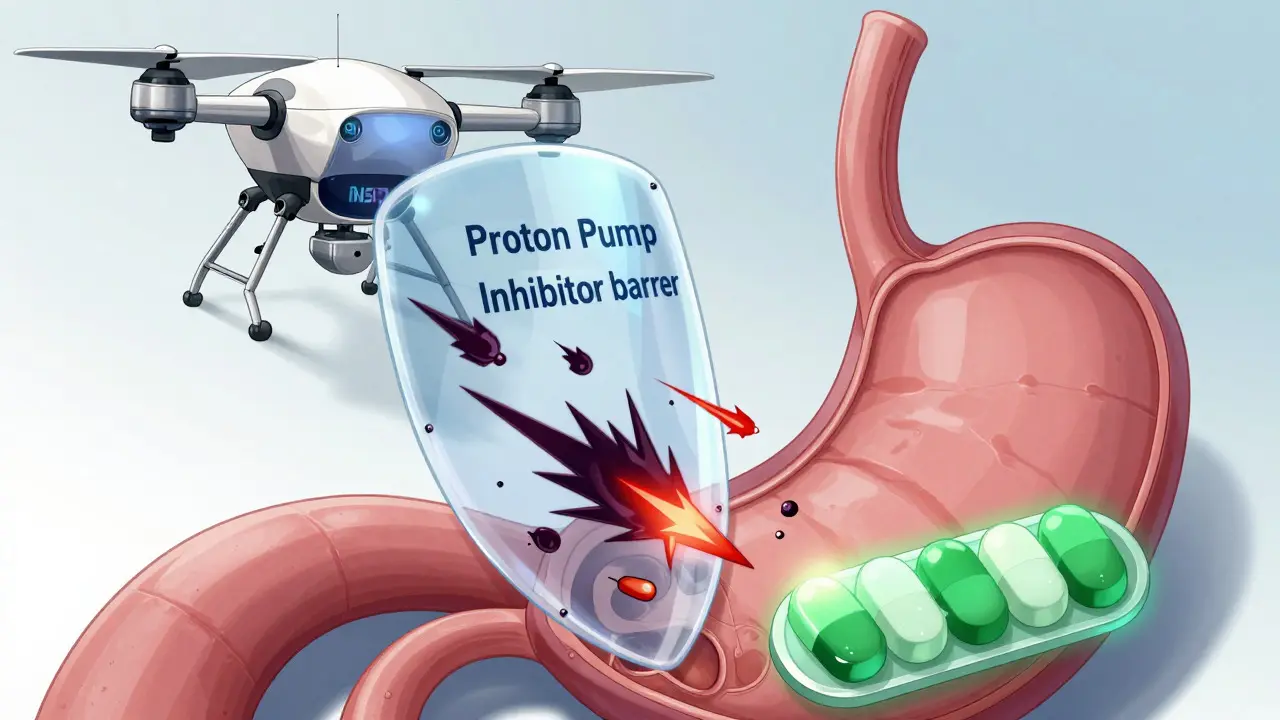
If you cannot switch off the SSRI or the NSAID, adding a Proton Pump Inhibitor (PPI) is the gold standard for prevention. PPIs like omeprazole, pantoprazole, or esomeprazole drastically reduce stomach acid production. By lowering acidity, they give your stomach lining a better chance to heal and resist damage.
Research indicates that PPI co-therapy can reduce the excess bleeding risk from SSRI-NSAID combinations by approximately 70%. A typical dose might be omeprazole 20mg daily, taken before breakfast. Always consult your doctor before starting a PPI, as long-term use has its own considerations, such as potential impacts on calcium absorption.
3. Test for H. pylori
Before starting this combination, ask your doctor to test for H. pylori. If the bacteria is present, eradicating it with antibiotics can significantly lower your baseline risk of ulcers and bleeding. The American College of Gastroenterology recommends this step for high-risk patients initiating dual therapy.
Talking to Your Doctor
Despite the clear evidence, communication gaps remain widespread. Surveys suggest that nearly 70% of patients are not warned about this specific interaction when prescribed these common drugs. It is up to you to advocate for your safety.
At your next appointment, bring a complete list of all medications, including over-the-counter painkillers. Ask specifically: "Given that I am taking an SSRI, is my current pain medication safe for my stomach?" If you are older or have a history of ulcers, push for a proactive plan rather than a reactive one.
Healthcare systems are slowly catching up. Major institutions like Mayo Clinic and Cleveland Clinic have implemented automated alerts in their electronic health records to flag this interaction. However, not every provider has access to these tools. Don't assume your doctor knows you are taking ibuprofen for weekend back pain if you only see them for your anxiety prescription.
Frequently Asked Questions
Does taking aspirin with an SSRI carry the same risk as NSAIDs?
Yes, low-dose aspirin carries a similar risk profile to other NSAIDs regarding GI bleeding when combined with SSRIs. Aspirin irreversibly inhibits platelet function, and when combined with the platelet impairment caused by SSRIs, the risk of bleeding increases substantially. If you take aspirin for heart health, do not stop it without consulting your cardiologist, but discuss gastroprotective strategies with your primary care provider.
Which NSAID is the safest to take with an SSRI?
Among non-selective NSAIDs, ibuprofen is generally considered to have a lower GI toxicity profile compared to naproxen or diclofenac. However, celecoxib (a COX-2 inhibitor) is often cited as the safest option for patients requiring potent anti-inflammatory effects while on SSRIs, as it preserves more of the stomach's protective mechanisms. Always use the lowest effective dose for the shortest duration possible.
Can I take acetaminophen (Tylenol) instead of NSAIDs?
Acetaminophen is a much safer alternative for pain relief when taking SSRIs because it does not affect platelet function or stomach lining integrity in the same way NSAIDs do. It is ideal for headaches, minor aches, and fever. However, it is less effective for inflammatory conditions like rheumatoid arthritis or severe tendonitis. Be mindful of liver health and do not exceed the recommended daily dosage.
How long should I stay on a Proton Pump Inhibitor (PPI)?
If you are continuously taking both an SSRI and an NSAID, you typically need to remain on the PPI for as long as you are on the combination therapy. Once you stop one of the interacting medications, your doctor may reassess whether you still need the PPI. Long-term PPI use should be monitored to ensure it remains beneficial and to manage any potential side effects like nutrient malabsorption.
Are there any antidepressants that don't increase bleeding risk?
Bupropion is an antidepressant that works on dopamine and norepinephrine rather than serotonin. Because it does not significantly affect platelet serotonin uptake, it has a much lower association with GI bleeding compared to SSRIs. If you require strong pain management with NSAIDs, your psychiatrist might consider bupropion as an alternative, provided it is suitable for your specific mental health needs.