Drug Interaction Checker
Check Your Medications for Safety
This tool helps you identify potential interactions between your prescription medications and OTC drugs. Many people unknowingly combine medications that can cause serious health risks. Always consult with your pharmacist or doctor before taking any new medication.
Results
Enter your medications above and click "Check for Interactions" to see potential safety concerns.
When a medication moves from prescription-only to over-the-counter (OTC), it’s not just a change in where you buy it-it’s a shift in who’s responsible for your safety. You no longer need a doctor’s note to pick up ibuprofen, loratadine, or omeprazole. But that convenience comes with hidden risks. Millions of people use OTC drugs every day without thinking twice. What they don’t realize is that these aren’t harmless candies. They’re powerful chemicals, and using them wrong can land you in the hospital.
Why Do Medications Switch from Prescription to OTC?
The FDA doesn’t let just any drug go OTC. There’s a long, strict process. A company must prove the medicine is safe for self-use, that people can diagnose their own condition correctly, and that the risks are low even if someone takes it wrong. For example, ibuprofen was prescription-only until 1984. After years of studies showing it was safe for short-term pain relief in healthy adults, it became available on shelves. The same happened with famotidine (Pepcid AC) and omeprazole (Prilosec OTC). The goal? Make treatment faster and cheaper. The FDA estimates these switches save the U.S. healthcare system over $100 billion a year by cutting down on doctor visits for minor issues.But here’s the catch: what’s safe for one person isn’t safe for everyone. A healthy 30-year-old can take an OTC painkiller without issue. A 72-year-old on blood thinners? That’s a different story.
The Hidden Dangers of Self-Medication
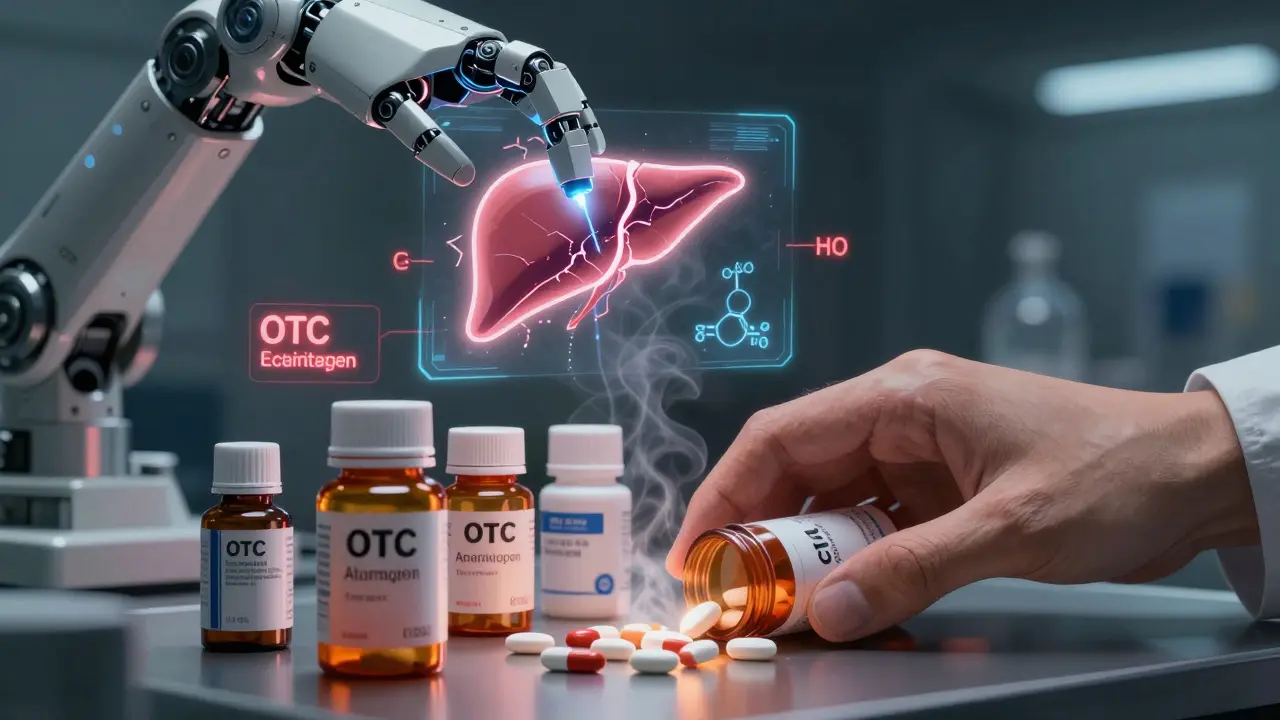
Most people think OTC means “safe.” That’s a dangerous myth. A 2023 study in India found that 77% of patients didn’t know the contraindications for their OTC drugs. In Australia and the U.S., similar gaps exist. People don’t check labels. They don’t ask pharmacists. They just grab what’s on the shelf.One of the biggest risks? Acetaminophen overdose. It’s in more than 600 OTC products-pain relievers, cold medicines, sleep aids. People take one for a headache, another for a cold, and a third for trouble sleeping. They don’t realize they’re hitting 4,000 mg or more of acetaminophen in a day. That’s the maximum safe dose. Go over it, and you can cause serious liver damage-even death.
Then there are NSAIDs like ibuprofen and naproxen. They’re great for a sore knee or menstrual cramps. But take them daily for months without knowing you have high blood pressure or kidney issues? You could trigger a heart attack, stroke, or kidney failure. The American Geriatrics Society lists NSAIDs as one of the top 30 risky OTC drugs for people over 65. Why? Because older bodies process drugs slower, and they’re often on five or more medications at once.
Decongestants like pseudoephedrine are another trap. They’re sold behind the counter now because they’re used to make methamphetamine. But even if you’re not making drugs, they can spike your blood pressure dangerously if you’re on antidepressants like MAOIs or tricyclics. I’ve seen patients come in with heart palpitations after taking a cold medicine while on a prescription for depression. They didn’t know the warning was there.
What the Label Doesn’t Tell You
OTC labels follow a strict format called “Drug Facts.” It’s designed to be clear: active ingredients, uses, warnings, directions, inactive ingredients. But most people skip the warnings. A 2022 survey found only 32% of consumers read the full label before using an OTC product.Here’s what you must check every time:
- Active ingredients - Are you doubling up? If your cold medicine and painkiller both contain acetaminophen, you’re at risk.
- Warnings - Does it say “Do not use if you have high blood pressure”? “Avoid if taking blood thinners”? That’s not a suggestion. It’s a red flag.
- Drug interactions - OTC drugs don’t play nice with prescriptions. Antihistamines with alcohol? Bad. Sleep aids with benzodiazepines? Dangerous.
And don’t assume the pharmacist will catch it. In many countries, including parts of Australia and India, pharmacists often don’t ask about other medications or health conditions. They just hand over the product. You have to be your own advocate.
Who’s Most at Risk?
Not everyone is equally vulnerable. The biggest danger zones are:- Older adults (65+) - Slower metabolism, multiple meds, higher risk of falls from drowsiness. Diphenhydramine (Benadryl) is a major culprit.
- People on multiple prescriptions - If you’re taking more than three medications, your chance of a harmful interaction jumps dramatically.
- Those with chronic conditions - Diabetes, kidney disease, liver problems, heart disease, asthma. OTC drugs can make these worse.
- Parents giving kids OTC meds - Dosing errors with children’s cough syrups are common. Never guess the dose. Always use the measuring tool that comes with it.
There’s no shame in asking for help. If you’re unsure, call your pharmacist. Or better yet, talk to your doctor before using a new OTC drug, especially if you’re over 60 or on other meds.
What’s Changing to Make OTC Safer?
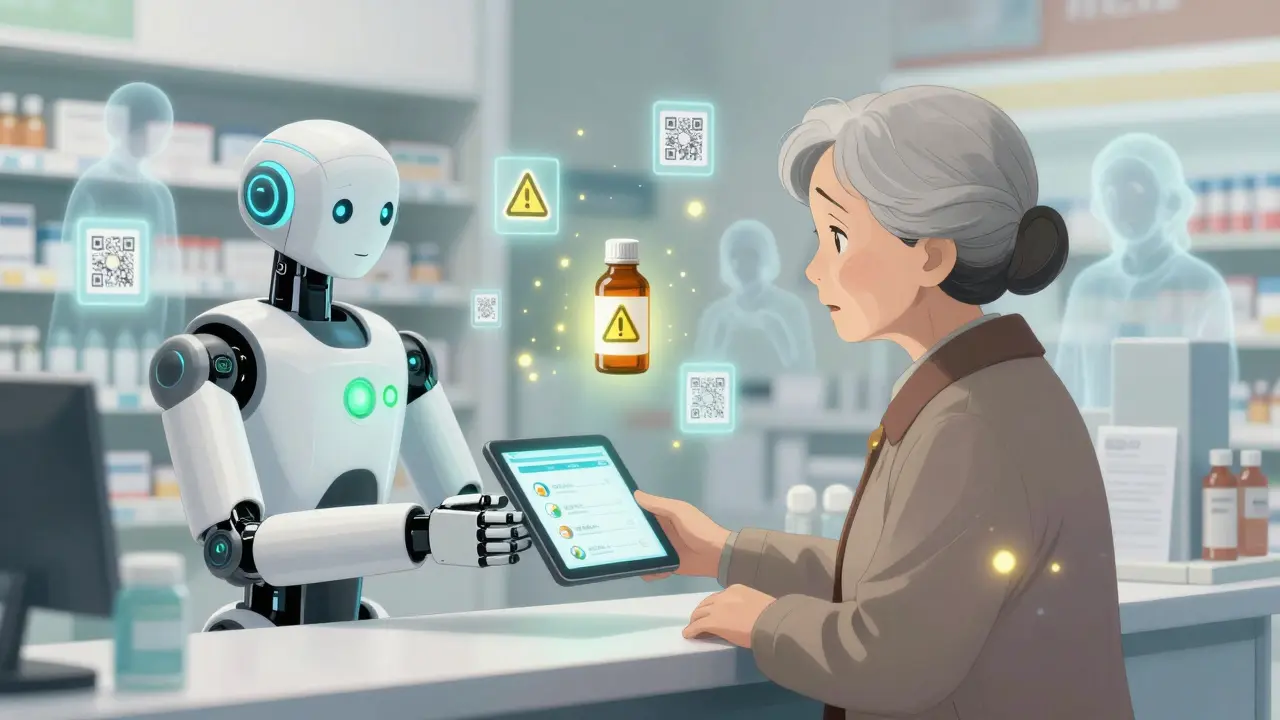
Regulators are waking up. The FDA’s 2022 label modernization initiative pushed for bigger fonts, clearer warnings, and simpler language. Now, labels say “Do not use” instead of “Caution.” That’s progress.Some pharmacies are testing QR codes on OTC packaging. Scan it with your phone, and you get a video explaining interactions, side effects, and what to avoid. Walmart started this pilot in 2023. Early results show people who scanned the codes were 40% more likely to check for drug interactions.
AI tools are also being tested. Imagine an app that asks: “What meds are you taking?” and “What symptoms are you treating?” It cross-checks your list against OTC products and warns you before you buy. It’s not here yet-but it’s coming.
What You Should Do Right Now
Don’t wait for a crisis. Here’s your three-step safety plan:- Check the label - Read the “Warnings” section. If you’re unsure, stop. Don’t guess.
- Check your other meds - Make a list of every pill, supplement, and OTC product you take. Include vitamins and herbal teas. Compare active ingredients. If two products have the same ingredient, you’re doubling up.
- Ask your pharmacist - Walk into any pharmacy and say, “I’m thinking of taking this for [symptom]. I’m on [list of meds]. Is this safe?” They’re trained for this. Use them.
Also, keep a medication journal. Write down what you took, when, and how you felt. If you get a headache, dizziness, or nausea after starting a new OTC drug, that’s a signal. It might be the medicine.
When to Skip OTC and See a Doctor
OTC drugs are for short-term, mild symptoms. If any of these apply, stop self-treating:- Symptoms last more than 7 days
- Pain gets worse, not better
- You have a fever over 101°F (38.3°C)
- You’re dizzy, confused, or having trouble breathing
- You’re pregnant, breastfeeding, or caring for a child under 2
These aren’t just caution signs. They’re red lights. Ignoring them can delay real treatment. A persistent cough might be allergies-or it might be early-stage pneumonia. An OTC cough syrup won’t fix the infection.
Are OTC drugs safer than prescription drugs?
No. OTC drugs aren’t inherently safer-they’re just approved for use without a doctor’s supervision. Many OTC medications are the same strength as their prescription versions. The difference is who’s guiding use. A prescription drug comes with monitoring; an OTC one doesn’t. That’s why misuse is more common with OTC drugs.
Can I take OTC painkillers every day?
No. Long-term daily use of NSAIDs like ibuprofen or naproxen increases your risk of stomach bleeding, kidney damage, and heart problems. Acetaminophen can cause liver failure if taken daily over time. These aren’t meant for chronic daily use. If you need pain relief every day, see a doctor. There’s likely an underlying issue that needs treatment.
Why are some OTC drugs kept behind the counter?
Some drugs, like pseudoephedrine, are kept behind the counter because they can be used to make illegal drugs. But even if you’re not making meth, these drugs can raise blood pressure dangerously. Keeping them behind the counter forces you to talk to a pharmacist, who can check for interactions and warn you if it’s unsafe.
Do OTC drugs interact with vitamins and supplements?
Yes. St. John’s Wort can reduce the effectiveness of birth control and antidepressants. Vitamin E and garlic can thin your blood, making NSAIDs riskier. Even common supplements like magnesium or calcium can interfere with antibiotics or thyroid meds. Always tell your pharmacist everything you’re taking-supplements included.
What should I do if I think I’ve overdosed on an OTC drug?
Call poison control immediately. In Australia, dial 13 11 26. In the U.S., call 1-800-222-1222. Don’t wait for symptoms. Acetaminophen overdose, for example, can cause liver damage without immediate signs. Bring the bottle with you if you go to the hospital. Time matters.