
Medication Heat Risk Calculator
Select all medications you currently take that affect heat tolerance
How to interpret your score:
0-3: Low risk - Continue precautions
4-7: Moderate risk - Take extra precautions
8+: High risk - Seek immediate medical attention
Important Safety Tips
Stay hydrated: Drink at least 2-4 extra cups of water daily during heat waves
Avoid peak heat: Stay indoors between 10am-4pm when possible
Cool your body: Use cooling vests or damp towels if you're on high-risk medications
Monitor symptoms: Watch for cramps, dizziness, headache, or no sweating
When the temperature rises, most people sweat to cool down. It’s natural. But for some, the body just doesn’t respond the way it should - even when it’s hot, they stay dry. No sweat. No relief. And that’s not normal. It’s a side effect of common medications, and it can be dangerous.
Heat intolerance isn’t just about feeling uncomfortable. It’s when your body can’t regulate its temperature, and that puts you at risk for heat exhaustion or even heat stroke. The CDC reports that between 2010 and 2022, hospital visits for heat-related illness jumped by 67% among people taking medications that interfere with sweating. And it’s not rare. About 15% of U.S. adults on prescription drugs experience this. If you’re on any of these meds, you need to know the signs - and what to do.
How Medications Stop You from Sweating
Sweating is your body’s main way to cool off. It’s controlled by nerves that tell sweat glands to activate. When those signals get blocked, your body overheats. Several types of drugs interfere with this process.
Anticholinergic drugs are the biggest offenders. These include medications for overactive bladder like oxybutynin, allergy meds like diphenhydramine (Benadryl), and even some stomach remedies. They block a chemical called acetylcholine, which is needed to trigger sweat. Studies show these drugs can cut sweating by 60 to 80%. That means even light activity in 27°C (80°F) weather can push your core temperature up dangerously fast.
Then there are beta blockers - drugs like metoprolol and propranolol, often prescribed for high blood pressure or heart conditions. They don’t stop sweat glands directly. Instead, they prevent blood vessels in your skin from opening up. Normally, when you get hot, your body sends more blood to the skin to release heat. Beta blockers stop that. Research shows this reduces heat loss through the skin by 25 to 40%. The result? Your body traps heat inside.
Diuretics - water pills like hydrochlorothiazide and chlorthalidone - cause dehydration. They make you pee out 1 to 2 liters of fluid every day. Less fluid means less sweat. A 2023 study found people on these drugs produce 30 to 50% less sweat. That’s not just inconvenient. It’s a ticking clock. Dehydration + heat = heat exhaustion, fast.
The Most Dangerous Medication Classes
Not all drugs affect heat the same way. Some are far more risky than others.
Antipsychotics - such as olanzapine, risperidone, and haloperidol - are among the most dangerous. These drugs don’t just reduce sweating. They mess with your brain’s thermostat. The hypothalamus, which controls body temperature, gets confused. That means even in moderate heat - 27 to 32°C (80 to 90°F) - someone on these meds can develop heat stroke. The CDC calls this a “high-risk combination.”
Tricyclic antidepressants (TCAs) like amitriptyline are next. They cut sweating by 65 to 75%. Compare that to SSRIs like fluoxetine or sertraline, which actually increase sweating. That might sound good, but it leads to dehydration. So even if you’re sweating a lot, you’re losing fluids faster than you can replace them.
Stimulants for ADHD - like methylphenidate (Ritalin) and amphetamine (Adderall) - raise your metabolic rate by 15 to 25%. That means your body is generating more internal heat. At the same time, these drugs can reduce blood flow to the skin. Double trouble. You’re making more heat and blocking your ability to release it.
GLP-1 agonists - like semaglutide (Ozempic, Wegovy) - are newer, popular weight-loss drugs. But they suppress thirst. Clinical trials show people on these meds feel 40 to 50% less thirsty, even when they’re dehydrated. That means you might not drink enough, even if you’re sweating or in the sun. Dr. Nish Shah from Houston Methodist warns: “It’s easy to get dehydrated without realizing it.”

Who’s at Highest Risk?
It’s not just about the drug. It’s about how many you take, how old you are, and how hot it gets.
People over 65 are especially vulnerable. Their bodies don’t regulate heat as well. And if they’re on five or more medications - a condition called polypharmacy - their risk of heat stroke triples. A 2023 study from the American Geriatrics Society found that older adults on multiple heat-affecting drugs are 300% more likely to need hospitalization during a heat wave.
And it’s not just seniors. Anyone taking three or more of these drugs is at high risk. The CDC found that 18 to 22% of all heat-related ER visits among adults over 50 are linked to medication use. Lithium - used for bipolar disorder - is especially risky. Dehydration can spike lithium levels in the blood by 25 to 35%, leading to toxicity. Even a small temperature rise above 29°C (85°F) can trigger dangerous side effects.
Climate change is making this worse. With 2023 being the hottest year on record, and projections showing a 40 to 60% increase in medication-related heat complications by 2050, this isn’t a future problem - it’s happening now.
Warning Signs You’re Overheating
You don’t have to wait for heat stroke to act. Early signs show up fast - often within 30 to 90 minutes of being in the heat.
- Cramps in arms, legs, or stomach (65% of cases)
- Dizziness or lightheadedness (55%)
- Headache (70%)
- Flushed, red skin
- Heavy sweating - or no sweating at all (85% of cases)
- Nausea or vomiting (35%)
- Weakness or fatigue
If you notice any of these, get out of the heat. Drink water. Cool down. Don’t wait for it to get worse.
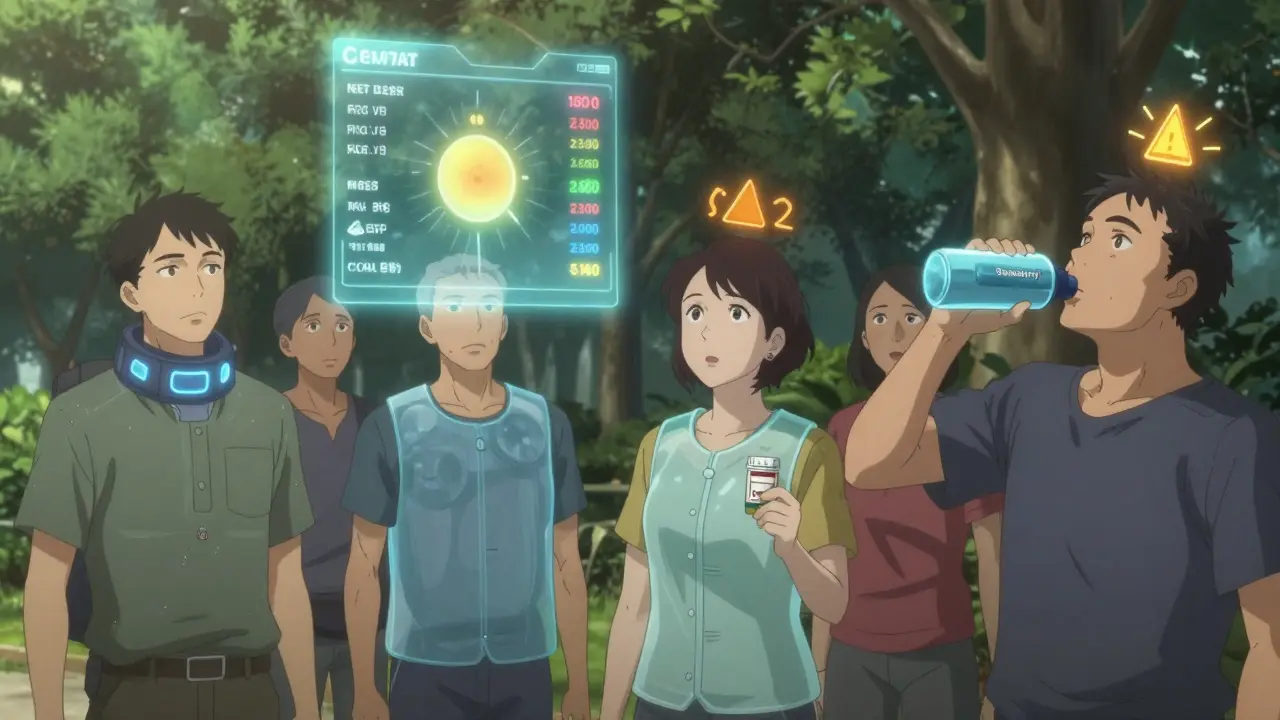
What to Do: Practical Steps to Stay Safe
You can’t always stop taking your meds. But you can take steps to protect yourself.
- Drink more water. Add 500 to 1,000 mL (about 2 to 4 cups) extra daily during hot weather. Don’t wait until you’re thirsty.
- Avoid the sun. Stay indoors between 10 a.m. and 4 p.m. That’s when UV radiation is strongest - and when heat builds fastest.
- Use air conditioning. If it’s over 32°C (90°F), stay inside. Fans alone won’t help if you’re on meds that block sweating.
- Monitor your weight. A drop of more than 2% in body weight means you’re dehydrated. Weigh yourself daily during heat waves.
- Wear cooling gear. Cooling vests - now used in hospitals - can lower core temperature by 0.5 to 1°C. They’re especially helpful for those on antipsychotics or anticholinergics.
- Use sunscreen. Some meds, like calcium channel blockers and ACE inhibitors, make skin more sensitive to sunburn. Use SPF 30+ daily.
Check your meds. If you’re on diuretics, anticholinergics, beta blockers, antipsychotics, or GLP-1 drugs, talk to your doctor. Ask: “Could this affect how I handle heat?”
What’s Being Done to Help
Hospitals and health systems are starting to act. In July 2023, Epic Systems - the biggest electronic health record provider - added automatic alerts in their system for 14 high-risk medications during summer months. If you’re on one, your doctor gets a warning.
The CDC updated its guidance in March 2023, and the American Heart Association issued new advice in January 2024 for patients on beta blockers and diuretics. The FDA even approved the first wearable core temperature monitor, TempTraq, in December 2023 - designed specifically for people on heat-affecting drugs.
Research is moving fast. The NIH is funding a $2.5 million study to build AI tools that predict heat risk based on your exact medication list. The goal? Personalized heat safety plans - not one-size-fits-all advice.
For now, the best defense is awareness. Know your meds. Know your body. And don’t ignore the signs.
Can drinking more water fix heat intolerance caused by medication?
Drinking more water helps, but it doesn’t fix the root problem. If your medication blocks sweat glands or cuts off blood flow to your skin, extra fluids won’t restore your body’s ability to cool down. You can still overheat even if you’re well-hydrated. The goal is to reduce heat exposure, not just replace lost fluids.
Are over-the-counter drugs like Benadryl risky in the heat?
Yes. Diphenhydramine (Benadryl) is an anticholinergic, and it can reduce sweating by up to 80%. Even one dose on a hot day can make you vulnerable to heat illness. Many people don’t realize OTC meds carry this risk. Always check labels for anticholinergic ingredients - especially in sleep aids, cold meds, and allergy pills.
Do all beta blockers cause heat intolerance?
Most do, but not equally. Non-selective beta blockers like propranolol reduce skin blood flow by 35 to 40%, while selective ones like metoprolol reduce it by 25 to 30%. The difference matters. If you’re on a beta blocker and live in a hot climate, ask your doctor if switching to a less heat-impacting option is possible.
Can I stop my medication if it causes heat intolerance?
Never stop a prescription medication without talking to your doctor. Stopping suddenly can cause serious side effects - like rebound high blood pressure or seizures. Instead, discuss alternatives. There may be other drugs in the same class that don’t affect thermoregulation as much.
Is heat intolerance worse in older adults?
Yes. Aging reduces natural sweating, blood flow to skin, and thirst signals. When combined with multiple medications, older adults are 300% more likely to suffer heat stroke. The CDC recommends extra caution for those over 65 on three or more heat-affecting drugs. Regular check-ins with a doctor during summer months are essential.
Do I need to avoid the sun completely if I’m on these meds?
Not completely - but you need to be smart. Avoid outdoor activity during peak heat hours (10 a.m. to 4 p.m.). If you must go out, wear light clothing, use a wide-brimmed hat, carry water, and take breaks in the shade. Use cooling vests or damp towels if available. Even short exposure can be risky if you’re on antipsychotics or diuretics.
Heat intolerance from medication is real, preventable, and often overlooked. You don’t have to suffer through summer. With the right knowledge and precautions, you can stay safe - no matter how hot it gets.