
Imagine paying a premium for a life-saving drug, only to find out the pill inside is actually crushed drywall or nothing more than sugar. This isn't a horror story; it's a reality in a $200 billion global counterfeit pharmaceutical market. While most of us trust the pharmacy counter, the rise of online sales and sophisticated printing means that fake drugs are getting harder to spot. In some regions, as many as 1 in 10 medical products are falsified. The scary part? Most people think they can tell a fake by just looking at it, but high-end counterfeits are designed to fool the human eye.
The goal here isn't to turn you into a forensic scientist, but to give you a practical framework to protect yourself. You can't always rely on a quick glance, but by knowing what specific red flags to look for in counterfeit medication packaging and seals, you can significantly lower your risk.
The Red Flags: What to Look for During a Visual Check
Visual inspection is your first line of defense. While it isn't foolproof-some reports suggest it only catches a small fraction of sophisticated fakes-it's the fastest way to weed out low-effort counterfeits. You aren't looking for "general quality" but for specific anomalies.
Start with the colors. Genuine pharmaceutical companies use strict color standards (like Pantone codes). If the box looks slightly yellowed, the blue is a shade off, or the ink looks faded, be suspicious. For example, some counterfeit versions of the eye drop Muro 128 have been flagged for having a noticeably yellowed tint compared to the authentic product.
Next, look at the text. Counterfeiters often struggle with font consistency. Check the lot numbers and expiration dates. Are the numbers aligned perfectly, or is one digit slightly higher than the others? Is the font weight inconsistent-some letters looking bolder than others? In recent alerts regarding counterfeit Ozempic, these tiny alignment and font issues were some of the only clues available to consumers.
Finally, check for spelling and grammar. It sounds obvious, but typos in the dosage instructions or the manufacturer's name are common. If you see a misspelling on a medical product, do not take it. Period.
Analyzing Seals and Security Features
Security seals are designed to prove a product hasn't been tampered with, but they are also primary targets for counterfeiters. A holographic seal is often used to scream "authenticity," but these are no longer the gold standard. Many modern counterfeiters can replicate 80% of traditional holograms with ease.
When checking a seal, look for these specific issues:
- Adhesion: Is the seal peeling at the edges? Does it look like it was glued on manually rather than machine-applied?
- Hologram Clarity: Does the hologram look "flat" or blurry? Genuine holograms have crisp, multi-dimensional images that shift clearly when you tilt the box.
- QR Codes: Scan the QR code. Does it take you to an official manufacturer's portal, or a generic-looking website? Some fakes omit batch-specific QR codes entirely, leaving only a generic one that doesn't link to a unique product ID.
If you're dealing with a blister pack, check the foil. Is the printing on the back of the foil crisp, or does it smudge? Is the pill seated firmly, or is there a gap between the tablet and the seal? These gaps can indicate a manually packed counterfeit rather than a factory-sealed product.
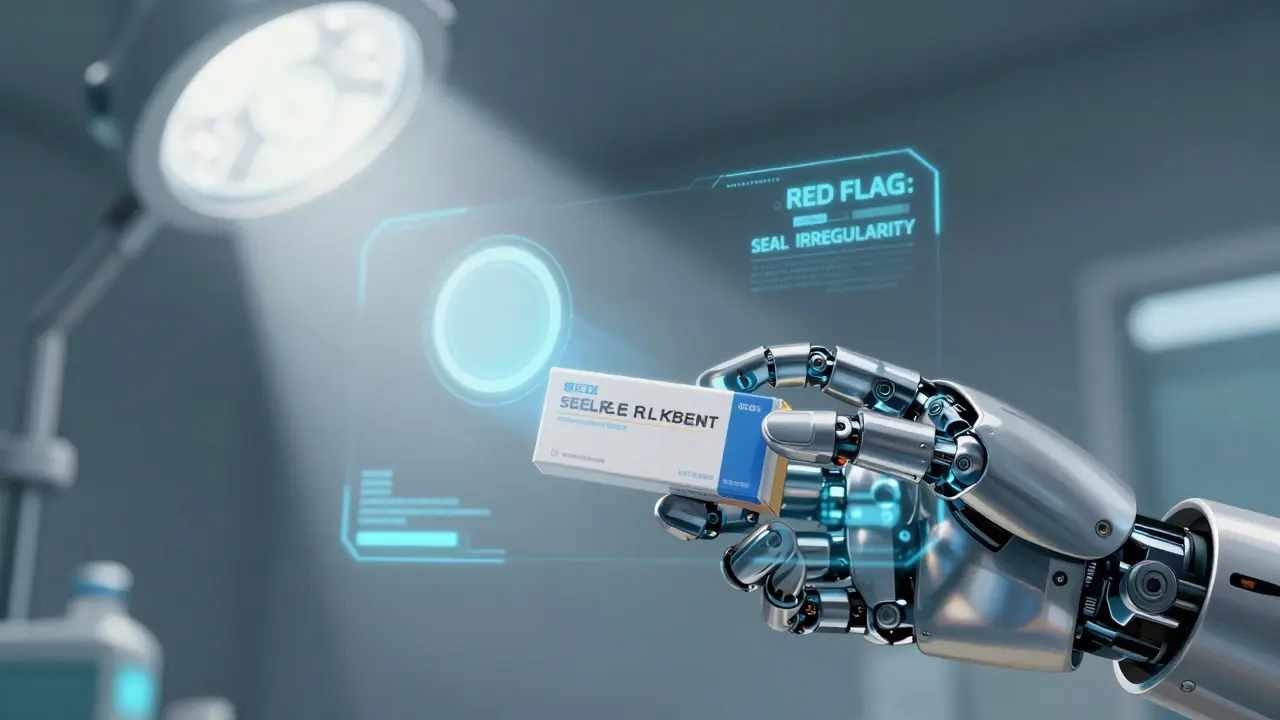
Advanced Detection: Beyond the Naked Eye
If you're a pharmacist or a healthcare provider, you have tools that the average consumer doesn't. This is where the detection rate jumps from a gamble to a science. Professional-grade detection usually moves into three levels of verification.
The second level involves microscopic analysis. Using a 10x to 40x magnification loupe can reveal "microtext"-tiny lettering that is invisible to the eye but clear under magnification. Counterfeiters often can't replicate this microtext, leaving it as a blurry line or a smudge. In cases of fake Levitra packaging, microscopic analysis revealed lettering discrepancies that were completely invisible during a standard visual check.
The third and most reliable level is spectroscopic analysis. Tools like Raman Spectrometers are handheld devices that use laser light to identify the chemical fingerprint of a substance can verify authenticity with nearly 99% accuracy. They can tell if the packaging ink is the correct chemical composition or if the pill inside is actually the active ingredient it claims to be. This is how experts catch fakes that look perfect but use discontinued ink colors from a decade ago.
| Method | Equipment | Detection Accuracy | Who Should Use It? |
|---|---|---|---|
| Visual Inspection | Naked Eye / Bright Light | Low (12-35%) | Consumers |
| Microscopic Analysis | 10x-40x Loupes | Moderate (45-60%) | Pharmacists |
| Raman Spectroscopy | Handheld Spectrometer | High (98.7%) | Regulatory Agencies |
| LC-MS / NMR | Lab Equipment | Near 100% | Specialized Labs |
The Danger of "Too Good to be True" Sources
The packaging is only one part of the equation; the source is the other. The vast majority of counterfeit medications enter the home through unregulated online pharmacies. If a website offers a medication without a prescription, or the price is significantly lower than the local pharmacy, the chance that the packaging is counterfeit skyrockets.
Counterfeiters often target high-demand drugs with expensive price tags, such as cancer medications or weight-loss drugs like semaglutide. In some cases, the profit margins on these fakes can be as high as 9,000%. When the profit is that high, criminals invest more in making the packaging look perfect. This is why you should never rely on a "professional looking website" as a proxy for drug safety.

Practical Steps for Safe Medication Handling
To keep yourself and your family safe, adopt a layered approach to verification. Don't just check one thing; check three.
- Verify the Source: Only buy from pharmacies licensed by your national health authority. If buying online, ensure the pharmacy requires a valid prescription.
- Inspect the Box: Hold the package under a bright light (ideally 500-1,000 lux). Look for the font inconsistencies, color shifts, and spelling errors mentioned above.
- Test the Seal: Check the hologram's depth and ensure the QR code leads to a legitimate, secure manufacturer's database.
If something feels off, don't just throw the medicine away-report it. Programs like the FDA's MedWatch allow you to flag suspicious packaging, which helps authorities track the source of the counterfeit and warn other patients.
Can I trust a hologram as proof that my medicine is real?
No. While holograms are a helpful security feature, they are no longer a guarantee. Modern counterfeiters can replicate a huge percentage of traditional holograms. You should use a hologram check as one of several tests, not the only one.
What should I do if I think my medication packaging is fake?
Stop using the medication immediately. Contact your pharmacist or prescribing doctor to verify the product. You should also report the suspicious packaging to your national health regulator (such as the FDA in the US or the MHRA in the UK) to help prevent others from being harmed.
Are fake medications always easy to spot by the color of the pill?
Definitely not. Many counterfeiters can match the color, shape, and even the imprint of a genuine tablet with astonishing accuracy. The packaging is often where they make more mistakes, but even then, some fakes are visually identical to the original.
Why are counterfeit drugs so common in online pharmacies?
Unregulated online pharmacies often bypass the strict supply chain requirements that physical pharmacies must follow. This allows them to source cheaper, falsified products from illegal labs and ship them globally with very little oversight.
Does the expiration date help in identifying a fake?
It can. Look for "impossible" dates or dates that are printed in a different font than the rest of the lot number. Sometimes counterfeiters use a generic date across thousands of fake packs, which can be a red flag if you see multiple packs with the exact same lot number and date from different sources.
Next Steps for Different Users
For Patients: If you are taking a high-cost or high-risk medication, ask your pharmacist to show you the security features of the packaging during your first fill. This creates a "baseline" in your memory, making it much easier to spot a fake if you switch pharmacies or buy a refill later.
For Caregivers: When managing medications for elderly parents, do a monthly audit of the packaging. Look for any changes in the brand's logo or packaging style, as pharmaceutical companies occasionally update their designs, but sudden, drastic changes in a single bottle's appearance are cause for alarm.
For Pharmacy Staff: Invest in a high-quality 10x magnifying loupe. Incorporating a 5-minute microscopic check for high-risk medications can catch counterfeits that a standard visual check would miss, providing an essential extra layer of safety for your patients.