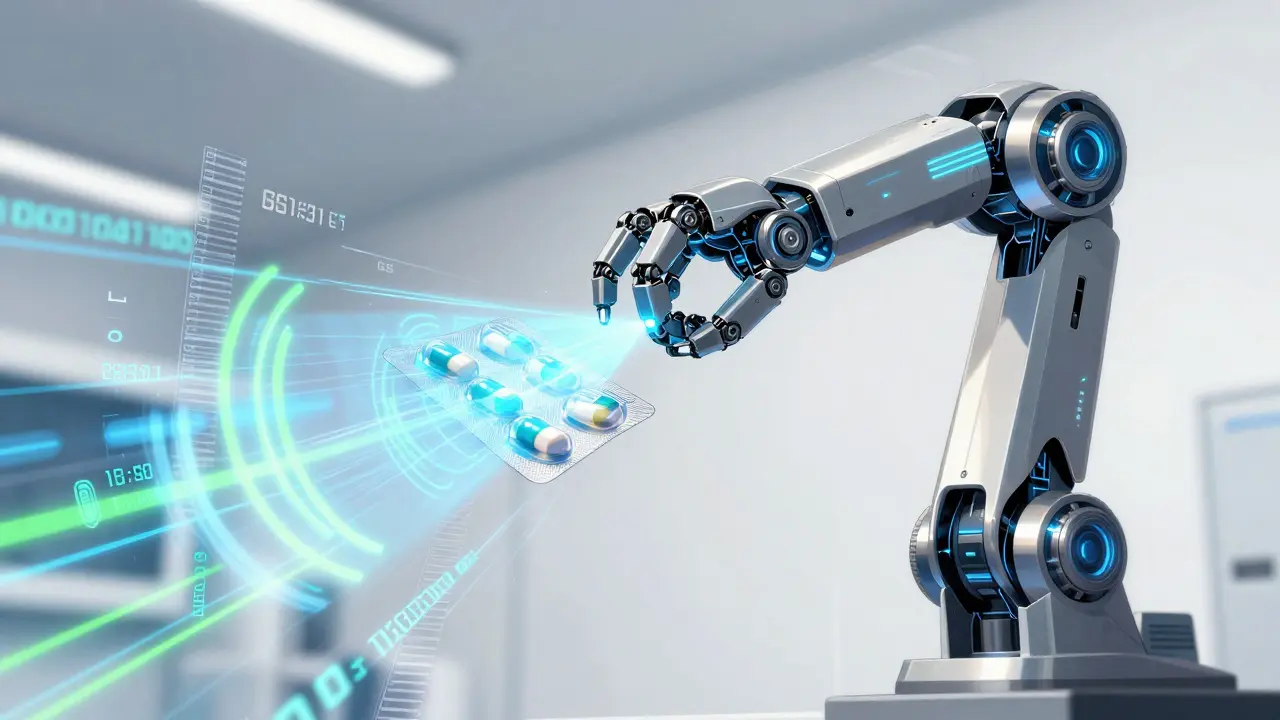
Every year, millions of people around the world take pills that don’t contain the right medicine-or any medicine at all. Counterfeit drugs aren’t just a scam; they’re deadly. A single fake antibiotic can turn a treatable infection into a fatal one. A fake cancer drug might look identical to the real thing, but without the active ingredient, it gives false hope while the disease spreads. The World Health Organization estimates 1 in 10 medical products in low- and middle-income countries is fake or substandard. That’s not a distant problem. It’s happening now, and the tools to stop it are evolving faster than ever.
Serialization: The Foundation of Drug Tracking
The backbone of modern anti-counterfeit efforts is serialization. This means every pill bottle, blister pack, or vial gets its own unique digital ID-like a fingerprint for medicine. By 2025, the U.S. Drug Supply Chain Security Act (DSCSA) and the EU’s Falsified Medicines Directive (FMD) made this mandatory for all prescription drugs. Companies now must track each unit from factory to pharmacy using GS1 standards. This isn’t optional anymore. Failure means fines, recalls, and lost licenses.
Serialization works because it creates a digital trail. If a pack is scanned at a warehouse, then again at a hospital, and finally at the pharmacy, every stop is logged. If someone tries to slip in a fake, the system flags it instantly. This cuts recall times by nearly 60%. One European distributor reported that before serialization, finding a bad batch took weeks. After implementation, they pinpointed it in hours. The catch? It’s expensive. Setting up the systems, training staff, and upgrading software can cost over $2 million for mid-sized companies. But the alternative-being stuck with a $147 million recall like one U.S. firm suffered in 2025-is far worse.
NFC: The Smartphone That Checks Your Medicine
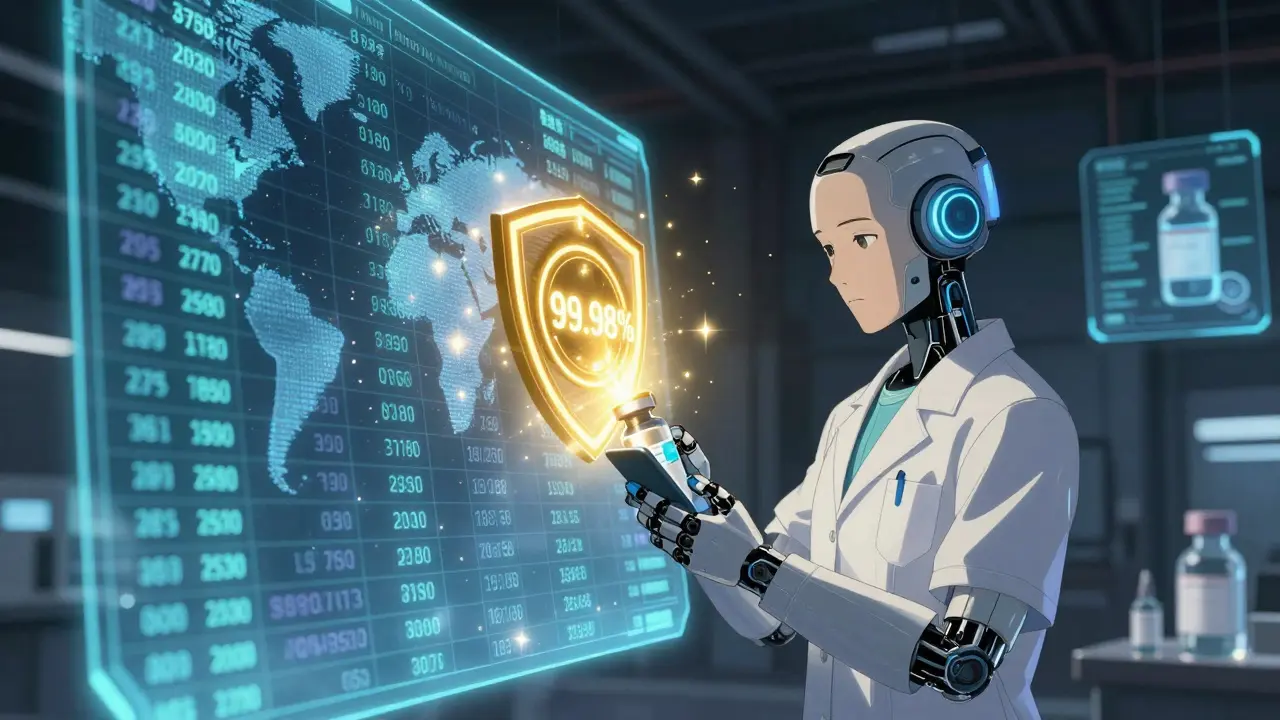
What if you could tap your phone on a medicine bottle and instantly know if it’s real? That’s NFC technology. Near Field Communication chips, tiny and invisible inside packaging, store encrypted data. When you tap your phone (Android 8.0+ or iOS 11+, which cover 89% of phones in use today), it connects securely and verifies the product in under two seconds. Accuracy? 99.98%. That’s better than most barcode scanners.
Unlike QR codes-easily copied and printed on fake packaging-NFC uses cryptographic authentication. You can’t screenshot or scan your way around it. ForgeStop’s 2025 tests in Latin America showed pharmacies using NFC cut counterfeit incidents by 98% within six months. Pharmacists now verify over 1,200 products daily, adding just 3-5 seconds to each sale. No more guessing. No more fear. Just a tap and a green checkmark.
Big pharma is moving fast. Of the top 50 drug companies, 43% increased NFC adoption last year. The EU’s upcoming Digital Product Passport rule, requiring all packaging to link to digital records by 2027, will push this even further. NFC isn’t just a security feature-it’s becoming part of the patient experience.
Blockchain: The Unbreakable Ledger
Imagine a record so secure, no one can delete, alter, or fake it. That’s blockchain. In pharma, it’s not about cryptocurrency. It’s about creating a shared, tamper-proof log of every movement a drug makes-from the factory floor to your local pharmacy. Each time a shipment changes hands, the transaction is added to the chain. Temperature, humidity, location, time-all recorded.
Companies like De Beers used blockchain to track diamonds. Now, drugmakers are doing the same. For cold-chain medicines like insulin or vaccines, this is life-saving. If a vial was exposed to heat during transit, the blockchain shows it. Pharmacies won’t dispense it. Regulators can trace the breach instantly.
But blockchain isn’t easy. Gartner says full integration takes 18-24 months. It needs buy-in from manufacturers, distributors, wholesalers, and retailers. Legacy systems often don’t talk to each other. SAP’s Integrated Business Planning software gets mixed reviews for this reason. Still, for global supply chains, blockchain is becoming unavoidable. It’s the only way to prove authenticity across borders.
Forensic Tech: DNA and Invisible Markers
What if the medicine itself carried a secret signature? That’s where forensic authentication comes in. Some companies are embedding DNA strands or unique molecular tags directly into the packaging or the drug formulation. These markers are invisible to the naked eye and can’t be replicated without access to the original lab. A lab test-using a handheld device or sending a sample-can confirm authenticity with near-perfect accuracy.
It’s the gold standard. But it’s also the most expensive. Each unit adds $0.15-$0.25 to the cost. For a bottle of pills, that’s 10x more than standard serialization. That’s why it’s mostly used for high-value drugs: cancer treatments, rare disease meds, and biologics. It’s not for aspirin. But for a $50,000 therapy? Absolutely.
Another innovation is thermochromic and UV inks. These change color under heat or ultraviolet light. A pharmacist can shine a cheap UV pen on the box and see a hidden logo. Tamper-evident seals, induction caps, and holograms add more layers. Together, they create a “defense in depth” strategy. No single layer is perfect. But five together? Nearly impossible to beat.
AI and Visual Inspection: The Digital Eyes
Even the best packaging can be copied. That’s where AI steps in. Cameras at distribution centers and pharmacies now scan packaging with machine learning models trained on millions of real and fake images. These systems spot tiny differences: a slightly off font, a misaligned barcode, a color shift no human would notice.
In controlled tests, AI systems now detect counterfeits with 99.2% accuracy. Real-world use is trickier-lighting, angles, and packaging wear can fool the system. But accuracy jumped from 89.7% in 2024 to 94.3% in mid-2025. Companies like Cognitivemarket are rolling these out in warehouses across North America and Europe. They’re not replacing humans-they’re giving them superpowers.
One hospital pharmacy in Australia started using AI-assisted scanning last year. Their fake drug detection rate rose 70%. Staff no longer have to manually compare every box. The system flags the suspicious ones. They only need to double-check those.
Why QR Codes Are Failing
QR codes seem simple. Scan. Verify. Done. But they’re the most common point of failure. Why? Because they’re easy to copy. A counterfeiter can print a fake QR code that links to a fake website showing a fake verification page. ForgeStop found that 78% of pharmaceutical QR code systems failed security audits in 2025. No encryption. No authentication. Just a picture.
The $147 million recall in Q3 2025? That was caused by a QR code system without cryptographic protection. The fake codes looked identical. Patients thought they were safe. They weren’t. QR codes aren’t dead-but they’re no longer enough. If you’re using them, you need to add encryption, digital signatures, or link them to blockchain records. Otherwise, you’re just giving counterfeiters a roadmap.
The Global Patchwork: Regulations and Trade Wars
Not every country is on the same page. North America and Europe lead with strict laws. Asia-Pacific is growing fastest, with China, India, Brazil, and Nigeria rolling out new rules in 2025. But enforcement varies. In some places, counterfeiters still operate openly.
Then there’s the tariff problem. In April 2025, the U.S. imposed tariffs of 10% to 46% on pharmaceutical ingredients and packaging from China and India. That’s increased production costs by 12-18%. Supply chains slowed by 3-6 weeks. Some manufacturers cut corners to stay profitable. Others moved production to Mexico or Eastern Europe. The result? More complexity. More risk. More need for better tracking.
Regulators aren’t waiting. The EU’s Digital Product Passport and the U.S. DSCSA are pushing companies to connect systems across borders. The goal? A single, global chain of trust. It’s ambitious. But without it, fake drugs will keep slipping through.
What’s Next? The Future Is Layered
The future of stopping fake drugs isn’t one technology. It’s many working together. Serialization for tracking. NFC for instant verification. Blockchain for audit trails. Forensic markers for high-value drugs. AI for detection. Tamper-evident packaging for physical security.
By 2027, 83% of pharmaceutical executives plan to use multi-layered security. That’s the new standard. It’s not about choosing the best tech. It’s about using enough of them so that no single flaw can be exploited.
And it’s not just about safety. It’s about trust. Patients need to believe their medicine is real. Pharmacists need to know they’re not putting lives at risk. Regulators need proof the system works. Every layer adds confidence.
The cost of inaction? Lives. The cost of action? Money, time, and effort. But the alternative is unthinkable.