Paragraph IV Challenge: What It Means for Generic Drugs and Your Prescription Costs
When a Paragraph IV challenge, a legal filing by a generic drug manufacturer to challenge a brand-name drug’s patent before it expires. Also known as a patent certification, it’s a key part of the Hatch-Waxman Act, the 1984 law that balances drug innovation with affordable access. This isn’t just legal jargon—it’s why your $300 brand-name pill might suddenly drop to $10. The Paragraph IV challenge is the main reason generic drugs hit shelves faster than they otherwise would.
Here’s how it works: when a company wants to make a generic version of a drug, they file an Abbreviated New Drug Application (ANDA) with the FDA. If they believe the original patent is invalid, too broad, or won’t be infringed, they submit a Paragraph IV certification. That triggers a 45-day window for the brand-name maker to sue. If they do, the FDA can’t approve the generic for 30 months—or until a court rules otherwise. But if the generic wins, they get 180 days of market exclusivity as the only generic seller. That’s when prices really drop. This system isn’t perfect—some companies game it by filing weak patents just to delay generics—but overall, it’s kept billions in drug costs down.
It’s not just about price. The generic drug approval, the process by which the FDA confirms a generic is therapeutically equivalent to the brand relies on this challenge to break monopolies. You’ll see this in action with drugs like Lipitor, Nexium, or even newer biologics—once a Paragraph IV challenge succeeds, you get more choices, better pricing, and fewer surprises at the pharmacy. And it’s not just big pharma playing the game. Smaller generics and even Indian manufacturers use this route to bring affordable options to U.S. patients.
What you’ll find in the posts below are real-world examples of how this system touches your life. From how generic versions of extended-release pills are tested for bioequivalence, to why doctors push generics even when patients hesitate, to how recalls and dosing errors can still happen even with cheaper drugs—every article connects back to the same truth: brand-name drug exclusivity, the period during which a company has exclusive rights to sell a drug without competition is fragile. And when it cracks, you win.
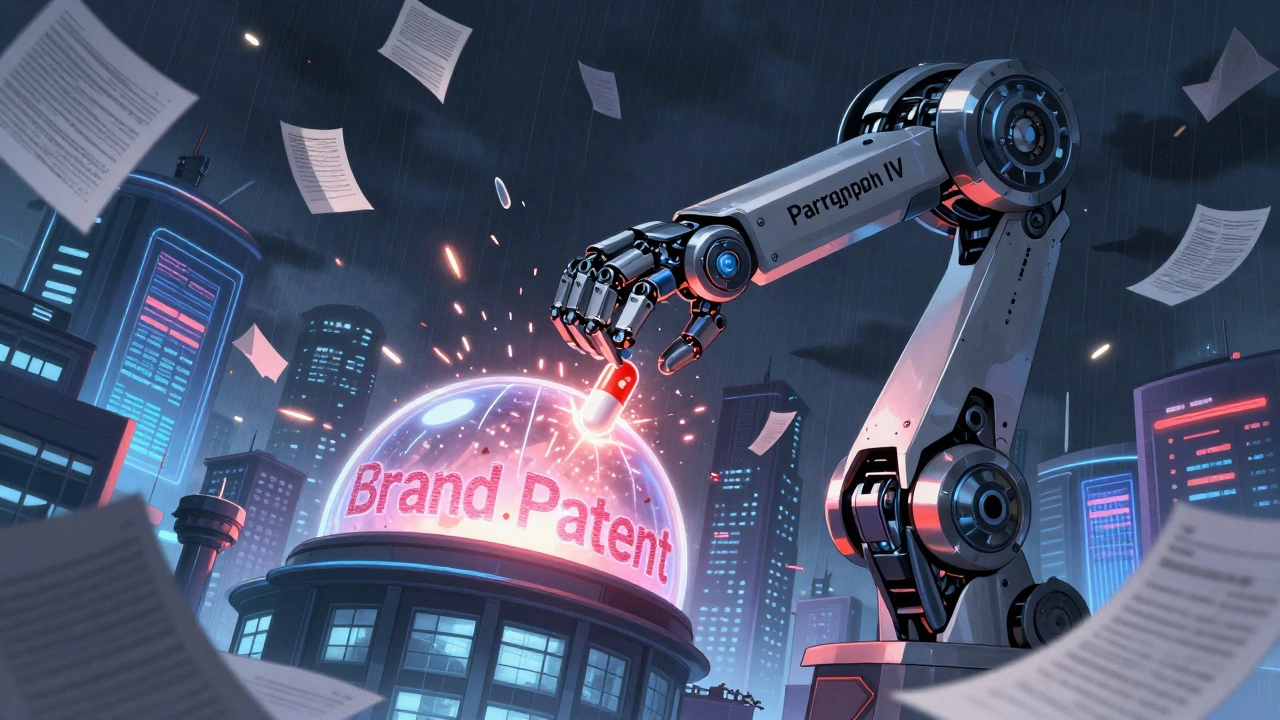
Paragraph IV Patent Challenges: How Generic Drug Makers Beat Brand Patents
Paragraph IV patent challenges let generic drug makers legally fight brand patents to bring cheaper medicines to market faster. Under the Hatch-Waxman Act, these challenges have saved patients over $1.2 trillion since 1990.