Creatine Phosphokinase: What It Is, Why It Matters, and What High Levels Mean
When your body’s muscles work hard—or get damaged—creatine phosphokinase, an enzyme found in muscle, brain, and heart tissue that releases energy for muscle contraction. Also known as CPK, it leaks into your bloodstream. That’s why doctors test for it: elevated levels often mean something’s wrong with your muscles, heart, or even your brain. It’s not a disease itself, but a red flag that tells clinicians something’s off inside you.
There are three main forms of creatine phosphokinase, an enzyme that helps convert creatine into energy for muscle movement: CPK-MM (mostly in skeletal muscle), CPK-MB (mostly in heart muscle), and CPK-BB (in the brain). When you have a heart attack, CPK-MB rises quickly—often before other markers like troponin. That’s why it’s still used, especially in places without advanced labs. If your CPK-MM is sky-high, it could mean a serious muscle injury, like from extreme exercise, trauma, or a rare condition called rhabdomyolysis, a life-threatening breakdown of muscle tissue that releases harmful proteins into the blood. And if CPK-BB spikes, it might signal a stroke or seizure.
High creatine phosphokinase doesn’t always mean something bad. Athletes, especially those doing heavy weight training or endurance events, often have elevated levels after a tough workout. So do people who’ve had a fall, surgery, or even a long seizure. But if your CPK is over 1,000 U/L—and you’re not an athlete—you need to find out why. Left unchecked, rhabdomyolysis can wreck your kidneys. That’s why doctors don’t just look at the number—they check your symptoms, your meds, your recent activity, and whether you’re taking statins or other drugs that can trigger muscle damage.
What you’ll find in the posts below isn’t just a list of articles. It’s a real-world guide to how enzyme levels, drug interactions, and muscle health connect. You’ll see how medications like statins can raise CPK, how heart attacks show up in lab results, and how to spot dangerous muscle breakdown before it turns critical. These aren’t theory pieces—they’re practical, tested insights from clinicians and patients who’ve been there. Whether you’re worried about a lab report, managing chronic pain, or just trying to understand why your doctor ordered a CPK test, the answers here are clear, direct, and grounded in what actually happens in real clinics and hospitals.
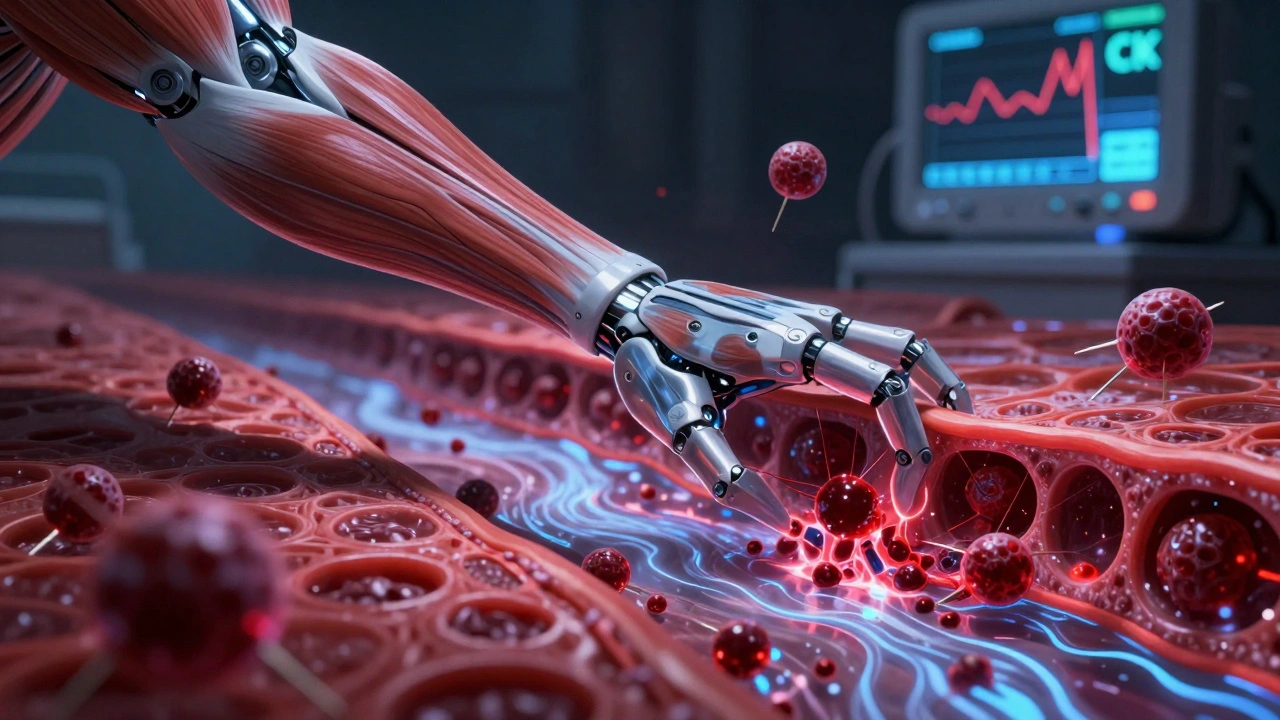
Daptomycin Muscle Toxicity: What You Need to Know About CK Monitoring and Symptoms
Daptomycin is effective against resistant infections but can cause muscle damage. Learn the symptoms, CK monitoring guidelines, and who’s at highest risk to avoid serious side effects.