Corticosteroid NSAID Combination: Uses, Risks, and Alternatives
When you take a corticosteroid NSAID combination, a pairing of anti-inflammatory steroids with nonsteroidal drugs like ibuprofen or naproxen. Also known as steroid-NSAID combo, it’s often prescribed for severe inflammation where one drug alone isn’t enough. But this mix isn’t harmless—it can seriously damage your stomach, kidneys, and even your heart if used too long or without monitoring.
NSAIDs, like ibuprofen, a common over-the-counter painkiller that reduces swelling and fever, work by blocking enzymes that cause pain and inflammation. Corticosteroids, such as prednisone, a powerful synthetic hormone that suppresses the immune system and reduces inflammation, hit the problem from a different angle. Together, they can bring quick relief for conditions like rheumatoid arthritis, severe allergies, or flare-ups of autoimmune diseases. But here’s the catch: both types of drugs irritate the stomach lining. When you combine them, your risk of ulcers, internal bleeding, and perforation jumps way up. Studies show patients on both drugs are up to five times more likely to need hospital care for GI complications than those on either one alone.
It’s not just your stomach at risk. These combinations can also spike blood pressure, cause fluid retention, and worsen kidney function—especially in older adults or people with existing heart or kidney issues. That’s why doctors now avoid prescribing them together unless absolutely necessary. And even then, they usually add a stomach-protecting drug like famotidine or a proton pump inhibitor. But if you’re already on this combo, you need to know the warning signs: black stools, vomiting blood, sudden abdominal pain, or unexplained bruising. These aren’t normal side effects—they’re red flags.
Thankfully, there are smarter ways to manage inflammation without stacking high-risk drugs. For many people, switching to a single NSAID with a lower GI risk, like celecoxib, or using a corticosteroid only for short bursts helps. Physical therapy, weight management, and newer biologics can also reduce the need for these combinations altogether. Some patients find relief with topical NSAIDs or heat/cold therapy, avoiding systemic exposure entirely. And if you’re on this combo because of a chronic condition, ask your doctor about alternatives like DMARDs or targeted therapies that don’t hammer your gut.
What you’ll find below are real patient-focused guides that cut through the noise. You’ll see how to spot dangerous interactions, what generic options exist, how to talk to your pharmacist about safer switches, and what newer treatments are replacing these risky combos. No fluff. No jargon. Just what you need to know to protect your health while still getting the relief you need.
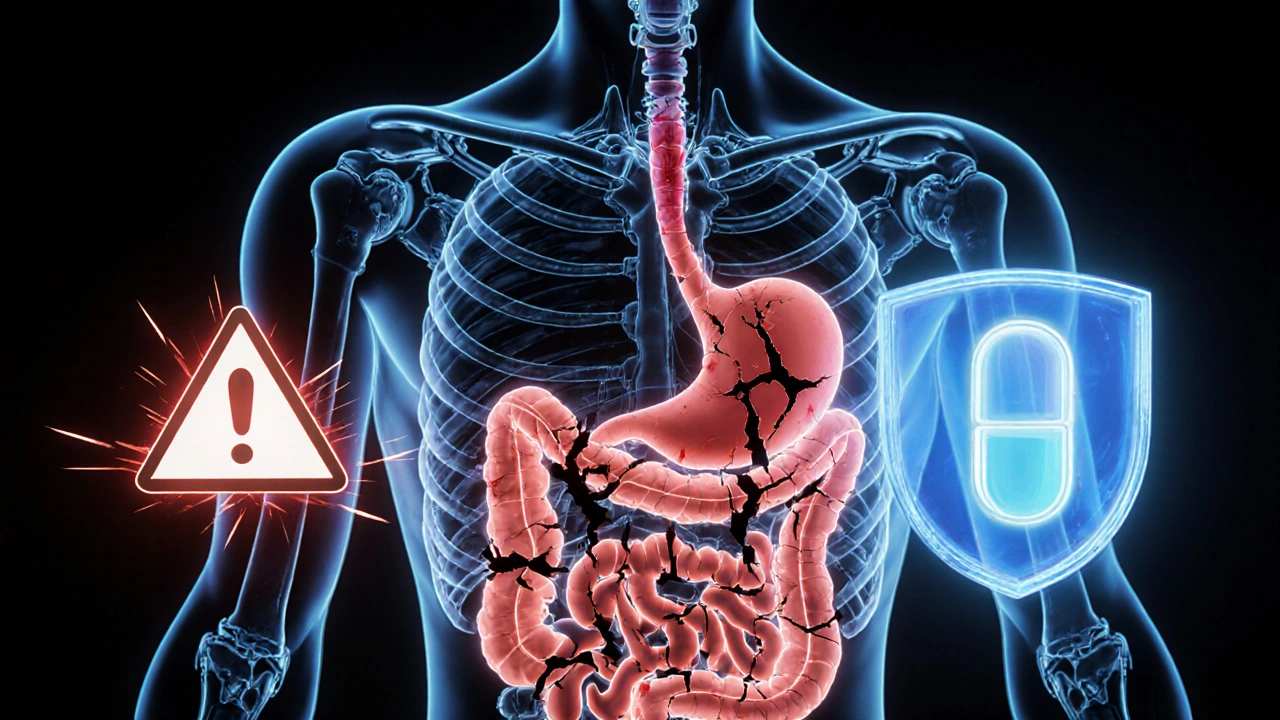
Steroids with NSAIDs: How This Common Drug Combo Raises GI Bleeding Risk and How to Prevent It
Taking steroids and NSAIDs together can raise your risk of serious GI bleeding by up to 12 times. Learn why this combo is dangerous, which NSAIDs are safest, and how a simple PPI can prevent life-threatening complications.