
Why Your Generic Drug Coverage Matters More Than You Think
When you switch health plans, most people focus on monthly premiums or doctor networks. But if you take any regular medications - especially generics - the real savings (or surprises) come from how your plan covers them. A $50-a-month plan might look great until you find out your $10 generic blood pressure pill suddenly costs $45. That’s not a typo. It happens all the time.
Generic drugs make up 90% of all prescriptions filled in the U.S., yet they account for only 23% of total drug spending. Why? Because they work just like brand-name drugs but cost a fraction. When your health plan puts them in the right tier, you pay $3 to $20 per month. Put them in the wrong tier, and you could end up paying hundreds more per year - even if you’re on a low-premium plan.
Understanding Formulary Tiers: The Hidden Cost Structure
Every health plan organizes drugs into tiers. Think of it like a pricing ladder. The lower the tier, the less you pay. Tier 1 is almost always for generic drugs. Tier 2 might include brand-name drugs with generic alternatives. Tier 3 and 4? Those are usually specialty or non-preferred meds.
But here’s the catch: not all plans are built the same. Silver Standardized Plans (SPDs) on the marketplace are required by law to waive your deductible for Tier 1 generics. That means if you’re on a $2,000 deductible plan, you still pay only a $20 copay for your metformin or lisinopril - no matter how much you’ve spent on other medical care. Non-standardized plans? They make you hit the full deductible first. For someone taking three generics monthly, that could mean paying $1,500+ out of pocket before coverage kicks in.
Medicare Part D plans are even more complex. In 2023, most had a $505 deductible before generics kicked in. But many now offer $0 to $10 copays after that. Some Advantage plans bundle medical and drug coverage, which can be great - unless your deductible is $3,000 and your generic meds don’t count toward it.
What’s in Your Medication List? Check the Exact Name
Not all generics are treated equally - even if they have the same active ingredient. Take metformin, the most common diabetes drug. There are dozens of manufacturers. Your old plan might cover metformin ER from Manufacturer A in Tier 1. Your new plan might only cover metformin ER from Manufacturer B. If yours isn’t listed? You’re suddenly in Tier 2 - and your copay jumps from $5 to $35.
Same goes for levothyroxine. It’s a thyroid drug. It’s a generic. But different brands have slightly different absorption rates. Insurers often favor one version. If you’ve been on the same generic for years and switch plans, you might get stuck with a different one - or worse, be told you need a prior authorization just to keep your current version.
A 2022 study by the American Pharmacists Association found 68% of people switching plans didn’t check if their exact generic formulation was covered. That’s not laziness - it’s because the information is buried. You can’t just look at “metformin.” You need to know the brand name of the generic, the dosage, and whether it’s immediate-release or extended-release.
Pharmacy Networks: The Silent Cost Killer
Even if your drug is in Tier 1, you might still pay more if you use the wrong pharmacy. Many plans have preferred networks. Use a non-preferred pharmacy? Your $5 copay becomes $20. Or worse - you’re told you need to mail-order your meds, and you can’t get them for 10 days.
OptumRx data shows that using a non-preferred pharmacy can raise generic drug costs by 300% to 400%. That’s not a mistake. That’s policy. And most people don’t realize it until they get the bill.
Before you switch, check if your local pharmacy is in-network. If you use CVS, Walgreens, or a small local pharmacy, make sure they’re listed. Don’t assume. Look it up on the plan’s website. If you can’t find it, call them. Ask: “Is [pharmacy name] in-network for Tier 1 generics?”
State Rules Change Everything
Where you live affects your drug costs more than you think. In New York, most plans have $0 copays for generics - no deductible required. In California, you pay 20% coinsurance after a $85 deductible. In D.C., there’s a separate $350 drug deductible - even if your medical deductible is $0.
California’s rules actually help adherence. People are more likely to fill prescriptions because they know exactly what they’ll pay. In states with integrated deductibles (medical + drug), people often skip refills because they’re still trying to hit $3,000 in spending before coverage starts.
If you’re moving states or considering plans across state lines, don’t just compare premiums. Compare how each state handles drug coverage. KFF’s 2023 state benchmark report shows these differences can add up to $1,200 in annual savings - or losses - depending on where you land.
How to Actually Check Your Coverage (Step by Step)
Here’s how to avoid the $500 surprise:
- Make a list of every medication you take - including dosage and how often (e.g., “metformin 500mg, twice daily”).
- Get the full formulary (not just a summary) from your new plan. Look for “Complete Drug List” or “Formulary PDF.”
- Search each drug by its brand name and generic name. Don’t stop at the generic. Look for the manufacturer.
- Check the tier. Is it Tier 1? What’s the copay? Is there a deductible? Does it apply to generics?
- Verify your pharmacy is in-network. Call the pharmacy and ask if they accept the plan for generics.
- Use the plan’s cost estimator tool. Medicare.gov has one. Healthcare.gov does too. Plug in your meds. It’ll show your projected annual cost.
People who do all six steps reduce unexpected drug costs by 73%, according to CMS data. That’s not a small number. That’s life-changing.
What’s Changing in 2025 and Beyond
The rules are shifting. Starting in 2025, Medicare Part D will cap out-of-pocket drug costs at $2,000 per year. That’s huge. But it also means insurers are reorganizing tiers. You might see generics split into Tier 1 (preferred) and Tier 1+ (non-preferred), with different copays.
More states are banning integrated deductibles. By 2027, 80% of marketplace plans are expected to stop requiring you to meet a medical deductible before your generic meds are covered. That’s because consumers kept getting burned.
AI tools are coming fast. CMS launched a beta tool called “Medicare Plan Scout” in late 2023. It automatically compares your meds across plans and flags where costs spike. In testing, it cut enrollment errors by 44%.

Real Stories: What Happens When You Don’t Check
One woman in Ohio switched to a cheaper plan because the premium was $70 less. She took three generics: lisinopril, metformin, and atorvastatin. Her old plan had $5 copays. Her new plan had a $1,800 deductible - and didn’t waive it for generics. She paid $540 out of pocket in three months before her coverage kicked in. She skipped her statin for two weeks. Her cholesterol spiked. She ended up in the ER.
Another man in Florida switched Medicare plans. His levothyroxine was $0 under his old plan. Under the new one, it was $35. Why? The new plan covered a different generic version. He didn’t realize until his refill was denied. He had to pay full price for a month’s supply - $120.
On the flip side, a woman in Massachusetts saved $780 a year by switching to a plan with $3 generic copays. She took three meds. Simple. But she checked before she switched.
Bottom Line: Don’t Switch Blindly
Health insurance isn’t about the lowest monthly bill. It’s about the lowest total cost for what you actually use. If you take generics - and most people do - your plan’s formulary is more important than your network or your deductible.
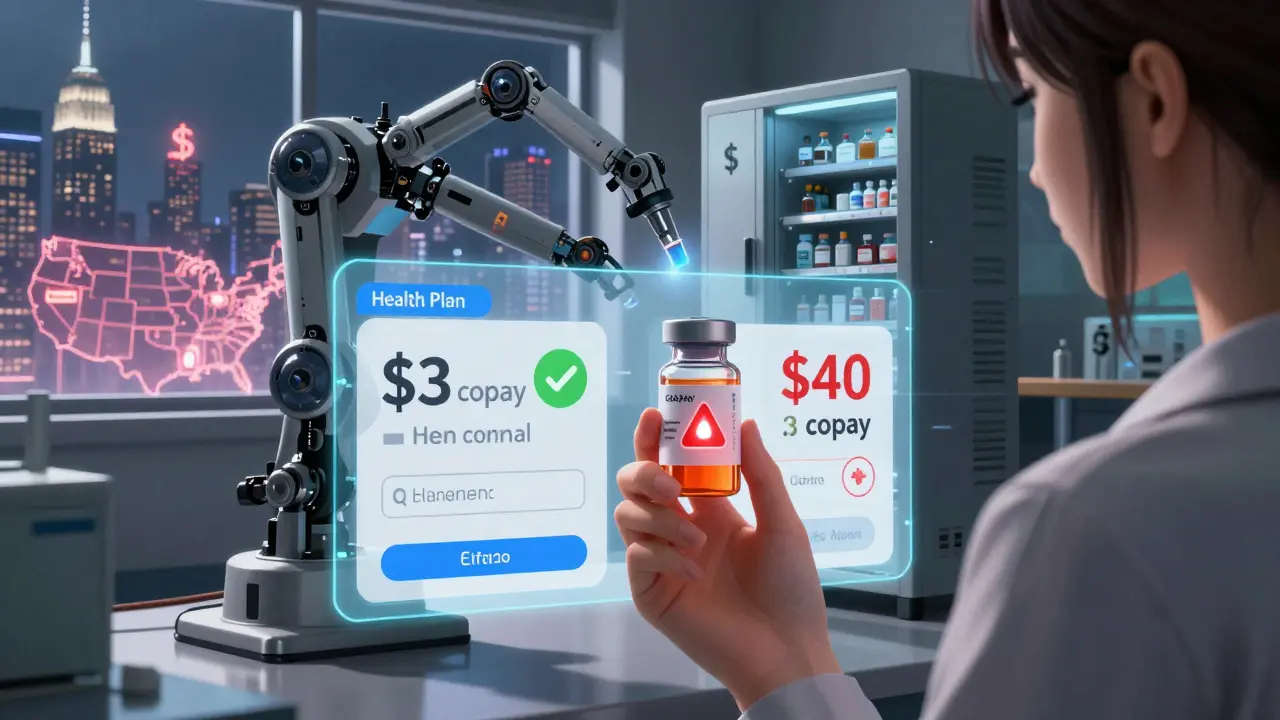
Take 30 minutes. Write down your meds. Use the tools. Call the pharmacy. Don’t trust the summary. Don’t assume. The difference between a $3 copay and a $40 one isn’t just money - it’s your health.
Frequently Asked Questions
Are all generic drugs covered the same way in every health plan?
No. Even if two plans cover the same generic drug, they may place it in different tiers, require different copays, or only cover specific manufacturers. One plan might list "metformin" as Tier 1 with a $5 copay. Another might only cover "metformin ER from Manufacturer X" in Tier 1 - and put all others in Tier 2 with a $35 copay. Always check the exact drug name and manufacturer on the full formulary.
Do I have to meet my deductible before my generic drugs are covered?
It depends on the plan. Silver Standardized Plans on the marketplace are required to waive the deductible for Tier 1 generics - meaning you pay only a fixed copay (usually $3-$20) right away. But most non-standardized plans, including many employer-sponsored and high-deductible plans, require you to meet the full medical deductible before any drug coverage starts. Always check the plan’s summary of benefits.
Can I switch plans just to get better generic coverage?
Yes - but only during open enrollment periods (usually November to December) or if you qualify for a Special Enrollment Period (like moving states or losing other coverage). You can’t switch mid-year just because your drug costs went up. Plan ahead. Use the Medicare Plan Finder or Healthcare.gov’s tool to compare options before open enrollment starts.
What if my generic drug isn’t on the formulary at all?
If your medication isn’t listed, you have a few options. You can ask your doctor for a similar drug that is covered. You can file an exception request with the plan - they must respond within 72 hours. Or you can pay out of pocket and then appeal later. But don’t assume you can just switch plans next year - if you go without your meds now, your health could suffer. Check formularies before you switch.
Do mail-order pharmacies offer better prices for generics?
Often, yes. Many plans offer lower copays for 90-day supplies through mail-order pharmacies - sometimes as low as $10 for a three-month supply. But you need to confirm the pharmacy is in-network and that your specific drug is available by mail. Some plans only offer mail-order for maintenance drugs, not acute ones. Always compare the total cost: mail-order versus retail, including shipping time.