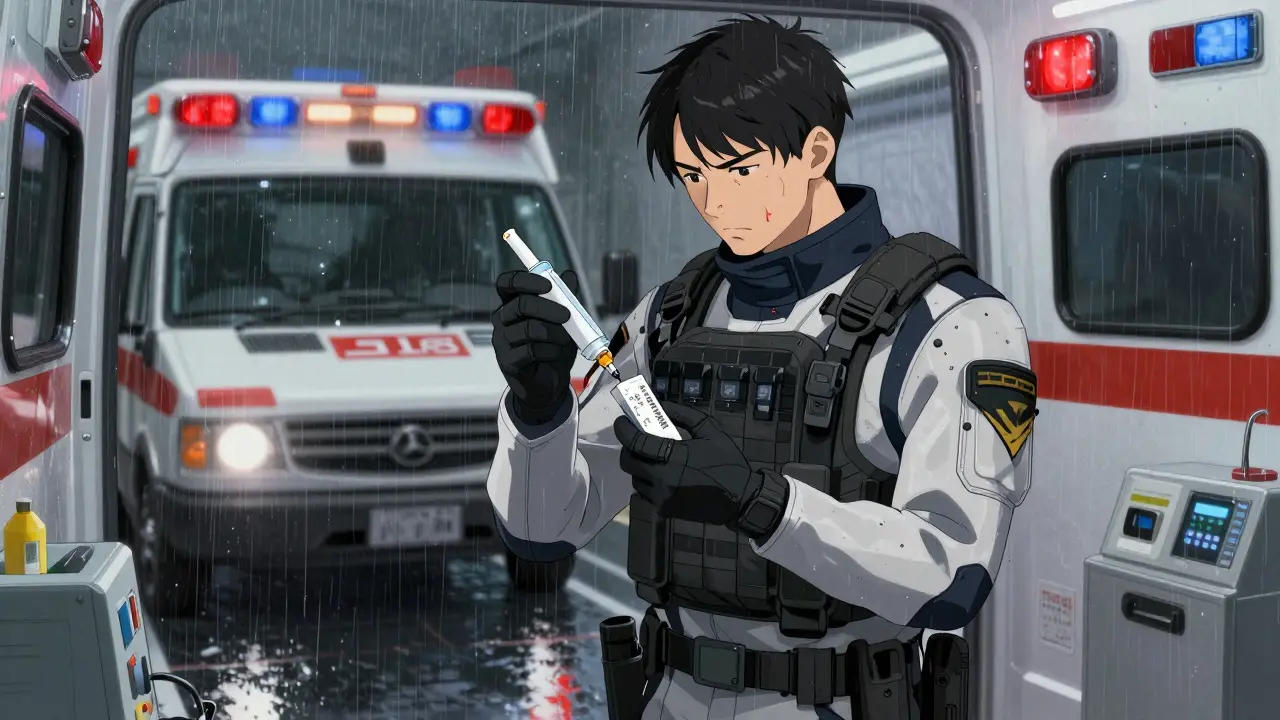
Imagine you are standing in an ambulance bay, sirens wailing, facing a patient going into anaphylactic shock. You reach for the epinephrine auto-injector, but your hand freezes. The date on the box is three months past its prime. Do you throw it away and wait for a replacement that might never arrive? Or do you administer a sub-potent expired medication, hoping it still holds enough power to save a life?
This isn't just a hypothetical nightmare scenario. With drug shortages becoming a persistent reality in healthcare systems worldwide, medical professionals are increasingly forced to make split-second decisions about using medications beyond their labeled expiration dates. The concept of "sub-potent" refers to drugs that may have lost some strength over time but haven't necessarily turned toxic or useless. Understanding when this practice is safe-and when it’s dangerous-is critical for anyone managing emergency supplies.
The Myth of the Expiration Date
We tend to treat expiration dates like hard stops, similar to how we view spoiled milk. If the date has passed, the product is bad. But pharmaceuticals don't work exactly like dairy. The U.S. Food and Drug Administration (FDA) mandated expiration dating in 1979, requiring manufacturers to prove stability through testing. However, these dates represent the last day the manufacturer guarantees full potency and safety under specific storage conditions-not the moment the drug becomes poison.
Consider the Shelf Life Extension Program (SLEP), launched in 1985 as a collaboration between the FDA and the Department of Defense. This program tested military stockpiles of expired drugs to see if they were still viable. The results were staggering. A 2006 study published in the Journal of Pharmaceutical Sciences found that 88% of 122 drug products remained effective 96 months (eight years) after expiration. In fact, research suggests that approximately 90% of medications retain significant potency for up to 15 years post-expiration if stored correctly. Pharmaceutical companies often set conservative dates to limit legal liability, not because the chemistry suddenly collapses on the morning after the deadline.
Chemistry Matters: Form and Storage
Not all medications degrade at the same rate. The physical form of the drug plays a massive role in its longevity. Solid dosage forms, such as tablets and capsules, are generally robust. Research from the University of Southern California indicates that tablets can retain 95% of their potency five to ten years after expiration, provided they are kept at around 25°C with 60% humidity. Liquids, on the other hand, are far more fragile. They degrade 30-40% faster than solids because water facilitates chemical breakdown and bacterial growth.
Storage conditions are equally critical. Temperature sensitivity is a major factor; according to the International Pharmaceutical Federation's 2021 guidelines, medications stored above 30°C degrade two to three times faster than those kept in cooler environments. Light exposure also accelerates damage, particularly for photosensitive drugs like nitroglycerin, which can lose 15-25% of its potency per month if exposed to light. If you keep your emergency kit in a hot car or a humid bathroom cabinet, the expiration date becomes even less reliable as a safety marker because the degradation process has already been accelerated by poor storage.
| Formulation Type | Potency Retention Estimate | Key Risk Factors |
|---|---|---|
| Solid Tablets/Capsules | High (95% at 5-10 years) | Humidity, extreme heat |
| Liquid Solutions | Low (Degrades 30-40% faster) | Bacterial growth, oxidation |
| Biologicals (e.g., Insulin) | Very Low (20% loss/month at room temp) | Temperature fluctuations |
| Auto-Injectors (Epinephrine) | Moderate (25% loss/year) | Light, temperature extremes |
High-Risk Categories: When Never Is Never
While many drugs remain stable, some categories pose unacceptable risks when expired. These are the medications where precision is non-negotiable. Biologicals, such as insulin, are notoriously unstable. Insulin degrades rapidly at room temperature, losing about 20% of its potency every month. Using expired insulin can lead to uncontrolled blood sugar levels and potentially diabetic ketoacidosis, a life-threatening condition.
Antibiotics present a different kind of danger. Tetracycline, specifically, is known to form toxic compounds after expiration rather than just losing effectiveness. Administering degraded tetracycline can cause kidney damage. Epinephrine auto-injectors also fall into a high-risk category due to their rapid potency loss-approximately 25% annually after expiration. While some studies show expired epinephrine can still be effective, the margin for error in treating anaphylaxis is slim. The American College of Emergency Physicians (ACEP) explicitly advises against using expired insulin, epinephrine, nitroglycerin, and liquid antibiotics.
Life-critical maintenance medications require precise dosing too. Anticoagulants like warfarin have a narrow therapeutic window; a 10% variation in potency could tip the balance toward hemorrhage or clotting. Similarly, seizure medications rely on consistent blood levels to prevent episodes. A 15% reduction in potency can increase seizure risk by 35%, according to data from the Epilepsy Foundation. For these drugs, "close enough" is not good enough.
Low-Risk Candidates: The "Better Than Nothing" Group
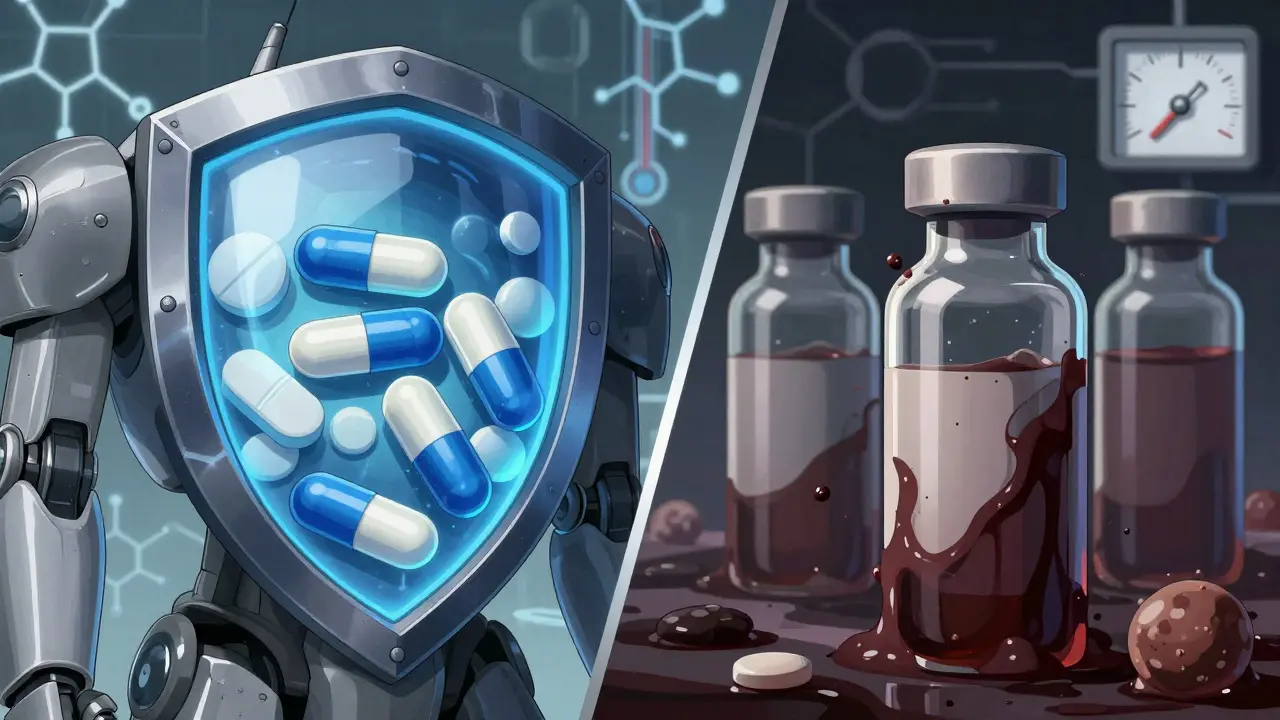
On the flip side, there are medications where the risk of using an expired product is significantly lower than the risk of having no treatment at all. Non-critical over-the-counter (OTC) drugs tend to hold up well. Ibuprofen, for instance, maintains 85-90% of its potency four to five years post-expiration, based on University of Utah research. Acetaminophen and diphenhydramine (Benadryl) are also considered relatively stable.
In emergency scenarios involving immediate life threats, the calculus changes. Dr. Lee Cantrell, Director of the California Poison Control System, noted in a 2022 study that expired epinephrine retained sufficient potency to treat anaphylaxis in 78% of cases tested up to 12 months post-expiration. While this doesn't mean you should routinely use old EpiPens, it highlights that in a true crisis with no alternatives, a slightly weakened drug might still trigger the necessary physiological response. Paramedics have reported successful outcomes using slightly expired rescue inhalers or pain relievers when supply chains broke down during shortages.
Protocols for Emergency Use
If you find yourself in a situation where an expired medication is your only option, strict protocols must be followed. The Denver Metro EMS Medical Directors established clear guidelines in 2022 that serve as a model for best practices. First, ensure that all non-expired supplies are exhausted. Second, perform a visual inspection. Look for particulate matter, discoloration, cloudiness, or crumbling tablets. If the drug looks wrong, do not use it. Third, document everything. Record the expiration date, the reason for use, and the patient's outcome.
Training is essential here. Only 32% of EMTs correctly identified high-risk expired medications in a 2022 NAEMT assessment, highlighting a gap in knowledge. Proper assessment requires understanding chemical stability principles. For example, knowing that solid acetaminophen is likely safe while liquid amoxicillin is not requires specific education. Agencies implementing barcode tracking systems and quarterly refresher training have seen improved compliance and safety records.
The Reality of Drug Shortages
The push to understand sub-potent medications isn't just theoretical; it's driven by market realities. The FDA tracked 312 drug shortages in 2022, a 27% increase from the previous year. Injectables made up 68% of critical shortages. These gaps cost U.S. healthcare $234 million in 2022 alone. As shortages persist, hospital systems are adapting. Adoption of expiration extension protocols grew from 8% of hospitals in 2019 to 43% in 2023. During the 2021-2022 fentanyl shortage, 67% of U.S. EMS agencies implemented protocols for using expired medications, compared to just 12% historically.
This shift reflects a pragmatic approach to patient care. When the alternative to a slightly weakened drug is no drug at all, providers are willing to accept calculated risks. However, this must always be a last resort, never a convenience. The FDA's April 2023 draft guidance proposes standardized extension protocols for 12 life-saving drugs, signaling a move toward regulated flexibility rather than wild west improvisation.
Frequently Asked Questions
Is it illegal to use expired medications in an emergency?
In most jurisdictions, using expired medications is not strictly illegal in a genuine life-or-death emergency where no alternatives exist. However, professional medical guidelines strongly discourage routine use. Healthcare providers must follow institutional protocols, which often require documentation and justification for using sub-potent drugs. Always check local regulations and hospital policies.
Do expired medications become toxic?
Most medications simply lose potency over time rather than becoming toxic. However, there are notable exceptions. Tetracycline antibiotics can form toxic compounds that damage kidneys. Liquid formulations and biologicals like insulin can degrade into harmful substances or support bacterial growth. Always avoid expired liquids and biologicals unless absolutely necessary and verified by a professional.
How long does epinephrine stay effective after expiration?
Epinephrine loses approximately 25% of its potency annually after expiration. Studies suggest that up to 12 months post-expiration, expired epinephrine may still retain enough strength to treat anaphylaxis in many cases. However, due to the critical nature of anaphylaxis, it is recommended to replace auto-injectors promptly. In a true emergency with no other options, a slightly expired injector is better than none.
Can I take expired ibuprofen or acetaminophen?
Generally, yes. Solid OTC pain relievers like ibuprofen and acetaminophen are quite stable. Research shows they maintain 85-90% potency for several years post-expiration if stored properly. While not ideal, taking them for minor pain or fever is unlikely to cause harm, though efficacy might be slightly reduced. Avoid using them if they look discolored or smell odd.
What is the Shelf Life Extension Program (SLEP)?
SLEP is a collaborative program between the FDA and the Department of Defense started in 1985. It tests expired military stockpile medications to determine if they remain potent and safe. SLEP has demonstrated that many drugs retain 90% of their original potency for years after their labeled expiration date, challenging the notion that drugs instantly become useless on the expiry day.
Why do pharmaceutical companies set short expiration dates?
Manufacturers set conservative expiration dates primarily for legal liability reasons. By guaranteeing potency only until a specific date, they protect themselves from lawsuits related to ineffective treatments. Additionally, stability testing is costly and time-consuming, so extending guaranteed shelf lives requires extensive additional data that companies may not want to pursue.